News Broadcasting
From a barber’s shop to a tea stall: BBC Urdu looks at the lives of India’s young Muslims

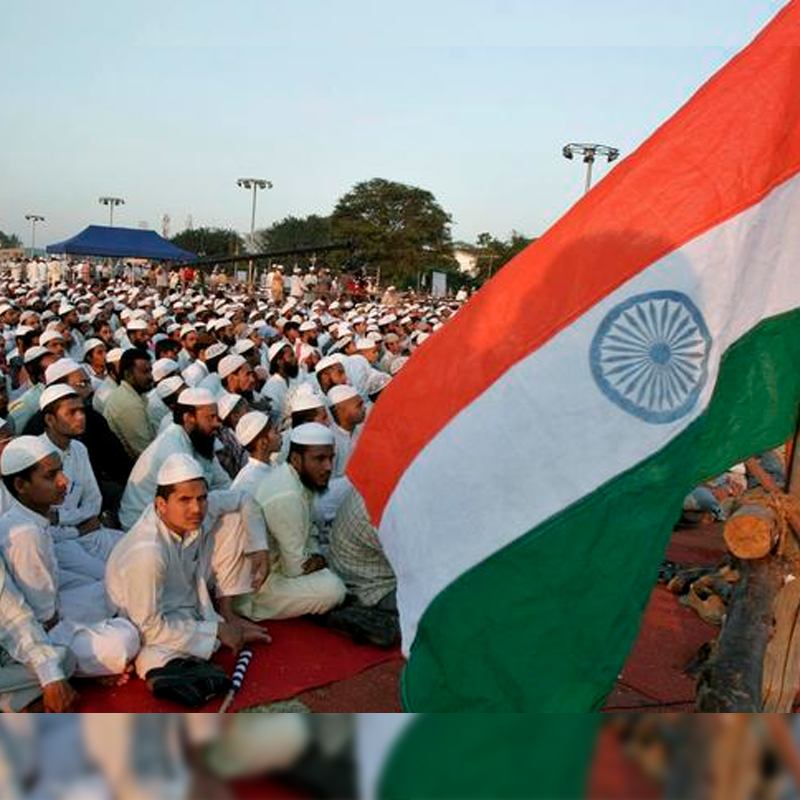
MUMBAI: India’s young Muslims, their views, hopes and concerns, are the subject of the new series of BBC Urdu, a part of BBC World Service — From a barber’s shop to a tea stall (Nai Ki Dukan Se Chai Ki Dukan Tak) going live on TV, radio and online on Monday 14 November.
The six-part TV and radio series and special content for the website bbcurdu.com is produced and presented by Mirza AB Baig. As he visits New Delhi, Lucknow, Kolkata, Hyderabad, Bangalore and Mumbai, Mirza Baig talks to Muslim youths who, due to high unemployment, are used to socialising in barber shops and tea stalls in their communities.
Each episode focuses on issues that young men and women were keen to discuss with the BBC: unemployment, the divorce practice of “instant triple talaq”, terrorism, LGBT, the high number of Muslims in India’s prisons and the uniform civil code (the proposal to replace the family laws exercised by religious communities with a common set of laws governing all India’s citizens).
Mirza Baig said: “In this series, for the first time, we have placed India’s Muslim youth at the very centre of our narrative. Talking to them, we wanted to bring to the fore their views, needs and worries.
From a barber’s shop to a tea stall is about them – and as we roll out this content, we hope that, along with BBC Urdu’s audience in Pakistan, Urdu-speakers in India will join the conversation via the BBC Urdu social media channels to continue and expand the debates we started in India’s Muslim communities.”
Indian experts join the discussion in the BBC Urdu series. Dr Tanweer Fazal of the Department of Sociology, Jawaharlal Nehru University, New Delhi, comments on unemployment among the country’s Muslims. Renowned scholar, Prof Tahir Mehmood examines the issues surrounding the application of the uniform civil code. Prof Vija Raghawan of Tata Institute of Social Sciences in Mumbai looks at the reasons for large numbers of Muslims in India’s jails. Dr Shaista Yusuf and Prof Sabiha Zubair in Bangalore explain the challenges presented by the continued practice, in some Sunni Muslim communities, of instant divorce known as “triple talaq”.
From a barber’s shop to a tea stall (Nai Ki Dukan Se Chai Ki Dukan Tak) will feature as part of the BBC Urdu programme, Sairbeen, on TV and radio every Monday starting from 14 November. The series’ text, audio and video content will also roll out on the website bbcurdu.com. The issues will be discussed with social-media audience via Facebook Lives on BBC Urdu Facebook.
The TV programme, Sairbeen, is broadcast live from London by Aaj News TV channel in Pakistan and streamed on bbcurdu.com at 19.30 PST (14.30 GMT) Monday to Friday. Each edition of Sairbeen is repeated on Aaj News at 11.00 on the following day and is available on bbcurdu.com on demand. The programme is also available via the BBC Urdu channel on YouTube. The radio programme, Sairbeen, is broadcast on shortwave at 20.00 PST (15.00 GMT) every day and is available via bbcurdu.com.