Cable TV
Fox or Time Warner, who will blink first?


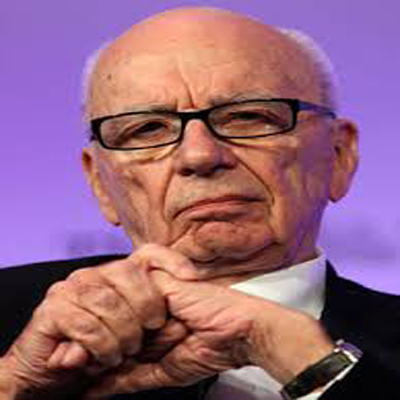
BENGALURU: If it had gone through, it would have been the second largest media deal ever in the history and created a mega media powerhouse, but Time-Warner rejected Rupert Murdoch’s 21st Century Fox offer allegedly worth about USD 76 billion cash and stock. Time Warner CEO Jeff Bewkes said that its board had decided such a deal would not be in the ‘best interests’ of his company or its shareholders.
Industry experts however expect Murdoch to make an improved offer, considering the fact that the media landscape is undergoing huge shifts. Murdoch has to gain scale as Pay TV distributors such as AT&T and Comcast are getting bigger and bigger through acquisitions, also Murdoch — is not known for backing off once he has set his sights on a company.
21st Century Fox had offered to buy Time Warner for USD 32.42 in cash and offered a ratio of 1.531 Fox class-A share for each Time Warner share. That, says Fox Business, a 21st Century property, equates to around USD 86 a share, or USD 76 billion. The combined company would sport revenues of USD 65 billion, and control a slew of television channels like Fox, TNT, and HBO, along with movie studios 20th Century Fox and Warner Bros.
Over the past few years, Time Warner has shorn off non-core business such as cable, internet and publishing and comprises a group of television and movie companies and has seen its stock price triple over the last five years.
Last month on completing the spin-off of Time Inc., Bewkes said: “The spin-off of Time Inc. completes the process we began several years ago to position Time Warner as the world’s leading video content company. Our strategy reflects our commitment to delivering strong returns to our shareholders as we light up the world with the best storytelling. The spin-off gives Time Warner even more focus as we continue to deliver on this strategy.”
A few days before the Time Inc., spinoff, as part of the studio’s television growth strategy, Times Warner subsidiary Warner Bros. Television Group (WBTVG) had announced that, following receipt of regulatory approvals, it had completed its acquisition of all Eyeworks’ businesses outside the US, in 15 countries across Europe, South America, Australia and New Zealand, adding 13 new territories to its international network of production companies. The company said that the Eyework acquisition further strengthened Warner Bros.’ international television production capabilities and sees Warner Bros. take over all of Eyeworks’ international distribution activities for both formats and finished product.
The largest media deal so far was the Time Warner-AOL merger in 2000-01 worth USD 164 billion and was once considered as one of the biggest ‘mistakes’ in corporate history by Bewkes.