Cable TV
Fox or Time Warner: Who will blink first – Time Warner’s attempt to get more money?

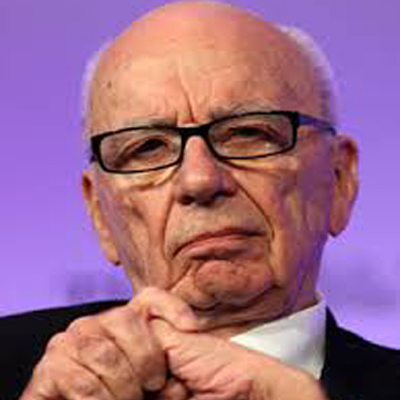
BENGALURU: Both the companies have issued official statements about the offer and rejection. Twenty-first Century Fox (Fox) issued a short, cryptic three sentence statement –“21st Century Fox can confirm that we made a formal proposal to Time Warner last month to combine the two companies. The Time Warner Board of Directors declined to pursue our proposal. We are not currently in any discussions with Time Warner.” Fox waited for the appropriate time and made the bid within a few days of Time Warner completing the spinoff of Time Inc., and hence made the target more affordable for Fox.
Speculation continues across media circles globally with some industry pundits claiming that the rejection of the Fox offer was a coy attempt by the Time Warner brass to get more money for the company. Time Warner shares closed last week at above USD 86 per share, already above the estimated USD 85 per share offered by Fox. If Fox wants to build more clout with Pay TV providers it actually is left with little option except to raise its bid, considering the fact that AT&T has announced a USD 49 billion deal to buy DirecTV and the friendly Comcast-Time Warner Cable merger is awaiting approvals. Other suitors could also make a pitch for Time Warner, hence raising the ante further.
As mentioned earlier, Time-Warner had rejected Rupert Murdoch’s 21st Century Fox offer allegedly worth about USD 76 billion cash and stock. 21st Century Fox had offered to buy Time Warner for USD 32.42 in cash and offered a ratio of 1.531 Fox class-A share for each Time Warner share.
Time Warner had in a statement last week said that the company was confident that its board’s strategy continues to deliver stockholder value and was superior to any proposal Fox had to offer.
Excerpts of the Time Warner release:
In making its determination, the Time Warner Board considered, among other things, that: The execution of Time Warner’s strategic plan will continue to drive significant and sustainable value for Time Warner stockholders; The unique value of Time Warner’s industry-leading businesses including its portfolio of networks and its film studio and television production business is only going to increase; There is significant risk and uncertainty as to the valuation of Twenty-First Century Fox’s non-voting stock and Twenty-First Century Fox’s ability to govern and manage a combination of the size and scale of Twenty-First Century Fox and Time Warner; and there are considerable strategic, operational, and regulatory risks to executing a combination with Twenty-First Century Fox.
Citigroup Global Markets Inc. is acting as financial advisor to Time Warner while Cravath, Swaine & Moore LLP is acting as legal advisor.
In the meantime, the US Federal Communications Commission (FCC) has set a deadline of 25 August 2014 for those interested in filing comments or petitions to deny the friendly Comcast Corporation (Comcast)-Time Warner Cable Inc., merger. (Time Warner Cable was spun off from Time Warner in 2009). The deal would give Comcast 30 million U.S. homes; about 30 per cent of all the cable households and 40 per cent of the high-speed internet market. In a statement in February 2014, Comcast had said that the stock-for-stock transaction in which Comcast will acquire 100 per cent of Time Warner Cable’s 284.9 million shares outstanding for shares of Comcast amounting to approximately USD 45.2 billion in equity value. Each Time Warner Cable share will be exchanged for 2.875 shares of Comcast, equal to Time Warner Cable shareholders owning approximately 23 per cent of Comcast’s common stock, with a value to Time Warner Cable shareholders of approximately $158.82 per share based on the last closing price of Comcast shares. Comcast also plans to expand its buyback program by an additional USD10 billion.