Connect with us

e-commerce

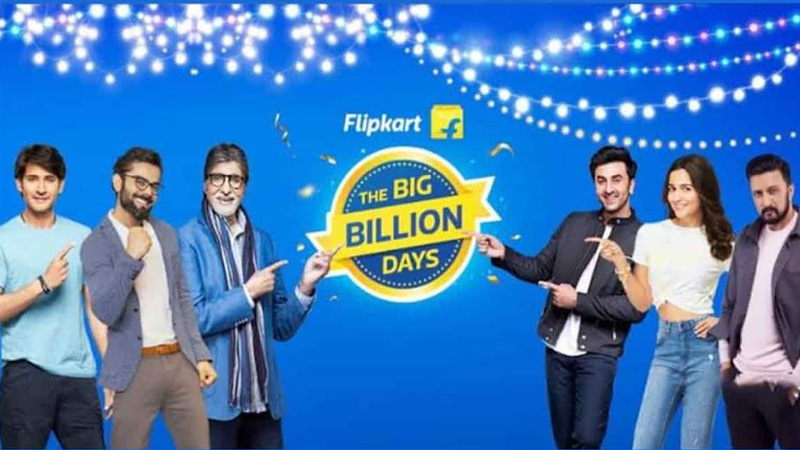
Flipkart’s influencer army hits it out of the e-park in sale season

Published

on

MUMBAI: This Independence Day, the real fireworks aren’t just in the skies, they’re lighting up Instagram, Youtube, and your Reels tab. In a head-turning report released by influencer marketing SaaS platform Klugklug, Flipkart and Amazon’s contrasting influencer strategies for their big sales reveal two vastly different playbooks and one clear early leader.

On Day One of the festive e-commerce face-off, Flipkart appears to be “batting bigger”, deploying influencers at three times the scale of Amazon. Flipkart commanded 75.89 per cent of the influencers and 71.01 per cent of total posts, while Amazon trailed with 24.11 per cent of influencers and 28.99 per cent of posts.

But while Flipkart is flooding the field with content, Amazon is playing the precision game.

Advertisement

“The Independence Day sales are a battleground for e-commerce and brands,” said Klugklug co-founder & CEO Kalyan Kumar. “Flipkart’s aggressive, high-volume influencer deployment strategy is clearly leading in terms of reach and overall engagement at this stage.”

Indeed, Flipkart’s influencer army is delivering big on reach and engagement. The platform’s creators garnered a whopping 136.91 million views, 1.56 million likes, 423.19K comments, and 31.4K shares adding up to a massive 2.02 million in total engagement.

Amazon’s numbers, while more modest, point to a different kind of victory. The platform clocked 11.73 million total views, with 806.07K likes, 226.5K comments, and 16.89K shares, totalling 1.05 million engagements. However, its overall engagement rate was a notable 3.02 per cent, more than double Flipkart’s 1.32 per cent.

Advertisement

“Amazon is demonstrating a more surgical approach,” explained Klugklug co-founder & CPO Vaibhav Gupta. “While their influencer deployment is smaller, their engagement rates are higher driven by mega-influencers. Flipkart, meanwhile, is casting a wider net, creating a splashy buzz with a mass rollout.”

Flipkart’s biggest win seems to lie with its nano to macro influencers, who are showing solid engagement. The platform’s nano creators saw an impressive 4.70 per cent engagement rate, while Amazon’s mega influencers delivered a strong 3.50 per cent.

However, when it comes to mega influencers, Flipkart is steamrolling the competition. These top-tier content creators alone generated 121.64 million views for Flipkart, dwarfing Amazon’s combined 10.77 million views from mega influencers and 11.98 million views from macro influencers.

Advertisement

The numbers reflect the sheer difference in scale: Flipkart has gone all in, while Amazon is strategically picking its bets.

“Both strategies have merit,” said Gupta. “It will be fascinating to see which proves more effective as the sale progresses big splash or deep connect?”

As the sale rolls on, the scoreboard is far from final. But if the first day is anything to go by, Flipkart is swinging for the fences while Amazon is quietly building innings. Either way, the real winner is your feed, which is now a cricket field of commerce.

Advertisement
Click to comment

Leave a Reply

Your email address will not be published. Required fields are marked *

e-commerce

Visa report tracks rise of India’s affluent, experience-led spending

Affluent base doubles to 130 lakh, travel 58 per cent of elite spends.

Published

on

MUMBAI: In India’s new luxury playbook, it’s less about owning more and more about living better. A new whitepaper by Visa Consulting and Analytics (VCA) maps a decisive shift in India’s affluent economy, where spending is becoming more intentional, experience-led, and closely tied to personal identity rather than pure income growth.

Titled India’s Affluent Economy 2025–2026, the report draws on a Visa-commissioned Yougov study and VisaNet data across travel, dining, retail and lifestyle categories. The headline number is hard to miss: individuals earning over Rs 10 lakh annually have nearly doubled from 69 lakh to 130 lakh, significantly expanding the country’s discretionary spending base.

But it’s not just about scale, it’s about behaviour. As consumers move up the affluence ladder, discretionary categories are taking a larger share of credit card spends, positioning cards as key enablers of premium, lifestyle-driven consumption.

Advertisement

The geography of wealth is shifting too. Affluence is no longer confined to metros such as Mumbai, Delhi and Bengaluru, with cities like Ahmedabad, Surat, Jaipur and Lucknow increasingly mirroring metro consumption patterns.

The report highlights a clear pivot from ownership to access. More than 50 per cent of affluent consumers now use cards for elite memberships, while 7 in 10 are drawn to limited-edition drops and curated collections. Increasingly, luxury is defined by seamless access be it concierge-led travel or curated dining where time saved is as valuable as money spent.

Spending patterns reinforce this shift. Among the ultra-elite, travel accounts for 58 per cent of discretionary spends, far outpacing retail and luxury combined at 28 per cent. Cross-border spending penetration stands at 63 per cent, signalling a growing global outlook among India’s affluent.

Advertisement

Closer home, indulgence is becoming routine. Nearly 4 in 5 affluent consumers dine at premium establishments at least three times a year, while 1 in 4 visit luxury venues more than five times annually. Dining spends are also climbing, with Rs 20,000 emerging as a new entry-level benchmark per experience and Rs 50,000 marking premium territory.

Retail, meanwhile, is becoming more selective. Three in four affluent consumers make a high-end purchase at least once a quarter, while one in four shops premium every two weeks. Luxury retail intensity is also rising, with 2 in 5 consumers spending over Rs 5 lakh annually, and a smaller but significant segment exceeding Rs 10 lakh.

Technology and wellness are carving out new roles in this ecosystem. High-end gadgets now see average spends of Rs 60,000 or more per purchase, while ultra-elite consumers are eight times more likely to visit spas and show five times higher engagement with cosmetic stores than non-affluent groups.

Advertisement

The broader takeaway is structural. Affluent consumers are no longer buying products, they are buying ecosystems. Integrated experiences across travel, dining, wellness and payments are becoming central to how this segment lives and spends.

As India’s affluent base expands beyond metros and aligns more closely with global consumption patterns, the real opportunity lies not just in size, but in speed. For brands, the message is clear: relevance will be defined by how early and how seamlessly, they plug into this evolving lifestyle economy.

Advertisement
Continue Reading

Advertisement News18
Advertisement
Advertisement
Advertisement
Advertisement Whtasapp
Advertisement Year Enders

Indian Television Dot Com Pvt Ltd

Signup for news and special offers!

Copyright © 2026 Indian Television Dot Com PVT LTD