News Headline
Face of M&E industry in the next 5 years


KOLKATA: Overall advertising spend took a hit in 2020 due to the unprecedented Covid2019 crisis. With hints of recovery, experts are upbeat about adex growth this year as well as in the long term. India’s advertising market is estimated to post a CAGR of 16 per cent over the next five years factoring Covid2019 impact. While digital advertising is estimated to double its share in the overall ad pie, TV spends will largely remain stable, according to a report from Elara Capital.
However, it mentions that TV advertising may witness a decline in the ad share pie post-2025, if digital scales up further. Globally, digital advertising accounts for 61 per cent of ad spend whereas TV is 23 per cent, given demographics in India (the big mass market with several languages), it is believed that the share of mediums like TV and print will remain higher than the global average.
Elara Capital VP research analyst (media) Karan Taurani said huge pent-up demand in some sectors (travel, retail & tourism), which were negatively affected during Covid2019, an increase in the number of SME-led advertisers, and the surge in digital advertising led by favourable demographics will drive the growth.

“Facebook, Google and YouTube will continue to dominate the social, search and video advertising segment within digital advertising. Video advertising, which accounts for almost 30 per cent of digital advertising spend, has outperformed with a 50 per cent growth rate in CY19; however, the larger share keeps moving toward Hotstar and YouTube as they account for almost two thirds of this video advertising pie,” he stated.
During a panel discussion in Vibes 3.0, The Everywhere Content, Elara Media & Entertainment Conference, experts also reflected similar optimism. They said broader advertising trends within the TV vertical indicate a good recovery, backed by IPL after a big blow during the lockdown. Currently, ad spend stands in good stead after a K-shaped recovery, with some new ad verticals coming up while some old ones are drying up, they added.
The panellists added that digital will trigger new opportunities as millions of advertisers have moved to digital. SMEs do their own digital advertising, but their adoption is much slower. However, gradually these businesses have been shifting, in line with trends overseas a few years back.
Digital adoption has been noticeable in consumption patterns too, especially as it has leapfrogged during Covid times. In India, around 10 million viewers have cut chords during Covid2019 lockdown, choosing OTT platforms largely due to a variety of content. The key remains to keep up the engagement of audiences on the OTT platform. TV and OTT can coexist at least for the next eight-ten years. While men used to explore OTT content and women preferred daily soaps on TV, this trend has changed during the pandemic, where family viewing has grown significantly.
According to the panellists, the value of a revenue-paying subscriber is going to increase significantly. Earlier, with 30-40 OTT platforms and several TV networks, content demand was high. But now, the audience has become quality content-specific and is willing to spend on marquee shows and content. Partnerships with telecom service providers (TSP) will continue to account for a larger chunk of SVOD revenue for broadcaster and other OTTs in the near term; smart TV and smartphones too will support the growth of India’s SVOD ecosystem in the medium term, Taurani added.
Among other trends in media and entertainment industry, Taurani said cinema remains an outing and socialising trend in Asian countries, such as Singapore, Taiwan, China, the UAE and India. This means there is relatively low or no threat of OTT, unlike the West (US and UK) wherein consumers visit a cinema only to watch a movie. In terms of screen openings too, APAC has 88 per cent of screens open, whereas the US and the EMEA have opened up only 38 per cent and 24 per cent of screens, respectively, until now.






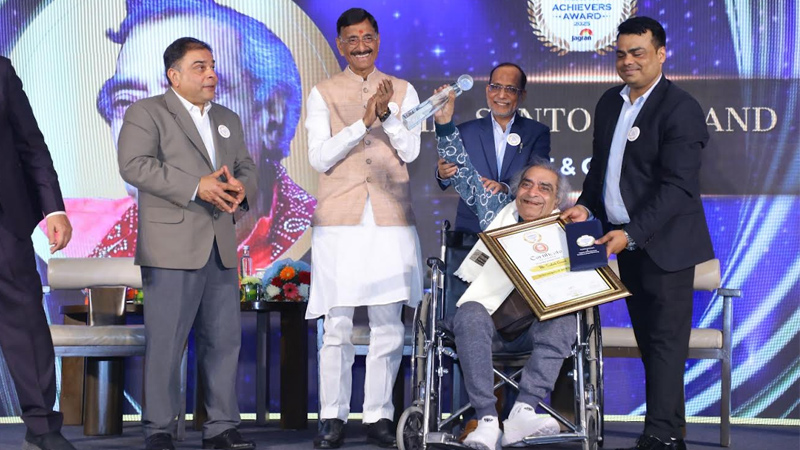
NEW DELHI: Hamdard Laboratories gathered a cross-section of India’s achievers in New Delhi on Friday, handing out the Hakeem Abdul Hameed Excellence Awards to figures who have left their mark across healthcare, education, sport, public service and the arts.
The ceremony, attended by minister of state for defence Sanjay Seth and senior officials from the ministry of Ayush, celebrated individuals whose work blends professional success with a sense of public purpose. It was as much a roll call of achievement as it was a reminder that influence is not measured only in profits or podiums, but in people reached and lives improved.
Among the headline awardees was Alakh Pandey, founder and chief executive of PhysicsWallah, recognised for turning affordable digital learning into a mass movement. On the sporting front, Arjuna Awardee and kabaddi player Sakshi Puniya was honoured for her contribution to the game and for pushing women’s participation onto bigger stages.
The cultural spotlight fell on veteran lyricist and poet Santosh Anand, whose songs have echoed across generations of Hindi cinema. At 97, Anand accepted the honour with characteristic humility, reflecting on a life shaped by perseverance and hope.
Healthcare honours spanned both modern and traditional systems. Manoj N. Nesari was recognised for strengthening Ayurveda’s place in national and global health frameworks. Padma shri Mohammed Abdul Waheed was honoured for his research-backed work in Unani medicine, while padma shri Mohsin Wali received recognition for his long-standing contribution to patient-centred care.
Education and social development also featured prominently. Padma shri Zahir Ishaq Kazi was honoured for decades of work in education, while former Meghalaya superintendent of Police T. C. Chacko was recognised for public service. Goonj founder Anshu Gupta received an award for his dignity-centred rural development initiatives, and the Hunar Shakti Foundation was honoured for empowering women and young girls through skill development.
The Lifetime Achievement Award went to former IAS officer Shailaja Chandra for her long career in public healthcare and governance, particularly in the traditional systems under Ayush.
Speaking at the event, Hamdard chairman Abdul Majeed said the awards were a tribute to those who combine excellence with empathy. “These awardees reflect Hakeem Sahib’s belief that healthcare, education and public service must ultimately serve humanity,” he said.
Minister Seth struck a forward-looking note, saying India’s young population gives the country a unique opportunity to become a global destination for learning, health and wellness by 2047.
The ceremony also featured the trailer launch of Unani Ki Kahaani, an upcoming documentary starring actor Jim Sarbh, set to premiere on Discovery on 11 February.
Instituted in memory of Unani scholar and educationist Hakeem Abdul Hameed, the awards have grown into a national platform that celebrates those building a more inclusive and resilient India. For one evening at least, the spotlight was not just on success, but on service with substance.







