iWorld
Every platform needs a centrality to its content: VOOT’s Gourav Rakshit at Vidnet 2019

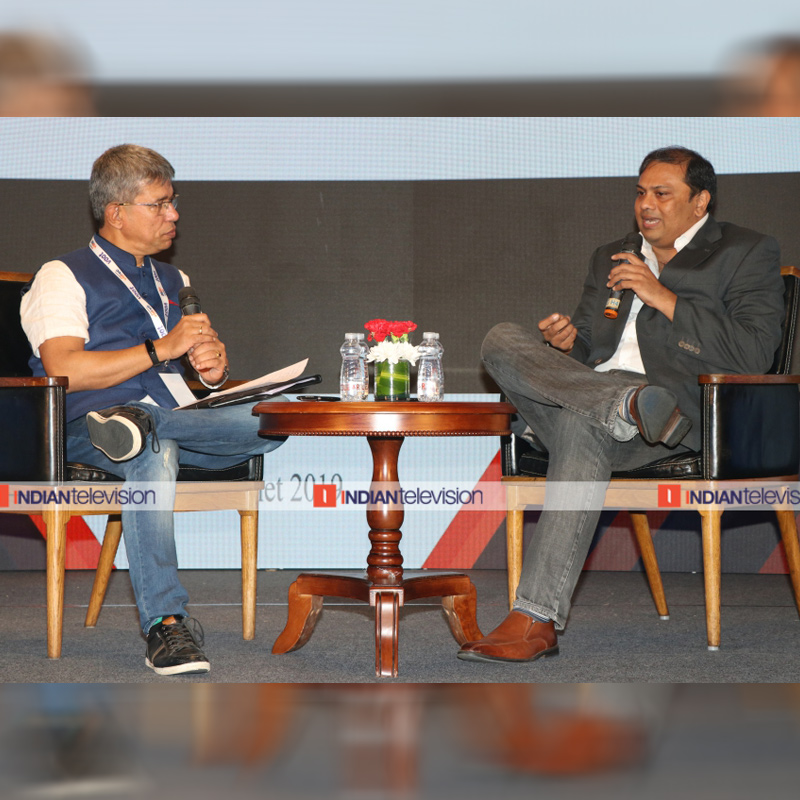
MUMBAI: Viacom18’s digital venture VOOT is set to expand the horizon of its business with new moves such as the upcoming launch of its subscription-based model in this calendar year and the full-fledged commercial launch of VOOT Kids. While it will maintain equal focus on the advertising-led platform, Viacom18 Digital Ventures COO Gourav Rakshit thinks it is an opportune time to enter the SVOD play.
At Indiantelevision.com’s Vidnet 2019, Rakshit spoke on industry issues as well as VOOT’s content strategy going forward in a candid fireside chat with Indiantelevision.com founder, CEO and editor-in-chief Anil Wanvari. Wanvari set the tone of the discussion by asking his lessons from Shaadi.com and his view on the industry as an outsider.
Rakshit said that Shaadi.com was obviously a fascinating journey for him as he gained more insights on the history of India and communities of the country. It also helped him to touch India at a very core level while they signed up about 10-15k people every day which largely represents middle-class India.
“I think from a learning point of view one of the things I can definitely bring is data science and AI models being used in match-making. They are very advanced. People talk about recommendations on OTT space. So, the order of magnitude of the algorithm on Shaadi is much higher than you have to in this space. Another thing is we ran the entire business on subscription model creating sufficient value to reach premium customers.”
However, he also shed light on the new things he had to face as he switched industries. “I did underestimate the long-gestation period of content between concept, and execution or original launch. At Shaadi.com we were one week away from the idea of execution. This industry has to think where the ball will be one year from now. So, it definitely has a layer of complexity,” he added further.
The other challenge is the supply-demand quotient. There has been a sudden burst of appetite but the growth in content creators can’t keep pace. However, he believes this is a short-term problem.
According to him, the OTT industry is still finding its footing. The industry also has to discover the right price points. “As you start to move from the extremely western psychological demographic to what we call India, then Bharat, the nature of the content that we produce and we are going to put on these platforms needs to be fundamentally different. There, I think the broadcast industry, which has sharpened over years of understanding what these consumers want, is going to have an edge both by virtue of the library of content and understanding the sensibilities of the users. In the near term, clearly, the highest disposable income is with people that have a westernised psychography,” he said.
He also added that every platform needs a centrality to its content that people want to consume and pay for. “We do daily digital soaps which are only available online and do exceedingly well. We have a base of extremely loyal people. In fact, we just concluded a season a few months ago. It is called Silsila and that had a massive fandom. So appointment-driven viewing on the internet as opposed to the only premise we are able to which is binge-watch is where we see a compelling case,” he also noted.
Rakshit noted that the one thing that digital offers but television is unable to provide is on-demand viewing. According to him, if consumers are able to choose when they want to watch something then they can choose what and how they want to watch, and then they will be looking for something which is closer to their own liking. Hence, there has to be an understanding of writing what these new-age consumers are looking for.
According to Rakshit, VOOT has an interesting content line up that is ready to hit the market. Moreover, the entry of fibre-to-home services will also help the platform at an ecosystem level. He also mentioned that as the industry progressed, the price discovery of subscription-based services would also be helpful for the platform.
Speaking on VOOT’s kids’ strategy, he said, “It’s a departure from pure-play video streaming and primarily because we recognise that the target group in that is in the age group of 4-8 years and they are not using their own phones. They are using the device of their parents with their explicit permission. As a form of engagement, we got multiple-choice questions, audiobooks sort of narrative as well as large-format books which people can read in electronic media. Our early indications are that parents like that.”