DTH
DTH segment expands its subscriber base by 1.01 mn in 2020
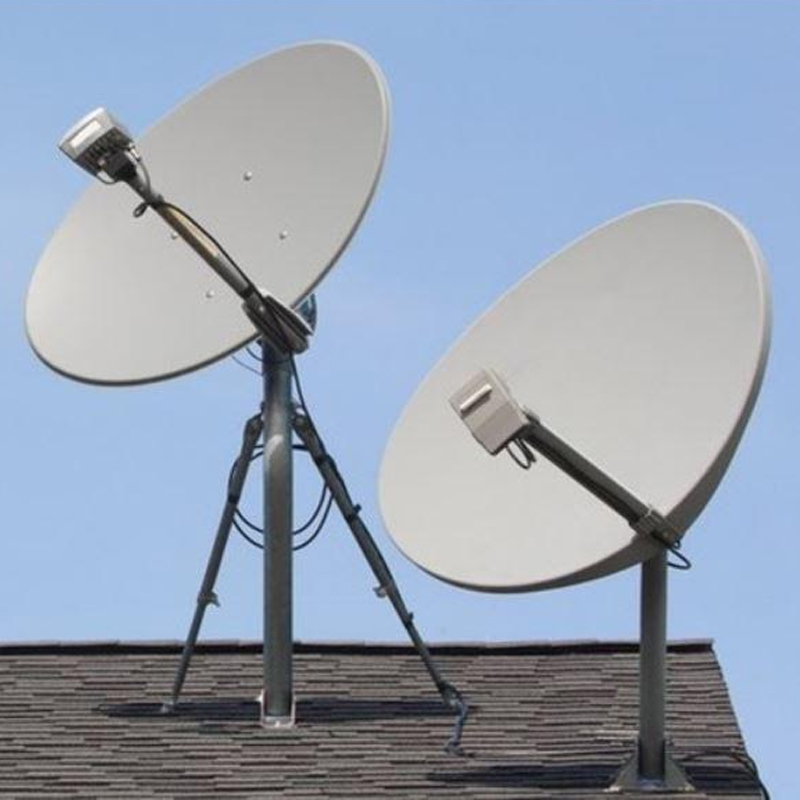
KOLKATA: The direct-to-home (DTH) subscriber base in India has reached a base of around 70.99 million in 2020, according to the Indian Telecom Services Performance Indicator Report October-December 2020 published by the Telecom Regulatory Authority of India (TRAI). This points to an addition of around one million subscribers in the year.
While the total active DTH subscriber base stands at 70.99 million as of 31 December 2020, the segment had reported a base of 69.98 million for the last quarter of 2019.
Tata Sky is leading the DTH segment with 33.03 per cent market share. It has marginally increased its market share of 32.58 per cent from July-September (2020) quarter. Airtel’s DTH arm has almost closed its gap with Dish TV with the former holding 25.17 per cent market share, and the latter gaining 25.45 per cent market share. Sun TV’s DTH arm has also improved its position with 16.35 per cent market share compared to 15.83 per cent in the previous quarter.
As on 31 December 2020, there are 1,704 MSOs registered with the ministry of information and broadcasting (MIB), as against 1,613 multi-system operators (MSO) at the end of 2019. There were 1,697 MSOs including two provisional MSOs at the end of the previous quarter. Further, TRAI data indicates that there are 12 MSOs and one HITS operator who have subscriber bases greater than one million. Siti Networks, GTPL Hathway and Hathway are the top three players in this category.
A total of 907 private satellite TV channels have been permitted by MIB for uplinking, downlinking, as on 31 December 2020. There are 326 pay TV channels including 233 SD channels and 93 HD channels and 581 free-to-air channels.
DTH
Dish TV launches ‘Kuch chhota sa’ campaign for TV flexibilit
New campaign highlights 190+ channels, Always-On service, Rs 99 Freedom Pack.
MUMBAI- Sometimes, the smallest remote click can fix the biggest daily friction and Dish TV is betting on exactly that insight. The company has rolled out a new campaign built around the thought ‘Kuch chhota sa karne par, life hogi behtar’, turning everyday viewing annoyances into a case for simpler, more reliable television access.
The campaign taps into a familiar household reality: millions of viewers continue to rely on free-to-air channels but increasingly want the flexibility of premium content, often ending up with a patchy and inconsistent viewing experience. Dish TV positions itself as the middle path—a structured yet flexible alternative that promises continuity without complexity. At its core is the pitch of an “Always-On” service, designed to keep content accessible even when recharge timelines slip, effectively reducing one of the most common friction points in DTH consumption.
To strengthen this proposition, the platform is offering access to over 190 channels, alongside a flexible pricing hook through its Freedom Pack, starting at Rs 99. The pack is positioned as a seasonal companion particularly relevant during high-engagement periods such as cricket tournaments, school holidays and festive windows, when content consumption spikes but users may not want long-term commitments.
Conceptualised by Enormous, the campaign unfolds through two master films and three short edits rooted in slice-of-life storytelling. From a husband quietly navigating around his sleeping wife to siblings striking a compromise over a coveted window seat, the narratives lean into humour and relatability rather than heavy messaging. The underlying idea remains consistent: small adjustments can meaningfully improve everyday experiences.
The rollout spans a full 360-degree media mix, including television, digital platforms, on-ground activations, point-of-sale visibility, Google Display Network placements and influencer-led content, signalling a push for both scale and contextual engagement.
As viewing habits continue to evolve in a hybrid ecosystem of free and paid content, Dish TV’s latest play reflects a broader industry shift where reliability and flexibility are increasingly positioned as differentiators, not just add-ons. In a market crowded with choice, the brand’s wager is simple: sometimes, it’s the smallest tweak that keeps audiences tuned in.