News Broadcasting
Dr S Jaishankar’s most significant interview to NDTV’s editor-in-chief Sanjay Pugalia


Mumbai: As India gears up for the grand finale of a successful G20 presidency, External Affairs minister S Jaishankar sat down for an engaging and in-depth conversation with NDTV editor-in-chief Sanjay Pugalia at NDTV’s G20 Conclave. In a room full of diplomats, foreign policy watchers and senior NDTV journalists, minister Jaishankar described India’s G20 Presidency as a game-changer. He said the country that commands respect today in the world is India. The minister added that under the leadership of prime minister Narendra Modi, India has taken G20 out of the conference rooms to the people. Dr Jaishankar expressed confidence of an outcome at the Summit.
On the latest China irritant of putting out a map claiming Aksai chin as its territory, the Minister said that this is China’s old habit. Describing the move as absurd, Dr Jaishankar said that India today is very clear about what territories it needs to defend. He reiterated that the area is an integral part of India.
In the same vein, the minister spoke of Pakistan, saying that no one invests in a ‘losing stock’. Dr Jaishankar also called the abrogation of article 370 one of the most significant achievements of the Modi Government and asked naysayers to go to Lal Chowk in Srinagar to see the difference for themselves. He hit out at previous governments for playing politics over Kashmir.

With India emerging as the voice of the Global South, the minister said that India has forwarded its agenda at G20. He said that India is the bridge between the North, South, East & West, today.
Praising PM Modi, the External Affairs minister said that he is a very curious person and has deep knowledge of global politics. He said that Prime Minister Modi’s single-line message to President Putin, that now is not the time for war, conveyed the world’s sentiment.
Dr Jaishankar described the success of Chandrayaan-3 as an example of India’s credibility and capability. He said that everyone at the BRICS Summit lauded the success as a collective achievement.
Responding to a question asked by the Australian High Commissioner to India, Mr. Phillip Green, on whether the world would go back to the times of Mahabharata and be bipolar, he said that multi-polarity is here to stay. No one country can call the shots anymore.





News Broadcasting
CNN-News18 to host Fury in the Gulf conclave on West Asia crisis
Three-hour summit to unpack geopolitical fallout and impact on India
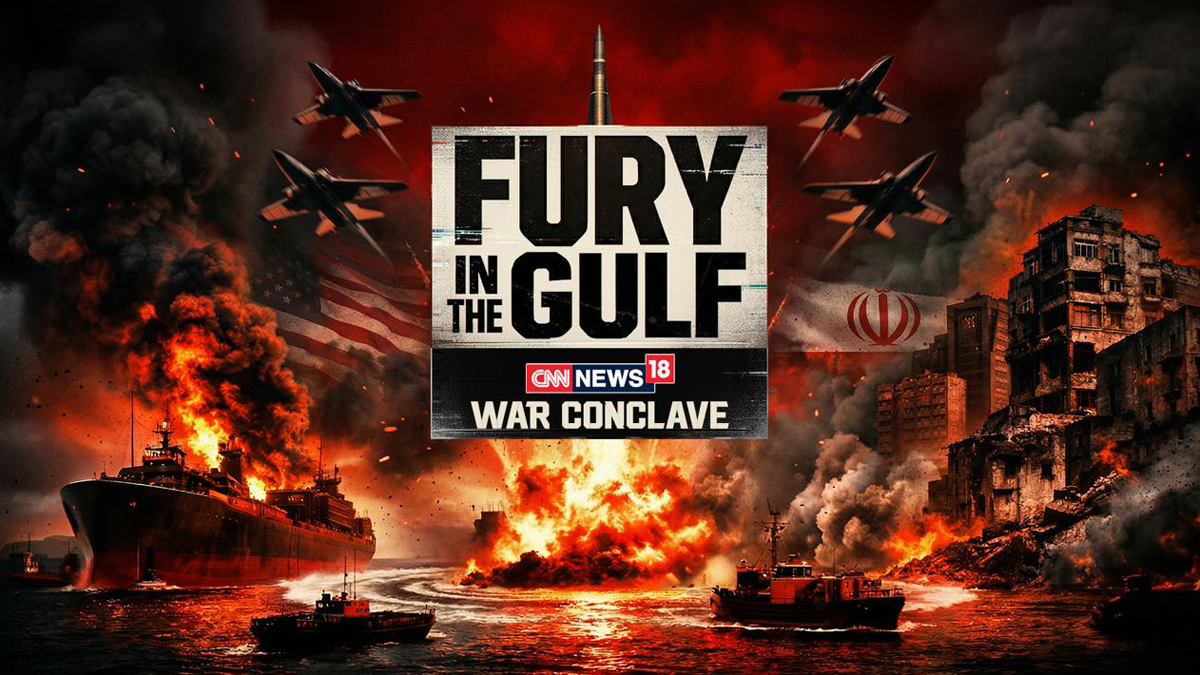
MUMBAI: CNN-News18 is set to host a special three-hour broadcast, Fury in the Gulf – War Conclave, on April 7, aiming to decode the escalating West Asia crisis and its far-reaching implications for India.
Scheduled from 4:00 PM to 7:00 PM, the conclave comes at a time when tensions between Iran and the United States are reshaping global geopolitics and triggering economic uncertainty. With India’s deep energy ties, trade links and large diaspora in the Gulf, the developments carry significant domestic relevance.
Built around the theme ‘Conflict, Consequences, and The Future,’ the programme will feature six curated sessions combining one-on-one interviews and panel discussions. The focus is to cut through the clutter and offer viewers a clearer understanding of the fast-evolving situation.
Key sessions include ‘Diplomacy in Times of War’ featuring Shashi Tharoor, and ‘World After the Iran Conflict’ with voices such as Ram Madhav, Reuven Azar, representatives from the European Union and the Iranian Deputy Envoy. Another session titled ‘Another Dunkirk?’ will bring together K. J. S. Dhillon and Jitin Prasada among others.
CNN-News18 editorial affairs director Rahul Shivshankar said, “In times of war, clarity becomes the most powerful tool. Fury in the Gulf – War Conclave brings together credible voices to address the questions and confusion that arise amid an overwhelming influx of information.”
He added that the initiative is aimed at delivering “facts, perspective, and insight” at a time when misinformation can easily cloud public understanding.
Echoing the sentiment, CNN-News18 CEO– English and business news Smriti Mehra said the conflict marks a defining global moment, with consequences that extend well beyond the region. She noted that the conclave seeks to present the crisis with “depth, nuance and responsibility” so audiences can better grasp its real-world impact.
As geopolitical tensions continue to dominate headlines, the conclave positions itself as an attempt to bring order to the noise, offering viewers a structured, insight-led look at a complex and rapidly shifting global situation.






