Connect with us

Hollywood

Disney pulls a Warner Bros, sets ‘Black Widow’ for simultaneous release

Published

on

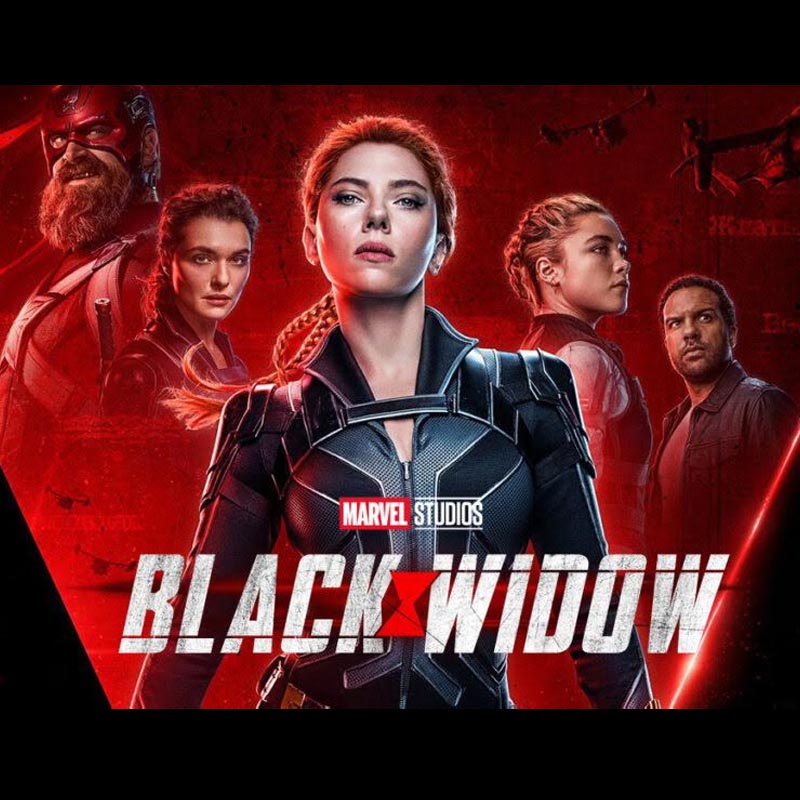
NEW DELHI: Taking a cue from rival Warner Bros, media & entertainment behemoth Disney has set its highly anticipated MCU outing Black Widow for a simultaneous release in cinema halls and on its premium streaming service, Disney+ Premier Access for an additional cost. After interminable delay due to the Covid2019 pandemic, Black Widow, which was initially supposed to come out last May, will now hit the big and small screen on 9 July.

With this announcement, Disney has also revealed its upcoming film Cruella will follow the same strategy, coming to theatres as well as Disney+ (via Premier Access) on 28 May. Also, Pixar’s animated movie Luca will now be skipping the silver screen and debut exclusively on Disney+ on 18 June.

The release dates of several other movies have also been pushed back – Ryan Reynolds-starrer Free Guy will now come to cinemas on 13 August, another MCU film Shang Chi and the Legend of the Ten Rings is set for 3 September, while The King’s Man will drop on 22 December. The Ben Affleck and Ana de Armas thriller Deep Water will now come out on 14 January 2022 instead of its August release; Death on the Nile, the film adaptation of the Agatha Christie mystery featuring an ensemble case, is coming next 11 February, instead of this September. 

Advertisement

While Marvel fans may be rejoicing at this piece of good news, the mouse house's decision to defer six of its big-ticket releases comes as a blow to cinemas, which have been struggling ever since the pandemic-induced lockdowns. Moreover, the simultaneous digital release of some of these movies will undoubtedly impact theatres in terms of ticket and concession sales, while boosting the already rising fortunes of Disney+.

Disney Media & Entertainment Distribution chairman Kareem Daniel said the move “reflects our focus on providing consumer choice and serving the evolving preferences of audiences.”

It may be recalled that last year, Disney's Mulan released exclusively on Disney+ and subscribers had to shell out an additional $30 access fee to watch it. After the fact, Walt Disney Co boss Bob Chapek had been cagey about the revenues Mulan netted, though he pronounced himself "pleased" with its performance.

Advertisement

The pandemic has forced Disney and other entertainment companies to shift gears and recalibrate their business strategies. In December 2020, to the dismay of many industry stakeholders, WarnerMedia dramatically boosted the profile of its HBO Max streaming service when it announced that 17 movies — the entire 2021 Warner Bros slate — would be available to subscribers at the same time as cinema audiences.


Click to comment

Leave a Reply

Your email address will not be published. Required fields are marked *

Hollywood

Utopai Studios partners Huace to deploy PAI for long form content

Deal includes revenue sharing as Huace adopts AI engine across global ops

Published

on

MUMBAI: Lights, camera… algorithm, the script just got a silicon co-writer. In a move that signals how storytelling itself is being re-engineered, U.S.-based Utopai Studios has partnered China’s Huace Film & TV Co. Ltd. to bring artificial general intelligence into the heart of long-form content creation.

At the centre of the deal is PAI, Utopai’s cinematic storytelling system, which Huace will deploy as a core engine across its production pipeline from development and creative iteration to global localisation. The partnership includes a large-scale annual usage commitment from Huace, alongside a usage-based revenue-sharing model, underscoring both ambition and commercial confidence on both sides.

For Huace, one of China’s largest film and television companies, the bet is not on automation alone but on scale with control. With distribution spanning over 200 countries and a presence across more than 20 international platforms, including Netflix and YouTube, the company brings a vast content ecosystem where even marginal efficiency gains can translate into significant output shifts. Its extensive TV IP library further positions it as fertile ground for AI-assisted storytelling workflows.

Advertisement

The choice of PAI follows what Huace described as a rigorous evaluation of existing AI tools, many of which remain limited to fragmented use cases such as video generation or editing. What tipped the scales, according to the company, was PAI’s ability to handle long-form narrative complexity maintaining continuity, structure, and creative coherence across entire story arcs rather than isolated clips.

Utopai, for its part, is using the partnership to anchor its international expansion strategy, pitching PAI as an enterprise-ready system built for customisation, privacy, and regulatory adaptability across markets. That positioning becomes particularly relevant as global media companies increasingly scrutinise how AI integrates into proprietary workflows.

The timing is notable. Earlier this month, Utopai upgraded PAI to support three-minute 4K video generation and advanced multi-shot sequencing features designed to tackle one of AI storytelling’s biggest hurdles: consistency across scenes.

Advertisement

What emerges is not just another tech collaboration, but a glimpse into how the grammar of filmmaking could evolve. Because if stories were once crafted frame by frame, the next chapter might just be coded scene by scene.

Continue Reading

Advertisement News18
Advertisement
Advertisement
Advertisement
Advertisement Whtasapp
Advertisement Year Enders

Indian Television Dot Com Pvt Ltd

Signup for news and special offers!

Copyright © 2026 Indian Television Dot Com PVT LTD

This will close in 10 seconds