English Entertainment
Disney Entertainment co-chairman Dana Walden outlines corp strategic vision

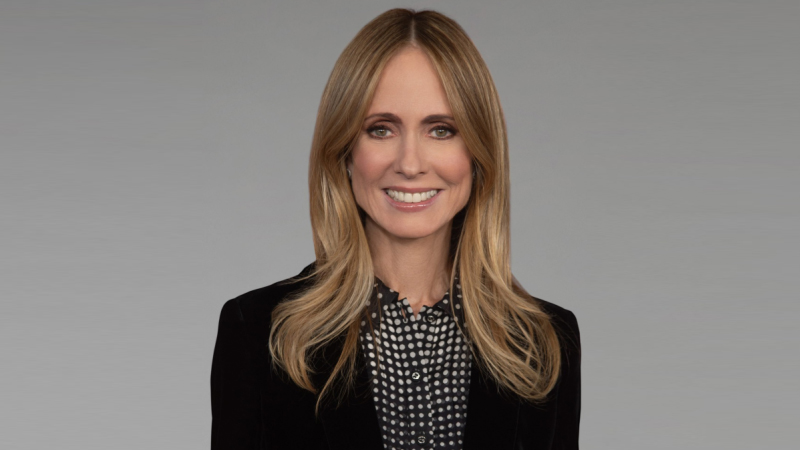
MUMBAI: Dana Walden, co-chairman of Disney Entertainment, delivered a comprehensive overview of the company’s operations and future direction at the Morgan Stanley Technology, Media & Telecom Conference on 4 March 2025, addressing key areas of investor interest including streaming profitability, content strategy, and technological innovation.
Walden explained how Disney’s restructuring under CEO Bob Iger has created a “clean structure” with three segments: Disney experiences under Josh D’Amaro, ESPN under Jimmy Pitaro, and Disney entertainment co-led by herself and Alan Bergman. Within their division, Bergman oversees film studios and branded series, whilst Walden manages global television, with joint responsibility for Disney+ and Hulu, including ad sales, technology, and platform distribution.
She emphasised that this structure has “restored the authority to creative executives” who understand “how to create stories at scale” whilst connecting “the people who approved the spending to the revenue.” Disney Studios achieved market dominance with $5.5 billion at the box office, which Walden suggested was “more than all the other studios combined, or very close.” The company also claimed half of the top ten most streamed shows of the year.
Walden highlighted a dramatic financial improvement in Disney’s streaming business, transitioning from “losing over $1 billion a quarter” to becoming “profitable, growing revenue and delivering with visibility towards double-digit margins.” She noted that Disney+ is still only five years old, emphasising the rapid pace of achievement.
The integration of Hulu on Disney+ for bundle subscribers was described as “an extraordinary value” that is “driving engagement” and “improving our churn dynamic.”
Upcoming content releases like Moana 2 (arriving on Disney+ on 12 March) will serve as “a huge event for subscribers, both in terms of acquisition and engagement,” followed by Mufasa in late March.
Disney’s creative prowess was underscored by its 60 Emmy Awards, which Walden pointed out was “more than any of our competitors ever,” whilst “the rest of the industry split the other 69 awards.”
Regarding international growth, Walden discussed the company’s investment in local content development over the past two years, citing the Korean series Moving which attracted “over 1.5 million subscribers.” She outlined a three-tiered approach: “local for local, local for regional, and global for the whole world.”
On ESPN’s upcoming direct-to-consumer service, Walden confirmed the flagship product would launch later this year with “new features that will really blow people away.” She highlighted recent additions to Disney+, including an ESPN tile with over 3,000 hours of programming and the newly launched SC+, a daily SportsCenter show that provides “a daily touch point for sports” and a “reason every day to open the app.”
In the competitive children’s entertainment space, Walden asserted Disney’s dominance in the preschool segment, with Bluey emerging as the most streamed show in the United States last year, driving “60 billion minutes of engagement on Disney+.” She acknowledged the fragmented viewing habits of older children across social media, gaming and YouTube, noting Disney’s “meaningful and great partnership with YouTube” where they produce “thousands of videos” with Disney Junior having “22 million subscribers.”
Walden revealed that Disney is developing technology features that will “specifically address how kids are interacting with content right now in a very contemporary way,” whilst also highlighting the success of Disney Playtime, a linear-style channel that helps “introduce this young audience to multiple franchises.”
On technology, Walden countered the notion that Disney needs to become a great technology company, asserting “Disney is a great technology company and a great storytelling company,” citing the Imagineers’ work in parks, Pixar’s production innovations, and the acquisition of BamTech. She highlighted key technology hires including Adam Smith from YouTube as Head of Technology and Andre Rohe from YouTube and Meta as Head of Engineering, who are focused on “algorithmic programming and personalization, deploying AI across all of our services.”
Walden identified advertising as “absolutely a growth area,” leveraging Hulu’s position as “the original ad solutions partner on streaming video.” She touted Disney’s technological advantages in “automation, programmatic targeting, the ability to work with the biggest DSPs to share data in a clean room,” claiming Disney is “significantly ahead of our competitors in this space.”
Concluding her remarks, Walden expressed confidence in Disney’s leadership team, describing the company as being in “incredibly good hands” under CEO Bob Iger, with “a small leadership team who deliver so much value” and “excellent” company culture.