Cable TV
Dentsu survey estimates economic impact in Japan from Fifa World Cup


MUMBAI: Just how huge soccer is in Japan can be gauged from this piece of news! Dentsu president Tateo Mataki has announced the results of an independent quantitative survey conducted by its Center For Consumer Studies (CCS) regarding the impact of the 2006 Fifa World Cup Germany to be held from 9 June to – 9 July, 2006 on Japan’s domestic consumer economy.
In addition to further stimulating already buoyant sales of DVD recorders and thin-screen televisions, which are making deep inroads into the household market, the event is strongly expected to provide a broad-based economic impact in Japan across many areas of the economy including manufacture of parts and components, distribution and service industries.
According to the survey estimates, the event will directly bolster household consumer expenditures in Japan by ¥ 224.1 billion ($ 1.95 billion), including ¥ 93.1 billion spent on such digital consumer appliances and services as thin-screen televisions, DVD recorders, personal computers, and subscription-based BS/CS broadcasting services. The impact on expenditures for food and beverage is estimated at ¥ 41.4 billion, while spending on related goods is expected to increase by ¥ 42.7 billion.

If the Japanese national team were to make it through to the semi-finals or final, the excitement induced across the entire country would further magnify the economic impact. In such a case, the total economic impact would grow to ¥ 546.1 billion, or ¥ 70.2 billion more than otherwise.
Although a direct comparison with this year’s tournament and other sporting events is not possible owing to the different host countries involved and changes in calculation methodology, Dentsu and Institutes For Social Engineering jointly produced estimates of the economic impact from the 2002 Fifa World Cup which was held in Korea and Japan.
According to those estimates, domestic consumption was bolstered by ¥ 848 billion including ¥ 705 billion in household consumer expenditures. The total economic impact induced by tournament-related consumption was estimated at ¥ 1,864.0 billion in 2002.







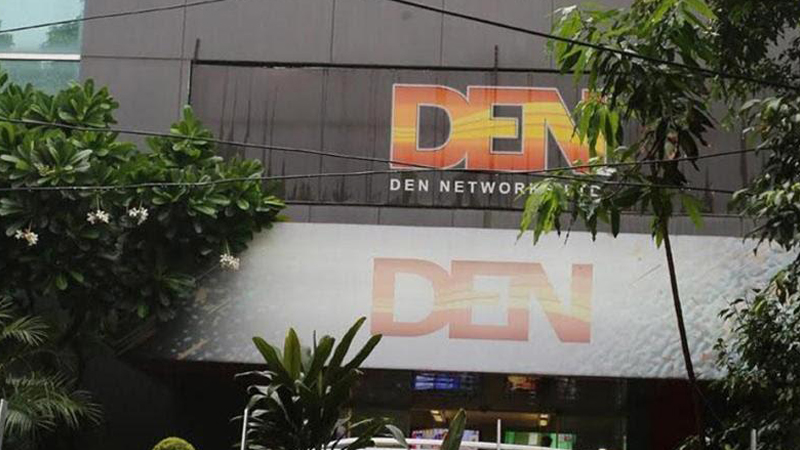
MUMBAI: When margins wobble, liquidity talks and in Q3 FY25-26, cash did most of the talking. Den Networks Limited closed the December quarter with consolidated revenue of Rs.251 crore, marginally higher than the previous quarter but down 4 per cent year-on-year, even as profitability stayed resilient on the back of strong cash reserves and disciplined cost control.
Subscription income softened to Rs.98 crore, slipping 3 per cent sequentially and 14 per cent from last year, while placement and marketing income offered some cheer, rising 15 per cent quarter-on-quarter to Rs.148 crore. Total costs climbed faster than revenue, up 7 per cent QoQ to Rs.238 crore, driven largely by higher content costs and operating expenses. As a result, EBITDA dropped sharply to Rs.13 crore from Rs.19 crore in Q2 and Rs.28 crore a year ago, pulling margins down to 5 per cent.
Yet, the bottom line refused to blink. Profit after tax stood at Rs.40 crore, up 15 per cent sequentially and only marginally lower than last year’s Rs.42 crore. A healthy Rs.57 crore in other income helped cushion operating pressure, keeping profit before tax at Rs.48 crore, broadly stable quarter-on-quarter despite the tougher cost environment.
The real headline-grabber, however, sits on the balance sheet. The company remains debt-free, with cash and cash equivalents swelling to Rs.3,279 crore as of December 31, 2025. Net worth rose to Rs.3,748 crore, while online collections accounted for 97 per cent of total receipts, underscoring strong cash discipline across operations, including subsidiaries.
In short, while Q3 showed signs of operating strain, the financial backbone remains solid. With zero gross debt, steady profits and a formidable cash war chest, the company enters the next quarter with flexibility firmly on its side proving that in uncertain markets, balance sheet strength can be the best growth strategy.







