High Court
Delhi HC quashes tax notices against Prannoy Roy & Radhika Roy, fines department Rs 2 Lakh

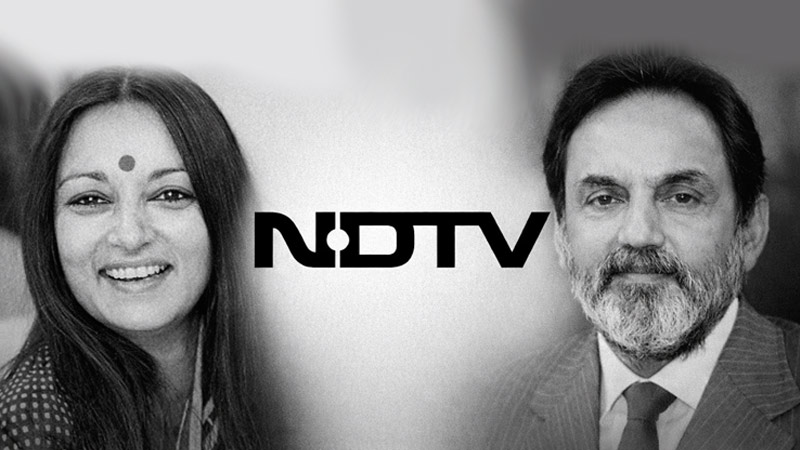
NEW DELHI: In a sharp rap on the knuckles for tax overreach, the Delhi High Court has told the Income Tax Department that it cannot keep knocking on the same door hoping for a different answer, especially when it has already been opened, inspected and firmly shut.
Quashing reassessment notices issued to veteran broadcaster Prannoy Roy and media professional Radhika Roy, the court on January 19 ruled that the tax authorities had acted without jurisdiction, reopening a settled assessment on nothing more than a change of opinion. To underline its displeasure, the court imposed a token cost of Rs 1 lakh each, Rs 2 lakh in total, on the department, payable to the Roys.
The case, like a badly written sequel, centred on Assessment Year 2009–10, an old chapter the tax department tried to reread years later.

Radhika Roy had filed her income tax return for AY 2009–10 on July 31, 2009, declaring an income of Rs 1.66 crore. The return was processed and accepted under Section 143(1), with the intimation issued on February 22, 2011.
Then came the first knock. In July 2011, the department reopened the assessment under Sections 147 and 148, citing transactions involving shares of New Delhi Television Ltd (NDTV) between the Roys and their holding company, RRPR Holding Pvt Ltd. The reassessment culminated in an order dated March 30, 2013, assessing Radhika Roy’s income at Rs 3.17 crore. This included a major addition of Rs 1.30 crore as short-term capital gains, along with smaller additions of Rs 20.74 lakh as house property income and Rs 2,750 relating to Section 80G.
Crucially, during these proceedings, the assessing officer had specifically examined interest-free loans received by the Roys from RRPR. A show-cause notice issued on March 6, 2013 proposed treating these loans as “deemed dividends” under Section 2(22)(e). After examining RRPR’s audited books, balance sheets and shareholding pattern, the officer dropped the proposal. No addition was made on this count.
Three years later, on March 31, 2016, the department reopened the same assessment yet again, issuing fresh notices under Section 148 to both Prannoy Roy and Radhika Roy. This time, the department leaned on “complaints” and an internal review of RRPR’s records, arguing that interest-free loans given to the Roys should be taxed as “deemed income” under Section 2(24)(iv).
The figures were hefty. RRPR had borrowed Rs 375 crore from ICICI Bank in October 2008 at an interest rate of 19 per cent per annum. From this loan, it extended interest-free advances of Rs 20.92 crore to Prannoy Roy and Rs 71 crore to Radhika Roy. According to the department, RRPR suffered interest costs of nearly Rs 35 crore in that year, and an estimated Rs 6.79 crore of “benefit” had accrued to Radhika Roy alone due to non-charging of interest.
A bench of justices Dinesh Mehta and Vinod Kumar held that the so-called “new information” was neither new nor hidden. The interest-free loans were already disclosed, examined and consciously accepted during the earlier reassessment proceedings.
“Section 147/148 powers are an exception, not a licence for repeated harassment,” the court observed, noting that the same transaction cannot be reopened merely because a different officer believes another legal provision should have been applied.
Calling Sections 2(22)(e) and 2(24)(iv) “two sides of the same coin”, the court said the department had every opportunity in 2013 to tax the alleged benefit if it believed it was taxable. Revisiting the issue years later was nothing but a change of opinion, a settled no-go zone in tax law.
The court also rejected the department’s attempt to invoke the extended six-year limitation period by alleging failure to disclose material facts. The Roys, it said, had disclosed all primary facts, including RRPR’s audited accounts, which explicitly recorded the interest-free loans. Drawing on Supreme Court precedents, the bench reiterated that an assessee is not required to disclose inferences or help the tax officer draw conclusions.
Allowing both writ petitions, the High Court quashed the 2016 notices and all consequential proceedings. While noting that “no amount of cost can be treated enough” for such cases, it imposed Rs 1 lakh as cost in each petition, a symbolic but pointed message.
Beyond the Roys, the ruling sends a wider signal. Reassessment powers are not a rewind button. Once the taxman has examined the facts, applied his mind and passed an order, he cannot keep returning with fresh labels for the same transaction.
In short, the court told the department to stop re-editing old tapes, especially when the credits have already rolled.







High Court
Delhi HC blocks illegal IPL 2026 streams, backs JioStar rights
Court orders swift takedowns, expands crackdown on piracy apps

NEW DELHI: In a timely move ahead of the cricketing season, the Delhi High Court has granted interim relief to JioStar India Private Limited, clamping down on illegal streaming of the TATA Indian Premier League 2026.
The court passed ex parte ad interim injunctions in two separate suits, restraining rogue websites and mobile applications from broadcasting IPL matches without authorisation. The tournament is set to begin on 28 March, making the timing of the order particularly significant.
Recognising JioStar’s exclusive digital and broadcast rights for the IPL cycle from 2023 to 2027, the court observed that unauthorised streaming would infringe its statutory and proprietary rights, potentially causing irreparable losses.
In one case, the court directed several identified websites to immediately stop hosting or streaming IPL content. It also issued a dynamic injunction, allowing JioStar to flag new infringing platforms in real time, which must then be blocked swiftly by domain registrars and internet service providers.
In a parallel order, the court turned its attention to piracy through mobile apps, particularly Android-based platforms distributing content via APK files. A broader dynamic+ injunction was granted, extending to future variants, mirror links and related interfaces, signalling a tougher stance on evolving piracy tactics.
The court also directed domain name registrars to suspend offending domains and share registrant details, including KYC and payment information. Internet service providers and telecom operators have been instructed to block access within strict timelines, in some instances within 36 hours. Both the Department of Telecommunications and the Ministry of Electronics and Information Technology have been asked to facilitate enforcement through necessary notifications.
Noting the fast-changing nature of digital piracy, the court emphasised the need for real-time enforcement tools to keep pace with anonymous and constantly shifting networks. It also underlined the commercial impact of piracy on legitimate rights holders.
The ruling reinforces the judiciary’s firm stance on protecting intellectual property in the digital age. For viewers, it is a reminder to stick to official platforms as the IPL season kicks off under tighter watch.






