Cable TV
DAS Phase III stayed in 5 states including Maharashtra as Bombay HC issues restraining order

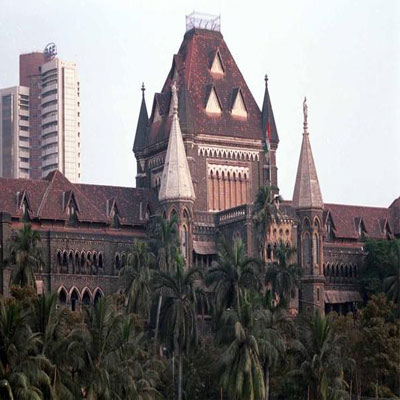
NEW DELHI: Maharashtra has become the fifth state to join the group of states, which have obtained a High Court restraint on the implementation of digital addressable system (DAS) Phase III.
The Bombay High Court cited a Supreme Court judgment and noted that a stay granted by a high court on a central notification in one state would be applicable in other states as well.
The Hyderabad High Court and the Sikkim High Court have already granted stay on implementation of DAS Phase III primarily on the ground of shortage of set top boxes (STBs). In addition, the implementation of DAS in Tamil Nadu remains stayed after a bunch of petitions were admitted from Phase I onwards by the Madras High Court.
The Hyderabad stay is for eight weeks in both Andhra Pradesh and Telangana, and the Sikkim stay is till 28 March, which is the next date of hearing.
Justice R D Dhanuka of the Bombay High Court said the Court will hear the matter on 1 February and gave the Government time to file its reply.
Citing shortage of seeding of STBs as well as problems in interconnect agreements (ICA), petitioner Nashik Zilla Cable Operator Association (NZCOA) presented copies of the stay orders by other High Courts. Other petitioners were City Cable Operator Association of Nashik and Sai Big Star Welfare Association of Jogeshwari, Mumbai.
Legal experts told Indiantelevision.com that while the Bombay High Court could use the precedent of other courts and direct a stay, this would only apply to areas under its jurisdiction and not pan-India.
Earlier on 23 December, 2015 a bench of the same Court had refused to extend the deadline and held that interim agreements could be entered into until the Telecom Regulatory Authority of India (TRAI) comes out with a model ICA.
TRAI has already issued a Consultation Paper on the subject and hopes to finalise a model ICA by mid-January, TRAI sources told this website.
The extension of DAS does not augur well for the Information and Broadcasting Ministry, which may see a catapulting of such cases as reports pour of just over 50 per cent of seeding of STBs.
In most cases, the Courts turned down a plea by TRAI to be impleaded though it was permitted to file applications for this purpose.
The directive by the Hyderabad High Court was notable in that Justice Vilas V Afzalpurkar went against an order given by a division bench of which he was a member in the same court relating to Phase III on 20 August, 2013.
As reported earlier, the Maharashtra Cable Operators Federation had also expressed difficulties in the 13th Task Force meeting held on the eve of the switch-off and had in fact said that seeding pan-India was less than 50 per cent even as the government claimed 76 per cent seeding and said the percentage achievement was 86.25 if Tamil Nadu that has some legal and other issues is excluded. The meeting was told there were only 405 zero seeding areas till the last report.
The first phase of digitisation covered four metro, Mumbai, New Delhi, Kolkata and Chennai. In the second phase 38 cities were covered with population more than one million. About 630 districts and 7709 urban areas will be covered in DAS Phase III aimed at all urban areas while the fourth phase by 31 December, 2016, this year will cover the rest of the country.