Applications
CRM gets chatty as Expedify plugs AI into the sales script

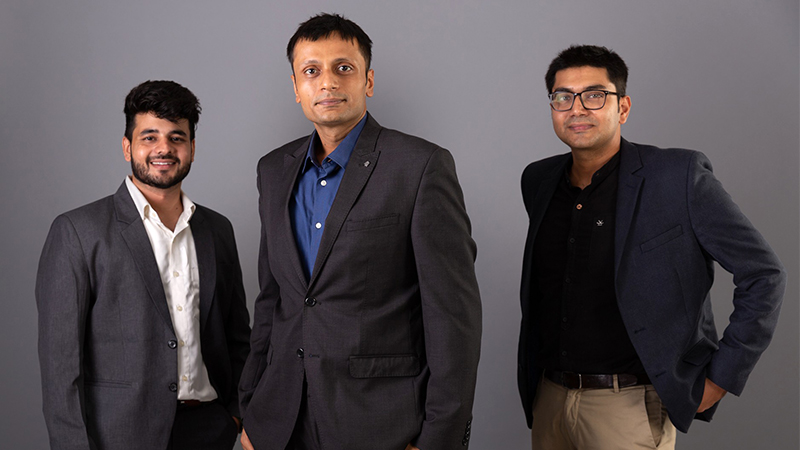
MUMBAI: Who needs dashboards when your CRM talks, thinks and works like a teammate? Expedify, the conversation-first platform that wants to make CRM feel more like collaboration than chore, has just launched what it claims is India’s first truly agentic, AI-native CRM. Designed to function more like a human team member than a data dump, the system uses built-in voice and chat agents to hold natural, real-time conversations across sales, marketing and service.
Instead of humans endlessly toggling between spreadsheets and dashboards, Expedify flips the script: its AI agents do the calling, following-up, qualifying, scheduling, analysing and even launching campaigns all through a unified conversational interface across WhatsApp, voice, email and web.
“This isn’t another tool you have to babysit,” said Expedify CEO and founder Shashank Shekhar Sharma. “It’s an intelligent teammate that thinks and talks in context, helping your team act faster and smarter without the usual drag of legacy CRMs.”

Here’s what sets it apart:
1 Lead qualification kicks off within 30 seconds of form submission.
2 An AI Analyst delivers on-demand insights without dashboard deep dives.
3 Multichannel campaigns across WhatsApp, email and voice can be launched without ever switching tabs.
4 Teams can chat with the CRM itself to ask questions, trigger actions or close deals no dashboards needed.
Expedify’s edge lies in its omnichannel default. Whether it’s a Whatsapp message, voice call, email or SMS, everything runs off a single rule engine and every customer interaction reflects back into the CRM automatically. For sectors like BFSI, edtech, real estate and retail, the tool dramatically reduces response time while ramping up personalisation.
Setup takes just 30 minutes, making it plug-and-play even for lean teams. It also undercuts traditional enterprise CRM pricing with a freemium model and premium tiers starting at 19 dollar/month (Growth) and 200 dollar/month (Teams) for up to 10 users.
Already in use across fintech, healthcare and edtech brands in India and Southeast Asia, Expedify is continuing to expand its AI agent library. The platform’s goal? To automate not just data but decisions so that sales teams can stop searching for insights and start acting on them.
With its eyes set on redefining post-sale engagement, Expedify might just be the CRM that finally talks the talk and walks the walk.





Applications
With 57 per cent single new users, Ashley Madison rebrands as discreet dating platform
Platform says majority of new members now identify as single

INDIA: Ashley Madison is shedding the “married-dating” label that defined it for two decades, repositioning itself as a platform for discreet dating in what it calls the post-social media age.
The rebrand, unveiled in India on 27 February, 2026, marks a structural shift in business model and identity. Once synonymous with married dating, the company now describes itself as the “premier destination for discreet dating” under a new tagline: Where Desire Meets Discretion.
The pivot is data-driven. Internal figures show that 57 per cent of global sign-ups between 1 January and 31 December, 2025 identified as single: a notable departure from the platform’s married core. The company argues that its community has already evolved beyond its original positioning.
“In an age where our lives have been constantly put on public display, privacy has become the new luxury,” said Ashley Madison chief strategy officer Paul Keable. He framed the platform’s offering as “ethical discretion” for singles, separated, divorced and non-monogamous users seeking private connections.
The shift also taps into wider digital fatigue. A global survey conducted by YouGov for Ashley Madison, covering 13,071 adults across Australia, Brazil, Canada, Germany, India, Italy, Mexico, Spain, Switzerland, the UK and the US, found mounting discomfort with hyper-public online lives.
Among dating app users, 30 per cent cited constant swiping and messaging as a source of fatigue, while 24 per cent pointed to pressure to curate public-facing profiles and early personal disclosure. Some 27 per cent said fears of screenshots or information being shared contributed to exhaustion; an equal share cited unwanted attention.
The retreat from oversharing appears broader. According to the survey, 46 per cent of adults actively try to keep most aspects of their life private online. Only 8 per cent feel comfortable sharing most aspects publicly, while 35 per cent say they are becoming more selective about what they disclose.
Ashley Madison is betting that this cultural recalibration towards controlled visibility can be monetised. By doubling down on privacy infrastructure and reframing itself around discretion rather than infidelity, the company is attempting to convert reputational baggage into a premium proposition.








