iWorld
Crime meets comedy in Amazon miniTV’s ‘Constable Girpade’


Mumbai: Amazon miniTV, a free video streaming service from Amazon, unveiled the trailer of its latest cop-comedy drama, Constable Girpade, created by award-winning writer-director, Saad Khan. The trailer gives an insight into Constable Girpade’s thrilling journey filled with twists, turns and laughter that will certainly keep viewers on the edge of their seats. The series brings together an ensemble cast including Khushaal Pawar, Neel Salkar, Vrajesh Hirjee, Gaurav Gera, Muskan Bamne, Dr. Sanket Bhosale and Chandni in pivotal roles.
Constable Girpade (Khushaal Pawar) and Phenyl Mohan (Gaurav Gera), the master of disguise, engage in a cat-and-mouse game throughout the series, which is filled with humorous moments and adventure. The trailer gives a glimpse of the hilarious characters in the series, ready to take viewers on an adventure, solving the wildest cases dealing with complex and unpredictable rich folks. Girpade is caught in the middle of all the drama while attempting to catch Phenyl Mohan, fulfill his obligations, and confess his love.
Produced by FirstAction Studios (a Rainshine Entertainment company), Constable Girpade explores the contrasting tones of Mumbai with complex crime cases that come to a shocking conclusion in the end, leaving viewers in splits. Keeping up with crime-solving elements, the series will leave viewers to ponder upon what is right and what is wrong! Get ready to tickle your bones with whodunit mysteries and solve intricate cases with Constable Girpade.

Amazon miniTV head of content Amogh Dusad sharing his thoughts about the series, said, “Constable Girpade is a perfect cop-comedy drama that has the perfect balance of investigations laced with humor, led by Khushaal Pawar as he prepares to win over audiences with his endearing portrayal of Girpade! Saad and his team have done a brilliant job of bringing together an ensemble that is definitely going to give audiences a laughter riot!”
Rainshine Entertainment (India) CEO Anuraag Srivastava said, “We’re delighted to join forces with Amazon miniTV for ‘Constable Girpade’. FirstAction studios at Rainshine has consistently captivated audiences with young and contemporary content, and this series is a testament to that. With its intriguing plot, ‘Constable Girpade’ promises a roller-coaster of laughter and suspense that will leave viewers wanting more.”







iWorld
Mark Zuckerberg’s sharp advice on employee retention goes viral
“Treat your employees right, so they won’t use your Internet to search for a new job.”
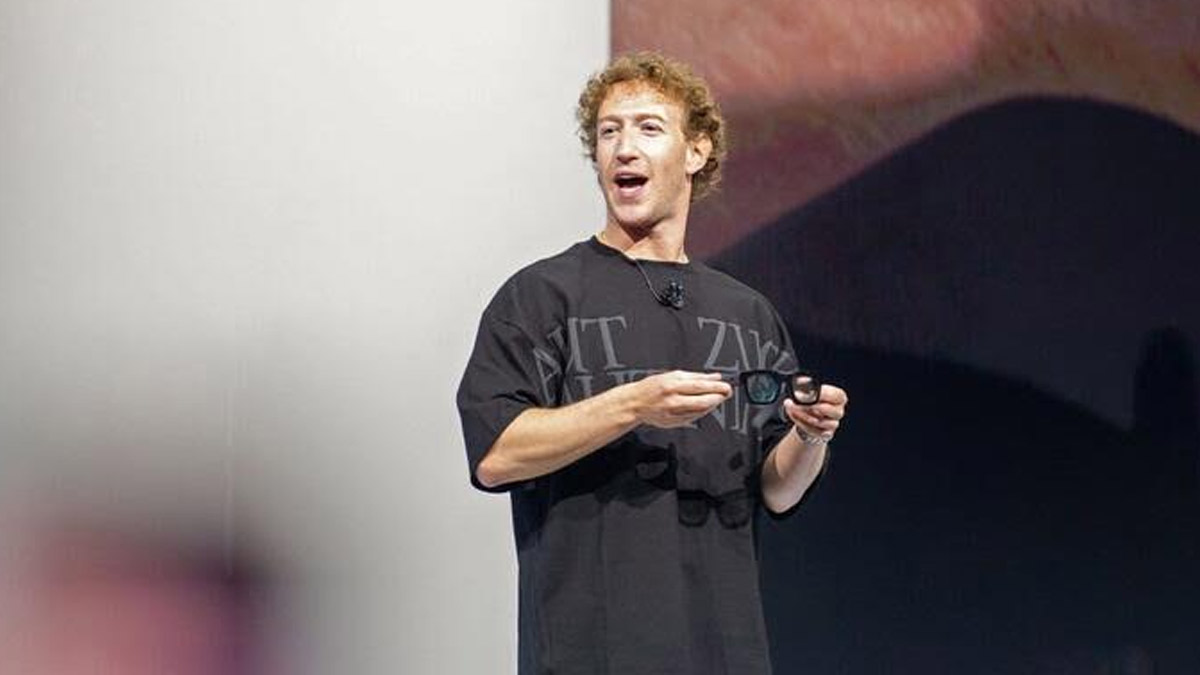
MUMBAI: When your employees start browsing job sites on company Wi-Fi, it might be time to check the office culture not the bandwidth. A candid one-liner from Meta CEO Mark Zuckerberg is making waves once again for its blunt take on modern workplaces and the challenge of keeping talent happy.
“Treat your employees right, so they won’t use your Internet to search for a new job,” Zuckerberg reportedly said. While delivered with a light touch, the remark highlights a serious shift in today’s job market with opportunities just a few clicks away, employee dissatisfaction can quickly turn into quiet job hunting.
The comment comes amid widespread restructuring, automation, and layoffs across industries, which have added to employee uncertainty. According to Gallup’s State of the Global Workplace 2025 report, half of employees worldwide are actively looking for new jobs, pointing to deep levels of disengagement.
At its heart, Zuckerberg’s observation delivers a simple truth: employees who feel respected, supported, and valued are far less likely to start scrolling through LinkedIn during work hours. Today’s workforce increasingly prioritises factors beyond salary such as work culture, flexibility, growth opportunities, and recognition. When these are missing, disengagement builds silently.
The quote also reflects how job searches have become discreet. Many employees continue working normally while quietly exploring other options, making it harder for companies to spot early warning signs of attrition.
Zuckerberg’s remark serves as a timely reminder that retaining talent is no longer just about preventing exits, it’s about creating an environment where people genuinely don’t feel the need to leave.
In an era where the next opportunity is only a tab away, smart companies are realising that the best retention strategy might just be treating people so well that they never feel tempted to look elsewhere.






