eNews
Creators in M&E industry can’t substitute storytelling with technology: Experts at Pearl Academy’s Portfolio 2022

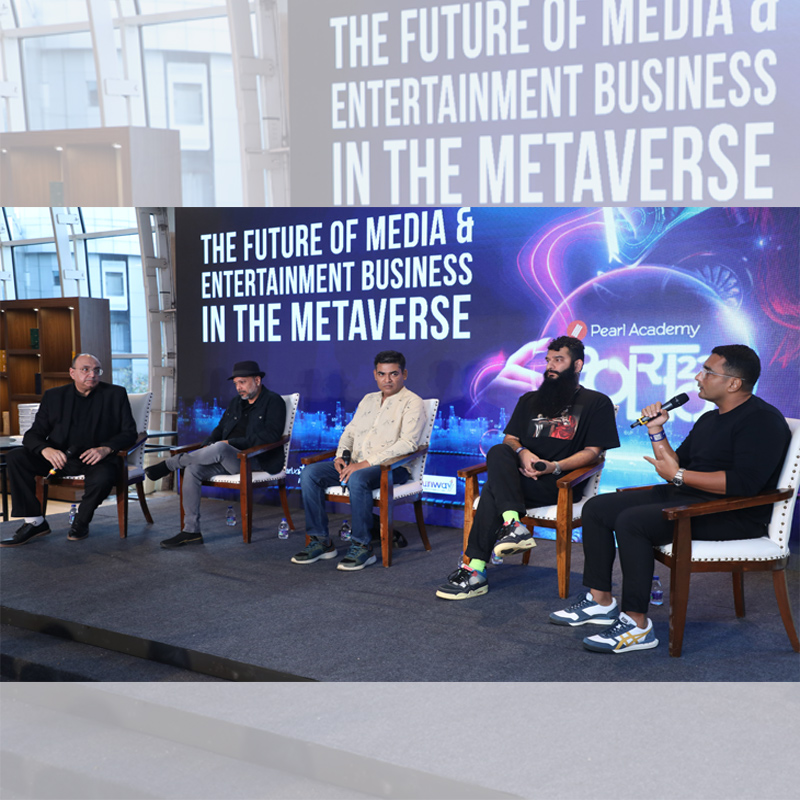
Mumbai: At Pearl Academy’s Portfolio 2022, experts from the world of advertising, media, cinema and entertainment decoded the future of these industries in the metaverse during a panel discussion. The panelists for this discussion were Ogilvy chief creative officer Sukesh Nayak; director, producer Aakash Bhatia; director of the film “Bheja Fry” Sagar Ballary and film producer Vivek Agrawal. The session was moderated by Pearl Academy dean, School of Contemporary Media Viveck Vaswani.
Commenting on the role of technology in these industries, Nayak said, “Technologies like Metaverse allow you to be braver in exploring different possibilities however stories and storytelling remain the key since there’ll not be any magic if the stories don’t mean anything.”
“Content creators and artists in these industries cannot substitute storytelling with technology. You can dream bigger with technology, but it should not make you complacent,” said Agrawal.
On being asked, what should millennials who want to join these industries be taught, Ballary said, “Art is the medium supported by science or technology therefore a beautiful balance between the two is required. Technology should be used as a tool to correct the art and not actually create it. Besides technology, gravitas and patience are important to be able to work on the art.”
“One thing that technology has allowed is for people to watch more content and has given them multiple viewing canvases. However, the usability of technology is on us as anything that moves you forward can take you backwards too,” opined director and producer Aakash Bhatia.
Portfolio 2022, which provided the platform for this panel discussion, is an annual event that showcases students’ projects by Pearl Academy that sits at the intersection of technology and creativity.