iWorld
Country branding on Twitter

MUMBAI: There is scope for country branding on Twitter. Only nine governments out of the 193 UN member states own their country name Twitter handle.
@GreatBritain, @Israel, and @Sweden are notable examples of nations promoting themselves on Twitter. @GreatBritain is part of the ‘Britain is Great’ campaign launched in March 2012 to highlight everything that is great about the UK. The country marketing campaign, led by a central team at Number10 involves UK Trade & Investment, VisitBritain,
the national tourism agency, Foreign & Commonwealth Office and the British Council.
The @GreatBritain account, which only has 4,021 followers, is just one small part of the overall campaign which ran in 17 cities around the world and which has attracted more than 835,000 likes on its 13 different Facebook pages.
The account tweets about everything that is great about Britain, from Team GB’s success at the London Olympics, to investment in the UK and great sites to visit in the UK. Its most popular tweet was about Prime Minister David Cameron’s favourite music, sent on 14 May 2012 and retweeted 166 times: “The Prime Minister has chosen his favourite album of all time. It’s The Dark Side of the Moon by Pink Floyd! #Music is #GREATBritain”.
@Israel is the country’s official Twitter channel, maintained by the Foreign Ministry’s Digital Diplomacy Team. The account is one of the most followed country accounts with more than 66,000 followers and serves as the focal point for Israel’s government Twitter activity.
The Swedish government has given its official Twitter handle to the people. Every week another Swede is in charge of the @Sweden account sharing recommendations, opinions and facts about life in Sweden with over 65,000 followers. The Curators of Sweden project was launched in December 2011 and, despite some unfortunate tweets, has been copied
with varying success by @Ireland and @NewZealand. The project has also inspired volunteer groups in over 20 countries to engage in what has become known as the rotation-curation movement.
The Twitter accounts of @AntiguaBarbuda, @Barbados, @Lithuania, the @Maldives, @SouthAfrica, and @Spain are run by their respective official tourism organisations to promote tourism in each country.
However, three out of five country accounts are either protected, dormant, inactive, or suspended and almost half of the 71 remaining active accounts are tweeting an automated news feed broadcasting news about the country.
These details were provided by Burson-Marsteller in the second installment of its Twiplomacy study (http://twiplomacy.com), looking specifically at country branding on Twitter.
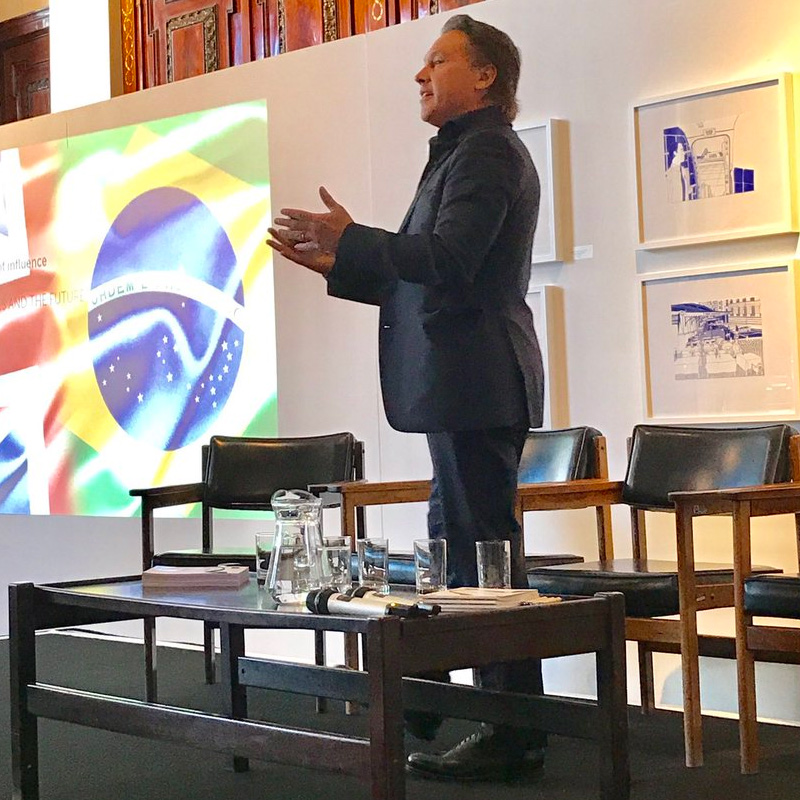
Burson-Marsteller EMEA Digital Practice head Matthias Lüfkens said, “Looking at the findings it becomes clear that few governments and tourism organisations have understood the power of country branding and marketing on Twitter. There is a huge opportunity for countries to use Twitter as part of their communications to engage with a large and
growing audience.”
Data used was taken in November 2012 looking at the Twitter handles of the 193 UN member countries. Burson-Marsteller used Twitonomy (http://twitonomy.com) to analyze tweeting patterns and the Twitter history of each account.