Cable TV
Convergence, consolidation & collaboration to fuel growth of cable, broadcast & OTT sectors

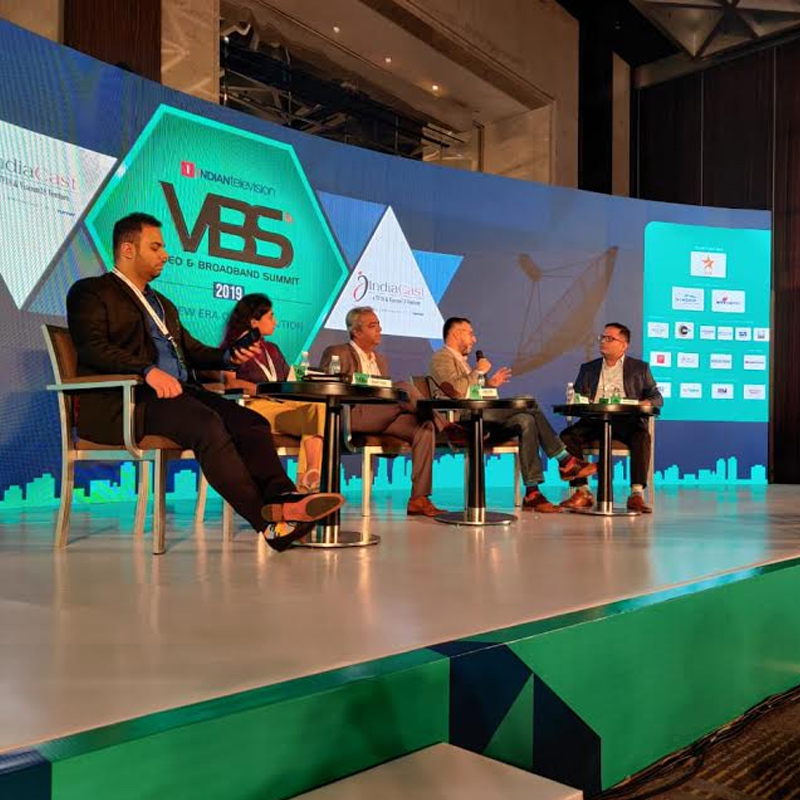
MUMBAI: In 2019, the Indian cable, broadcast and OTT industry witnessed many fundamental changes from digital dynamics to behavioural change of broadcasters moving from B2B to B2C model to industry stakeholders adjusting to the new tariff order (NTO). Indiantelevision.com’s VBS 2019 provided a platform to the industry experts to discuss and address the key issues faced them. Industry doyens revealed that convergence, consolidation and collaboration are the three 'C's to fuel the growth of the industry.
VBS 2019’s panel discussions on ‘Transforming the sector to fuel growth’ included Elara Capital VP-research analyst Karan Taurani, Shemaroo Entertainment chief operating officer Kranti Gada, BBC Global News South Asia distribution head Sunil Joshi, PwC India partner and leader- media, entertainment Raman Kalra along with moderator SBICAP Securities equity research head Rajiv Sharma.
Sharma set the tone of the discussion by briefing the audience on the major issues faced by the industry's stakeholders like cable, DTH, broadcasters, OTT, consumers and regulators in 2019.
Kalra said, “We have been talking about convergence for a very long time and consolidation will keep on happening if we are willing to provide relevancy to the consumer. In the entertainment media space it is important to find a model which is relevant at scale. But how do you make relevant at scale? The relevancy for scale will trigger the consolidation because it leverages number on the financial statements and on the balance sheets of the company. It brings about so many synergies to the business models to run profitable, long term and sustainable business.”
Taurani shared his view on consolidation in the cable space. He said, “Firstly it is important to highlight that business dynamics are changing completely. Broadcasters have been used to the B2B model since inception but now we are moving to B2C kind of a model. Basically everyone is well aware that if we really want to move to next level on digital, scalability is a very big factor and OTT platforms just offering about 10, 15, 20 movies will not help. So, to achieve that scale we need to invest in content. Apart from driving the partnership with other DTH cos or MSOs, achieving the scale on the digital part is needed. So I think it would take some more for them to understand the market and move to the next level.”
Gada believes it is a great time for the media industry. With the emergence of OTT, the industry has added one and a half hours of screen time on digital front along with the television screen. Therefore the engagement of the end consumer with the content or with media or films has increased multifold.
Gada says, “With deep-pocketed players cost goes haywire because short-term profitability is not their outlook, maybe their content is not their mainstay investment. It is sometimes just for consumer stickiness."
Joshi said that convergence is the mantra of the day. “We have broadcasters, DTH, cable, OTT, consumers and a regulator who are the stakeholders of the value chain. If we look at post NTO and market dynamics, OTT is being discussed so widely because of its crispness and on-point approach to the consumers. Most of the broadcasters have direct consumer reach on their OTT to take care of and keep the stickiness on the linear also both compliments.”
“Going forward, television needs to learn from OTT on what is been offered. So that on a quality level, both competes and at the operational level both collaborate. We have seen the collaboration of distribution platform and OTT because of their synergy and potential to exploit the potential consumers. Though they are competing at some level they are collaborating as well,” added Joshi.
The panellists also elaborated on the digital monetisation model. They believe that there are three ways to monetise on digital platforms. The first is the business model, second is consumer centricity and third is the experience. Consumer centricity focuses on investing in knowing consumers. The second point of experience focuses on delivering the right experience. With respect to the business model, one has to experiment with multiple business models.
The panellists also dwelled on the importance of the subscription model as AVOD does not lead to profitability because of the delivery cost, customer acquisition cost etc.
Stating an example of TataSky's binge initiative, Gada urged MSOs to become digital distributors and come up with aggregated and discounted offering for the consumer and make it convenient for those who are struggling with five to eight OTT apps. Gada asked MSOs to apply similar principles they used to offer TV channels to come up with bouquets of digital channels.
The panel also highlighted the surge in term of telcos spending towards OTT. The new emerging game-changers today are e-commerce, smart TV and VMC.
Sixty per cent of the money on digital advertising spent between Facebook and Google network. But now that is changing and the share is moving more towards OTT. The panel discussion ended on a positive note expecting that share of digital advertising will be 20-30 per cent whereas video advertising will be 40 per cent plus.