Hollywood
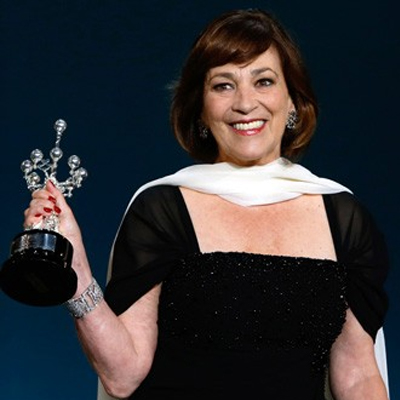
Carmen Maura gets Lifetime Award at San Sebastian Filmfest
NEW DELHI: Actress Carmen Maura has been presented with the Donostia Award at the 61st San Sebastian Film Festival.
The event which was held in Spain presented pays tributes to the ones with an outstanding professional careers in Spanish cinema in the last few decades.
The actress received her lifetime achievement award during the out-of-competition Official Selection presentation of her latest participation, Las brujas de Zugarramurdi directed by Álex de la Iglesia.
Las brujas de Zugarramurdi is a delirious frenetic comedy featuring three desperate men who hold up a gold-buyers shop in the Puerta del Sol and then make a madcap getaway heading for Disneyland accompanied by the son of one of them. However, at the French border, they fall into the hands of some Basque witches who keep up the age-old custom of practising witchcraft and making fun of men. The film is the third time that Carmen Maura has worked with Álex de la Iglesia after her performances in La comunidad (Common Wealth, 2000), which won the actress the Silver Shell at the San Sebastián Film Festival, and 800 balas (800 Bullets, 2002). The cast of the film is completed by Hugo Silva, Mario Casas, Jaime Ordó?ez, Macarena Gómez, Carolina Bang and Terele Pávez.
Maura was born in Madrid and started out as an actress in the theatre and small roles on television & films. She shot to fame thanks to the programme on TVE, Esta noche, directed by Fernando García Tola.
Among the numerous acknowledgements that she has received throughout her career, Maura has won four Goya Awards (for Mujeres al borde de un ataque de nervios, ?Ay Carmela!, La comunidad and Volver), the Best Actress Award at the Cannes Film Festival (for Volver), the Best Actress Award at the Venice Film Festival (for Mujeres al borde de un ataque de nervios), a nomination for the César for Best Actress (for Le bonheur est dans le pré), a César Award for Best Supporting Actress (for Les femmes du 6?me étage) and two European Film Academy Awards (for Mujeres al borde de un ataque de nervios and ?Ay, Carmela!). She has also received the Film Academy Gold Medal, the Gold Medal for Merit in Fine Arts and the Knight of Honour Medal of the Order of Arts and Letters of France.
The San Sebastian Festival commenced on 20 September with the opening gala at the Kursaal Auditorium presented by the actors Cayetana Guillén Cuervo and Unax Ugalde.

Hollywood
Utopai Studios partners Huace to deploy PAI for long form content
Deal includes revenue sharing as Huace adopts AI engine across global ops
MUMBAI: Lights, camera… algorithm, the script just got a silicon co-writer. In a move that signals how storytelling itself is being re-engineered, U.S.-based Utopai Studios has partnered China’s Huace Film & TV Co. Ltd. to bring artificial general intelligence into the heart of long-form content creation.
At the centre of the deal is PAI, Utopai’s cinematic storytelling system, which Huace will deploy as a core engine across its production pipeline from development and creative iteration to global localisation. The partnership includes a large-scale annual usage commitment from Huace, alongside a usage-based revenue-sharing model, underscoring both ambition and commercial confidence on both sides.
For Huace, one of China’s largest film and television companies, the bet is not on automation alone but on scale with control. With distribution spanning over 200 countries and a presence across more than 20 international platforms, including Netflix and YouTube, the company brings a vast content ecosystem where even marginal efficiency gains can translate into significant output shifts. Its extensive TV IP library further positions it as fertile ground for AI-assisted storytelling workflows.
The choice of PAI follows what Huace described as a rigorous evaluation of existing AI tools, many of which remain limited to fragmented use cases such as video generation or editing. What tipped the scales, according to the company, was PAI’s ability to handle long-form narrative complexity maintaining continuity, structure, and creative coherence across entire story arcs rather than isolated clips.
Utopai, for its part, is using the partnership to anchor its international expansion strategy, pitching PAI as an enterprise-ready system built for customisation, privacy, and regulatory adaptability across markets. That positioning becomes particularly relevant as global media companies increasingly scrutinise how AI integrates into proprietary workflows.
The timing is notable. Earlier this month, Utopai upgraded PAI to support three-minute 4K video generation and advanced multi-shot sequencing features designed to tackle one of AI storytelling’s biggest hurdles: consistency across scenes.
What emerges is not just another tech collaboration, but a glimpse into how the grammar of filmmaking could evolve. Because if stories were once crafted frame by frame, the next chapter might just be coded scene by scene.