News Broadcasting
Cabinet set to deliberate on TV ratings guidelines


MUMBAI: The Telecom Regulatory Authority of India’s (TRAI’s) recommendations are seeing movement to enable them to serve as the gold standard for television ratings. Currently with the law ministry, the file relating to TV rating guidelines is expected to be presented to the Cabinet very soon.
The TRAI had come up with its own analysis and recommendations around how TV ratings should be done in India following discussions with the various stakeholders in September 2013; with the Union Cabinet expected to deliberate and give it sanction soon it could well be en route to become law.
“The recommendations are fair and are neither pro nor against any measuring body. However, it is very clear that it will be passed by the cabinet,” says the highly placed source from the Indian Broadcasting Foundation (IBF).

As reported by indiantelevison.com in September, the regulatory body had sent out the recommendations on what should serve as guidelines to put in place a transparent, credible and reliable television ratings process in the country.
Amongst the recommendations is that any agency wanting to offer TV viewership monitoring or rating services has to perforce get itself registered with the ministry of Information & Broadcasting (MIB) if it fulfills the following guidelines: “The rating agency shall be set up and registered as a company under the Companies Act, 1956; any member of the board of directors of the television rating agency should not be in the business of broadcasting/ advertising/advertising agency; the rating agency should have a minimum net worth of Rs 20 crore; the rating agency should also meet the prescribed cross-holdings requirements.”
TRAI had also stated that to keep the ratings process credible, there should be a minimum of 20,000 panel homes which have to be set up within six months of the guidelines being implemented. Thereafter the number of panel homes has to be increased by 10,000 every year until it reaches 50,000.
To meet and fulfill the last criteria, TAM, the current measuring body, will have to invest a large sum of moolah ( Rs 100 crore plus) every year. This could well be a major challenge for it, if sources are to be believed. For the Indian broadcast industry, has pretty much been chary of funding any of its expansion plans, in the past.
“Its very existence will be under tremendous threat over the next year or so,” says a media observer. “If it manages to raise the money despite all the cross media equity holding restrictions, then it should be all right. But it will have to contend with BARC which will be getting the industry’s support and should start by mid to late next year. I would not like to be in TAM’s shoes.”
However, the source adds that most stakeholders involved in it hope that TAM will be able to participate in the working of BARC as well.
Another industry source comments, “We don’t care about what happens to TAM. The industry has opted for a new measuring system, then why should we think about TAM’s fate?”
Watever be the case, one thing is clear BARC is no more suffering teething problems and will sooner than later bring about a paradigm shift in the audience measuring game in India. And as far as TAM goes, it needs come up to scratch and follow the TRAI guidelines.
The ratings race may have only just begun.





News Broadcasting
CNN-News18 to host Fury in the Gulf conclave on West Asia crisis
Three-hour summit to unpack geopolitical fallout and impact on India
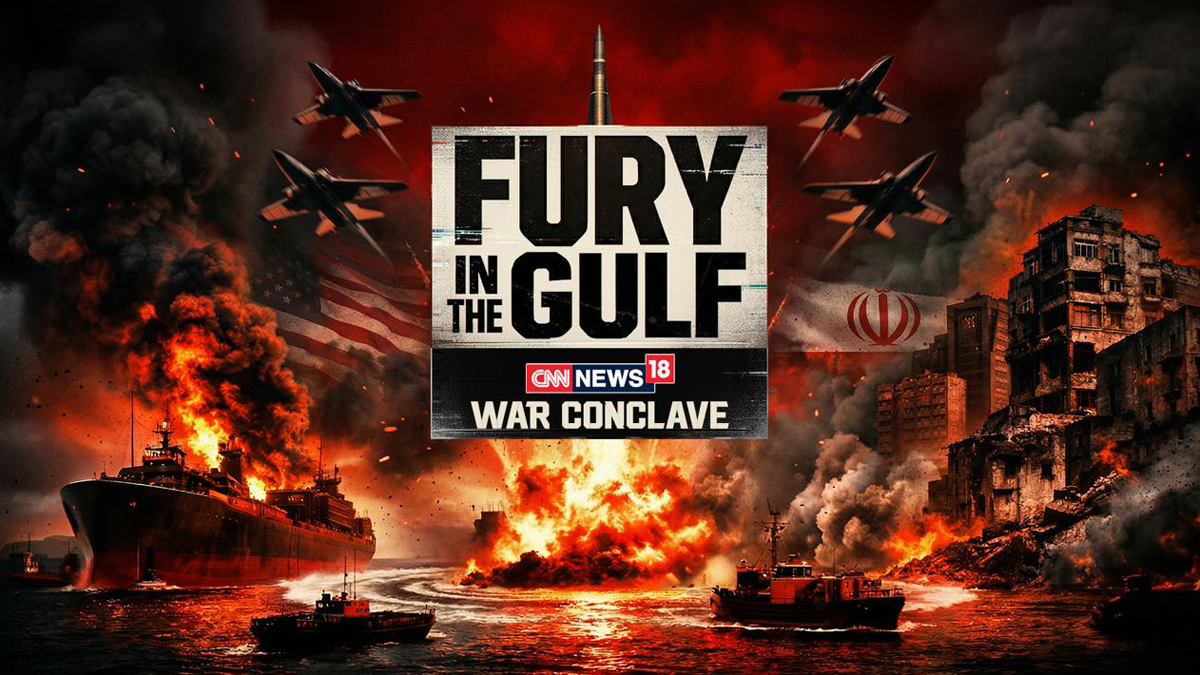
MUMBAI: CNN-News18 is set to host a special three-hour broadcast, Fury in the Gulf – War Conclave, on April 7, aiming to decode the escalating West Asia crisis and its far-reaching implications for India.
Scheduled from 4:00 PM to 7:00 PM, the conclave comes at a time when tensions between Iran and the United States are reshaping global geopolitics and triggering economic uncertainty. With India’s deep energy ties, trade links and large diaspora in the Gulf, the developments carry significant domestic relevance.
Built around the theme ‘Conflict, Consequences, and The Future,’ the programme will feature six curated sessions combining one-on-one interviews and panel discussions. The focus is to cut through the clutter and offer viewers a clearer understanding of the fast-evolving situation.
Key sessions include ‘Diplomacy in Times of War’ featuring Shashi Tharoor, and ‘World After the Iran Conflict’ with voices such as Ram Madhav, Reuven Azar, representatives from the European Union and the Iranian Deputy Envoy. Another session titled ‘Another Dunkirk?’ will bring together K. J. S. Dhillon and Jitin Prasada among others.
CNN-News18 editorial affairs director Rahul Shivshankar said, “In times of war, clarity becomes the most powerful tool. Fury in the Gulf – War Conclave brings together credible voices to address the questions and confusion that arise amid an overwhelming influx of information.”
He added that the initiative is aimed at delivering “facts, perspective, and insight” at a time when misinformation can easily cloud public understanding.
Echoing the sentiment, CNN-News18 CEO– English and business news Smriti Mehra said the conflict marks a defining global moment, with consequences that extend well beyond the region. She noted that the conclave seeks to present the crisis with “depth, nuance and responsibility” so audiences can better grasp its real-world impact.
As geopolitical tensions continue to dominate headlines, the conclave positions itself as an attempt to bring order to the noise, offering viewers a structured, insight-led look at a complex and rapidly shifting global situation.






