Education
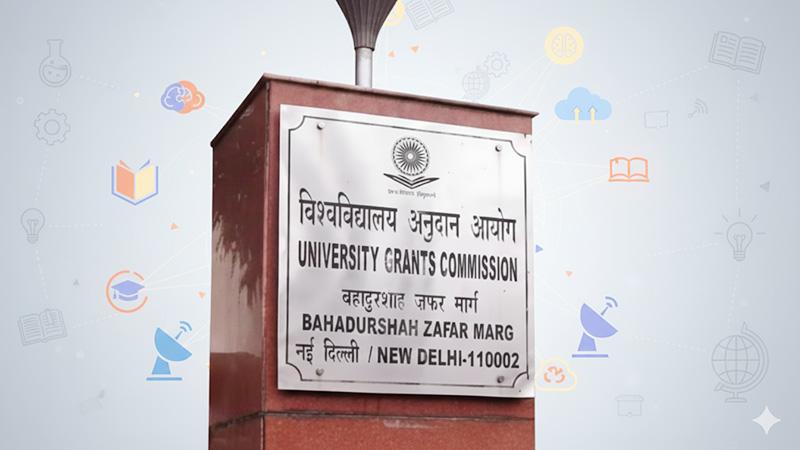
Cabinet clears bill for single higher education regulator, ends UGC era
NEW DELHI: The Union cabinet on Wednesday approved the Viksit Bharat Shiksha Adhikshan Bill, clearing the way for a single regulator for higher education and signalling the end of legacy bodies such as the University Grants Commission, the All India Council for Technical Education and the National Council for Teacher Education.
The legislation, set to be introduced in the ongoing winter session of parliament, was earlier drafted as the Higher Education Commission of India Bill. It revives a long-running reform push outlined in the National Education Policy 2020 to streamline oversight of India’s fragmented higher education system.
Under the proposed framework, a unified authority will take charge of academic regulation, accreditation and professional standards across higher education institutions, excluding medical and legal colleges. Financial control and funding powers will remain with the relevant ministry, rather than the regulator itself.
The move resurrects an idea first floated in 2018, when an earlier version of the HECI Bill proposed repealing the UGC Act. That attempt stalled after resistance from universities and academics wary of excessive centralisation.
The revised bill reflects a renewed push to implement the NEP 2020 vision, expanding the scope of regulation to include technical and teacher education under a single umbrella.
While the policy had proposed splitting higher education governance into distinct verticals: regulation, accreditation, academic standards and funding, the new bill adopts a more consolidated approach, with the government retaining control over finances while centralising academic oversight.

Education
Scaler appoints new heads for its online and offline businesses
Amar Srivastava becomes chief executive of the online business and group chief product officer; Vidit Jain takes charge of the offline schools
BENGALURU: Scaler is shuffling its top deck as the AI skilling race heats up. The Bengaluru-based tech education company has elevated two senior executives to lead its online and offline businesses, signalling a sharper push into an AI-driven market.
Amar Srivastava, previously senior vice president for product and business, has been appointed chief executive of the online business and group chief product officer. Vidit Jain has been elevated to senior vice president and head of Scaler School, taking charge of the company’s offline education units, the Scaler School of Business and the Scaler School of Technology.
The company has also recently appointed Ratnakar Reddy as head of enterprise for India and the Middle East and North Africa, with a brief to drive partnerships with governments and enterprises for AI-led skilling programmes.
Abhimanyu Saxena, co-founder of Scaler, said the promotions reflect the company’s confidence in both leaders and the direction it is heading. “Amar and Vidit have been central to Scaler’s journey, and their elevations reflect our conviction in their leadership and the direction we are shaping as a company,” he said. “With leadership now in place across the business, we remain focused on building engineers the world’s best companies want to hire. In an AI-first economy, that mission is more urgent and more achievable than ever. Our next chapter is centred on building an AI-native workforce from India, equipped to compete in a technology-driven global economy.”
Srivastava brings over a decade of experience building education-focused ventures. He previously founded Intellify and was part of the early team at Doubtnut. At Scaler, he will lead the online business with a focus on growth, profitability and expansion into new segments, while strengthening the product ecosystem across the group. He is blunt about what the AI economy actually needs. “The AI economy does not have a shortage of tools. It has a shortage of engineers who can think clearly, build reliably, and keep learning as the ground shifts. That is what we are building toward,” he said.
Jain brings more than 15 years of experience across startups and consulting, including stints at MPL and McKinsey and Company. He will oversee growth and profitability of Scaler’s offline business. His priorities are immediate and unambiguous. “The offline experience is where depth gets built, and that depth is critical in the AI era. Over the next 12 months, our focus will be on consistent growth, stronger unit economics, and delivering outcomes for students while building long-term employer partnerships,” he said.
Founded in 2019, Scaler is valued at $710 million and backed by Peak XV Partners, Tiger Global and Lightrock India. Its parent firm, InterviewBit, has featured on the Financial Times’ Asia Pacific High Growth Companies rankings every year from 2021 to 2025. On average, Scaler’s learners see a 4.5x return on investment and a salary increase of around 126 per cent.
With leadership locked in across every business unit, Scaler is betting that the next wave of global tech hiring will be won or lost on the quality of engineers coming out of India. It is a big bet. But the numbers, and the promotions, suggest the company is in no mood to hedge.