Cable TV
Broadcasters to hike rates in both DAS and analogue areas

MUMBAI: Things will be different the next time multi-system operators (MSOs) and direct-to-home (DTH) players sit across the table with broadcasters for renewal of channel contracts. Thanks to the price defreeze proposed by the Telecom Regulatory Authority of India (TRAI) after nearly seven years. The regulator on Monday released a notification, offering a 27.5 per cent inflation-linked hike to stakeholders in the tariff ceiling. The hike can be implemented in two phases: 15 per cent from April and the remaining 12.5 per cent from January 2015.
Broadcasters in particular have welcomed the move. With the 15 per cent hike April onward applicable to the analogue business, broadcasters are happy that they can at least increase their ARPUs.
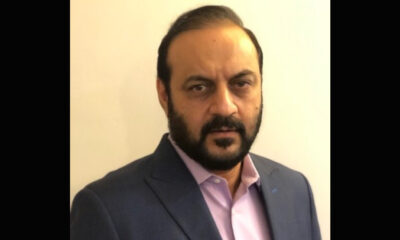
“CPS deals in DAS areas will not be impacted with this tariff ceiling hike. But if the MSO or DTH player has a RIO deal, be it in the DAS or non-DAS region, the rates will go up,” informs Media Pro COO Gurjeev Singh Kapoor.
For those wondering how rates can head north in DAS areas when the tariff ceiling notification is for non-addressable areas, here’s the logic. With RIO rates on digital platforms being 42 per cent of those on analogue platforms, a 15 per cent increase in analogue rates is bound to raise RIO rates for digital. Hence, while the hike in tariff ceiling is for non-DAS areas, the same is applicable to DAS areas as well. “This is the best thing that has happened to the industry, as we now have a platform to increase the ARPU and ask for more from consumers,” says Kapoor.
While an aggregator, on condition of anonymity, puts it as: “DAS rates are related to non-DAS rates. The hike of 15 per cent is on the RIO rate. So even though many feel that the fixed deals will not get affected, they will. Because the matrix for negotiation will change now and this is not only for analogue areas, but also for DAS areas. The negotiation for fixed deals is done on the RIO rate, and if that goes up, of course, the fixed deal will also rise.”
Most of the contracts are up for renewal in April; for TheOneAlliance, 60 per cent of the contracts will be renewed now whereas for Media Pro, close to 90 per cent of the contracts with both DTH operators and MSOs are up for renewal.
“We have a very good scope and so, have decided to increase the rates for every MSO and DTH player in both DAS and non-DAS areas. After a long time, broadcasters have got a hike in tariff ceiling and so, we would take the opportunity to hike the rates,” says TheOneAlliance EVP sales and strategy Makarand Palekar. “We will sit with the concerned MSOs and DTH players and try and incorporate this even in existing channel deals. And I am sure that DTH operators and MSOs will be happy with this as they can collect the same from the ground now.”
Will consumers see a hike in bills this month onward? “We will move things gradually. We will sit for negotiations now,” informs Palekar.
Are broadcasters happy with the percentage of hike? Palekar feels it could have been better. “But with digitisation, MSOs are currently in investment mode. So, in the current scenario, this could have been the best,” he says.
Kapoor agrees with Palekar saying, “Yes, it is not enough. The increase should come in every year, but then it is a welcome move. They have finally woken up from their slumber.”
According to the aggregator, “This figure of 15 per cent has been derived by the authority using past metrics and calibrations. While the hike is under the inflation rate, this is the best TRAI could have come up with.”
Apart from broadcasters, are MSOs happy with the move? “MSOs will get bothered with this hike. We may end up paying for this from our own pocket if we cannot collect it from the ground,” rues ABS 7 Star CMD Atul Saraf.
According to him, MSOs don’t put pressure on LCOs by hiking rates in the analogue regime. “There are chances that the local cable operator can go to the other MSO, if the other player doesn’t hike the price. So either both the MSOs operating in a particular area increase the price, or else, there will be competition,” he adds.
About hiking prices in DAS areas, Saraf says, “Broadcasters have already hiked the price in DAS areas. Also, the deals are on per box basis and there is 100 per cent declaration. So why would they want to increase the price in the DAS regime? So in the DAS regime, if broadcasters plan to hike prices, a few of us may go to the court.”
The increase in RIO by 15 per cent leaves a grey area for broadcasters to hike rates in both DAS and non-DAS areas, according to Saraf. “But there are hardly any RIO deals currently, as we prefer entering into a fixed deal, and especially in the non-DAS areas. But now it may be that MSOs may do a RIO deal, especially for sports channels,” he informs.
GTPL Hathway COO Shaji Mathews too feels MSOs will not benefit from the tariff hike. “Given that DTH rates are also low today, this hike will lead to more competition between the MSO and DTH,” he says.
Kapoor however begs to differ. “The ARPU for DAS phase III and IV is Rs 160 while for DTH, it is close to Rs 300. Even with the hike, the ARPU for cable will go up to Rs 190. There is a big gap between the two and I don’t see consumers moving from cable TV to DTH due to this hike,” he opines.
Whether the MSOs and LCOs will benefit from the move or no, still needs to be seen. The question now is, whether the consumer will pay for the hiked price in the cable TV bills? “The problem is not with the consumers, they are ready to pay,” says Palekar.
“We are showcasing around 400 channels, so the hike was much needed. It is also a good way to move people to digitisation,” concludes Kapoor.