Broadband
Broadband Forum report links incentives under GST to Digital India success
NEW DELHI: As online media consumption in India has shown growth over the past few years with mobile devices having taken over as the preferred medium of consuming online media, the government needs to incentivise further mobile handset manufacturing under the proposed Goods and Services Tax (GST), according to a new study.
The Broadband India Forum (BIF), in association with knowledge partner Ernst & Young (EY), in a research paper unveiled yesterday said that it becomes important to grant incentives to domestic manufacturing in order to set off the “local disabilities” in manufacturing, including the booming mobile handset manufacturing.
Wider deployment of 4G networks along with affordability and indigenisation, smartphones are going to drive mobile broadband to the next level of penetration, the BFI-EY report stated, adding that mobile handset manufacturing in India has gained fresh momentum in the past two years with a number of OEMs and third-party contract manufacturers setting up facilities in the country. The number of mobile handset manufacturing facilities reached 40 in August 2016 from just three in 2014 driven by the increase in duty differential in Union Budget 2015 to 11.5 per cent from five per cent, the report highlighted.
According to Partner EY Bipin Sapra, “(Mobile) Handset manufacturing industry has seen a tremendous growth in past few years driven by government’s ‘Make in India’ initiative and policy changes such as duty reduction on domestically manufactured handsets. It is expected that the adoption of smartphones in India will go up to 688 million by 2020 as compared to 238 million in 2015. With the introduction of GST, most of the current central and state taxes/duties will be subsumed under GST. Thus, it is expected that the incentives available to domestic manufacturers under the current regime would decrease and there is need to continue the incentives under the GST regime to meet the increasing demand through domestic production.”
The report, which notes the country has embarked on one of the world’s most ambitious broadband project with the `Digital India’ programme seeking to transform India into a digitally empowered society and knowledge economy, suggested the government may walk the extra mile to extend similar benefits to the component manufacturers that would encourage more investment in India and give a boost to the handset manufacturing eco-system.
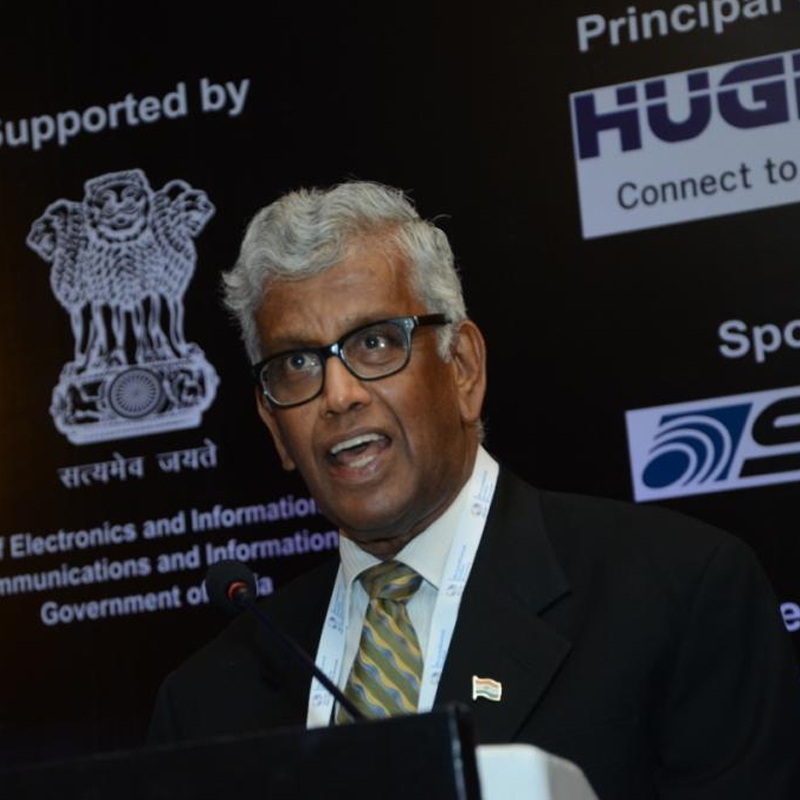
Pointing out that once the eco-system is created, the prices of parts and components may also become more competitive that in turn will reduce the cost of mobile handsets and make Indian handset manufacturers more competitive globally, BIF president T.V. Ramachandran said, “The broadband device today is a smartphone. We need to increase smartphone penetration as India today has less than 30 per cent smartphone penetration. This can only happen through local manufacturing and by further increasing local value addition.”
The GST alone will by itself not be the driver for incentivising manufacturing in a country and some of the essential factors for a sustained manufacturing environment in the country are infrastructure, a robust manufacturing ecosystem, skilled manpower, technology, R&D facilities, etc., the report said.
The report has also come out with a formula that may be adopted to hand out incentives to domestic manufacturing under GST.
Electronics and Information Technology secretary Aruna Sundararajan, who was present during unveiling of the report, said, “This complementary study by EY-BIF, providing how incentives can be continued under GST to the domestic handset industry, will be helpful for the government to frame a better policy and boost local handset manufacturing.”

Broadband
Tejas Networks names Arnob Roy as MD and CEO, overhauls top leadership team
The Bengaluru-based telecom gear maker reshuffles its entire top team even as quarterly revenue collapses by 83 per cent
BENGALURU: Tejas Networks is changing the guard at the top, and doing so at speed. The Bengaluru-headquartered telecom equipment maker has elevated Arnob Roy as managing director and chief executive officer, effective April 15, 2026, for a term running through to August 3, 2028, and in the same breath announced new appointments across operations and finance. The timing is pointed: the company is navigating one of the roughest patches in its recent history.
Roy steps up from his role as executive director and chief operating officer, a position he has held since March 2019. He brings more than three decades of experience in the high-technology sector across research and development, operations, and sales. His predecessor, Anand Athreya, resigned last year citing personal reasons and was relieved on June 20, 2025, leaving a gap at the top that has now been formally filled.
The numbers Roy inherits are sobering. Tejas posted a net loss of Rs 211.3 crore in the fourth quarter of fiscal year 2026, a near-194 per cent widening year on year from Rs 71.8 crore in the same period a year earlier. Revenue for the quarter collapsed 82.6 per cent year on year to Rs 333 crore, down from Rs 1,907 crore. EBITDA swung to a loss of Rs 118.2 crore against a profit of Rs 121.5 crore a year ago. The culprit is not hard to identify: Tejas has derived the bulk of its revenue from BSNL’s fourth-generation network project, delivered as part of a Tata Consultancy Services-driven consortium, and that roll-out is now winding down.
Roy, speaking during a post-earnings conference call with analysts, was candid about where the company has been. “The BSNL 4G network went live across 100,000 sites. We deployed our largest indigenous router networks in the country through the BSNL MAN network, as well as in the BharatNet Phase 3 network,” he said, adding that Tejas had also successfully rolled out its 400G and 800G DWDM equipment in domestic and international markets, and continued the deployment of what it describes as the world’s largest satellite IoT network through its vehicle tracking system solution.
The pivot to new revenue streams is already under way. Tejas has partnered with Japan’s Rakuten Symphony and NEC Corporation to push deeper into international markets, with several Open Radio Access Network trials ongoing, one of which concluded recently. The company is also diversifying across equipment categories and geographies to sustain momentum as the BSNL chapter closes.
To prosecute that strategy, Roy needs a full team around him. Preetham Uthaiah has been appointed chief operating officer, moving up from his current role as vice president of product management for wireless products at Tejas Networks. Uthaiah brings nearly 30 years of global experience spanning engineering, product management, and business development across India and the United States. Before joining Tejas Networks, he served as executive vice president of product management, marketing, and strategy at Saankhya Labs, and held senior roles at Tech Mahindra on both sides of the Atlantic. He holds an MBA from Arizona State University and a degree in electronics and communications from Karnatak University.
On the finance front, AVS Prasad has been approved as chief financial officer, effective May 16, 2026, succeeding Sumit Dhingra, who has resigned. Prasad, currently serving as finance controller at Tejas Networks, brings over 27 years of experience within the Tata Group across telecom, aerostructures, and defence. A company secretary and cost and management accountant by training, he has spent more than 15 years in senior finance roles including CFO and financial controller positions, with expertise spanning corporate finance, treasury management, regulatory compliance, internal audit, and governance.
New chief executive, new chief operating officer, new chief financial officer — all installed in a single move, at a moment when the company’s largest revenue source is drying up and the next chapter remains unwritten. Tejas Networks has placed its bets. Now it has to deliver.