iWorld
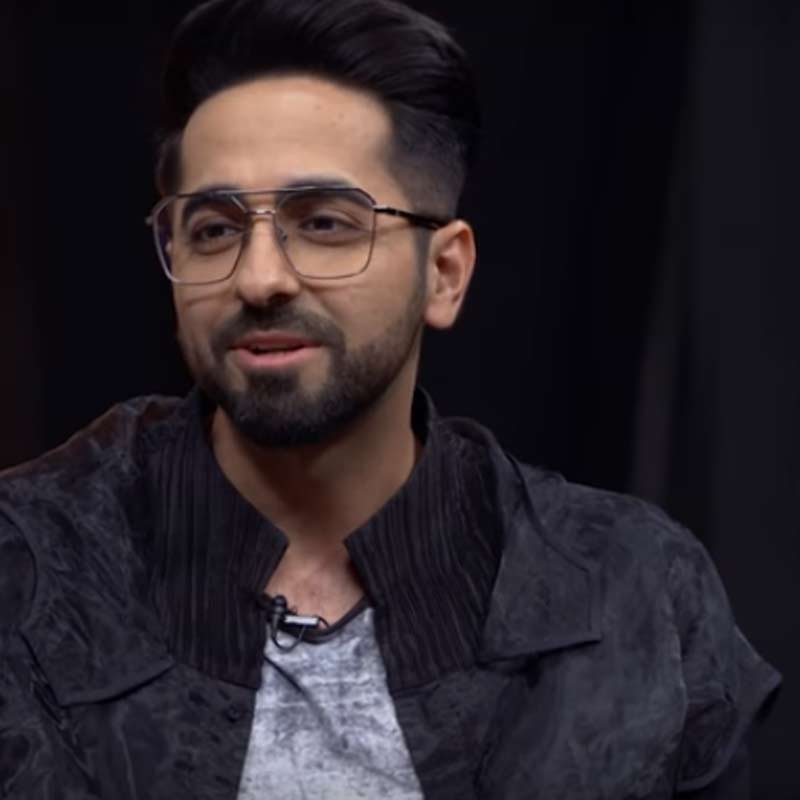
Bollywood star Ayushmann talks about his struggle with social media in the early stage of his career on #MeriRealLife
Mumbai, 14th, November 2018: Anupama Chopra is back with another interview on #MeriRealLife – this time with Vicky Donor’s famous and critically acclaimed actor Ayushamann Khurrana on her YouTube Channel Film Companion.
In the episode, going live today, Anupama chats with the youth sensation, Ayushmann, who shares about his journey to Bollywood and how his life changed after the movie ‘Vicky Donor’. He also talks about how curated the images on his Instagram account are and the tough time he has undergone, facing criticism from people on social media. Watch the full episode on
Talking about how he faced criticism on social media, the actor said on #MeriRealShow, “Success is a very lousy teacher. Your failures and rejections, they are your friends, philosophers and guides in life.”
#MeriRealLife interview series by Anupama Chopra is based on Idea 4G #MeriRealLife campaign which urges people to use social media responsibly and highlights the growing phenomenon of people living ‘dual-lives’ due to over use of the medium. The interview series features eminent Bollywood celebrities who talk about their association with social media and how they are battling the pressure of showing only their perfect side on social media. The show intends to bring out #MeriRealLife of Bollywood stars who are idolised by the masses and leaves them with the message of keeping it real on social media.
#MeriRealLife interview series has already featured talented actors like Taapsee Pannu, Vicky Kaushal and Sonam Kapoor in the past few weeks. These episodes are available on Film Companion’s YouTube channel and also on Idea Movies & TV and Vodafone Play apps.
Idea 4G #MeriRealLife campaign has garnered approx. 30 million video views across social media platforms and driven 16K conversations amongst users sharing their stories on #MeriRealLife.

e-commerce
American Express to acquire AI startup Hyper to boost automation
Deal targets expense management as AI reshapes corporate spending tools.
MUMBAI: From receipts to robots, the expense sheet is getting a brain upgrade as American Express moves to bring artificial intelligence into the heart of corporate spending. The company has announced plans to acquire Hyper, a relatively young but fast-rising startup founded in 2022 that builds AI-powered agents capable of organising expenses, generating reports, verifying compliance with budgets and policies, and nudging users with timely reminders. The deal, expected to close in the second quarter of 2026, underscores a growing shift among financial institutions to automate traditionally manual, time-heavy workflows.
Hyper counts Sam Altman among its backers, adding a layer of Silicon Valley credibility to the acquisition. While financial details remain undisclosed, the strategic intent is clear: deepen automation capabilities and sharpen American Express’s position in the competitive corporate spending ecosystem.
The two companies are not strangers. They previously collaborated in 2024 on a co-branded credit card product, suggesting that the acquisition is less a cold buy and more an extension of an existing relationship. With this move, American Express is effectively bringing that capability in-house, aiming to embed AI directly into its commercial services stack.
Chief executive Stephen Squeri had already signalled the direction of travel in a recent shareholder letter, describing AI as a “structural shift” in how businesses operate. The Hyper acquisition appears to be a direct response to that shift, particularly in expense management, where processes such as approvals, compliance checks and reporting remain ripe for automation.
Alongside the acquisition, the company is also expanding its product suite. A recently launched business credit card offers cashback and benefits at an annual fee of $295, with another card expected later this year moves that complement its broader push into commercial services.
Taken together, the strategy points to a future where managing expenses may require fewer spreadsheets and more algorithms. For American Express, the bet is simple, if businesses are rethinking how work gets done, the tools that power that work need to evolve just as quickly.