Hollywood
Benedict Cumberbatch to play Marvel’s ‘Doctor Strange’
MUMBAI: After months of speculations, the Sherlock famed Benedict Cumberbatch is the final choice for the titular role in Marvel Studios’ Doctor Strange, according to media reports.
Slated for release on 8 July 2016, the feature will be directed by Scott Derrickson. Cumberbatch will play Dr Stephen Strange, a former neurosurgeon who, after losing the use of his hands, turns to the mystic arts and the occult. He will serve as the Sorcerer Supreme — the primary protector of Earth against magical and mystical threats.
Doctor Strange made his first appearance in the Marvel Universe in 1963, and was first created by Stan Lee and Steve Ditko in the pages of Strange Tales No 110. He has also been a longtime member of superhero teams like Avengers, and wielded a significant influence as a member of the Illuminati, which included the likes of Professor X, Mister Fantastic, and Iron Man.
For the past few months, some of big Hollywood names have been linked to the role including Joaquin Phoenix, Ryan Gosling, Jared Leto, Tom Hardy, Justin Theroux, Ethan Hawke and Keanu Reeves.
Marvel also plans to release the third Captain America movie along with the feature.
In addition to his well-received ‘Sherlock’ series, for which he won an Emmy this year, he’s earned a great deal of Oscar buzz for his performance as cyberpioneer Alan Turing for The Imitation Game.

Hollywood
Paramount seeks FCC nod for foreign-backed $110 billion WBD deal
Gulf funds back merger as foreign stake nears 50 per cent, control stays with Ellison
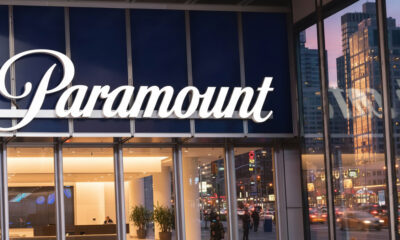
NEW YORK: Paramount Global has approached the Federal Communications Commission seeking approval for foreign investments tied to its proposed $110 billion acquisition of Warner Bros. Discovery, marking another key step in one of the biggest media deals in recent years.
According to regulatory filings made public this week, the investment backing the deal includes major Gulf sovereign funds such as the Public Investment Fund, the Qatar Investment Authority and L’imad Holding Company. Together, foreign investors are expected to hold just under 50 per cent of Paramount’s equity once the transaction is complete.
Despite the sizeable international backing, Paramount has made it clear that voting control will remain with the family of chief executive David Ellison, ensuring the company stays firmly under US control as required by broadcasting rules.
A company spokesperson described the FCC filing as routine for transactions involving foreign capital and stressed that it does not impact the closing of the deal. Under US law, any significant foreign ownership in broadcast licence holders must undergo regulatory review.
The merger itself has already cleared a major hurdle, with Warner Bros. Discovery shareholders approving the deal on 23 April. The transaction values the company at $31 per share, a 147 per cent premium to its earlier trading price, reflecting strong strategic intent behind the tie-up.
If completed, the combined entity will bring together a vast portfolio including Warner Bros. film studios, HBO Max, and networks such as CNN, TNT and Discovery Channel. The deal is currently expected to close in the third quarter of 2026.
However, scrutiny is intensifying. The US Department of Justice has issued subpoenas seeking details on the merger’s potential impact on cinema competition, streaming services and content licensing. Reviews are also anticipated in international markets, including the United Kingdom.
There is also a financial safety net built into the agreement. If regulators ultimately block the deal, Paramount would face a $7 billion break-up fee. Additionally, the company has taken on $2.8 billion in obligations previously owed by Warner Bros. Discovery to Netflix following an earlier terminated arrangement.
Paramount maintains that easing foreign ownership barriers will unlock fresh capital and strengthen its ability to compete in a rapidly evolving media landscape. For now, the spotlight remains on regulators, whose decision will determine whether this global media consolidation moves from script to screen.