iWorld
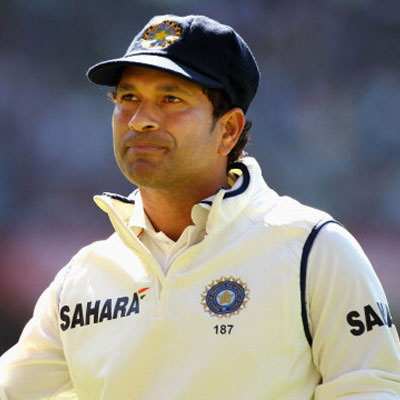
BCCI launches groundbreaking #ThankYouSachin campaign on Twitter
MUMBAI: The BCCI today announced a new integration with Twitter, one which allows fans worldwide to connect and say thank you to Sachin Tendulkar, like never before.
During the ongoing Test series between India and the West Indies, all Twitter users who send an appreciative message for Sachin to the @BCCI handle with the #ThankYouSachin hashtag will instantaneously receive a Tweet from @BCCI with a momentous picture of Sachin, including a personalised message and signature in his handwriting.
Since @BCCI announced the integration in a series of Tweets this morning, thousands of fans have participated, including several cricketers like Yuvraj Singh and Gautam Gambhir, to receive their own personal picture of Sachin.
@BCCI is encouraging its audiences to connect and tweet multiple times – via the web, TV and more – as there are many different images and messages that fans can avail of. The integration will be live, while the Kolkata and Mumbai Tests are being played. The service is supported by Twitter India and Digigraph.me. Twitter India applauded the service in a blog post this morning.
BCCI Honorary Secretary Sanjay Patel said: “Twitter has changed the way our fans, here and everywhere, stay connected to our sport and its personalities. We at the BCCI have always believed and invested in the power of mobile, digital and social. On the occasion of Sachin Tendulkar’s retirement, we’re delighted to work with Twitter and Digigraph and offer our fans this opportunity to thank Sachin and take home a piece of history.”
Twitter India market director Rishi Jaitly said: “Twitter is the world’s leading real-time information network where users follow, share and experience content that is live, public and conversational. In India, Twitter has brought cricket fans closer to the sport and to cricketers directly and in real time. We applaud the BCCI for harnessing the power of our platform and launching this #ThankYouSachin campaign with Digigraph.”
Digigraph founder and CEO Barry Berkowitz said: “Digigraph.me is humbled and proud to help the BCCI and Twitter honour legendary Cricketer, Sachin Tendulkar, on the eve of his historic 200th Test for India. Cricket fans around the world can now celebrate this moment by requesting, claiming and sharing personalised, autographed, collectable digital photos from Sachin, instantly from their Twitter newsfeeds.”

iWorld
Telcos push for unified rules as spam shifts to OTT platforms
Over 80 per cent fraud moves online, operators seek common framework.
MUMBAI: The spam may have left your phone network but it hasn’t left you alone. India’s telecom operators are once again dialling up the pressure for a unified regulatory framework, warning that fraud is rapidly migrating to internet-based platforms where oversight remains far looser. According to industry communication, a leading operator has written to multiple arms of the government including the Department of Telecommunications, the Ministry of Electronics and Information Technology and the Ministry of Finance arguing that tighter controls on traditional telecom networks are inadvertently pushing bad actors towards over-the-top (OTT) communication platforms.
The concern is not new, but the framing has sharpened. What was once an industry grievance is now being positioned as a consumer protection issue. Operators say that tackling spam in silos no longer works, as fraudsters seamlessly shift across platforms, exploiting regulatory gaps. The result: a moving target that traditional safeguards struggle to contain.
Executives point to a clear shift in fraud patterns. OTT platforms are increasingly being used for phishing links, impersonation scams and bulk unsolicited messaging, with industry estimates suggesting that over 80 per cent of spam activity has now migrated online. In this environment, the lines between telecom networks, messaging apps and financial fraud are blurring fast.
At the heart of the industry’s demand is a call for a technology-neutral regulatory framework, one that applies consistently across telecom and internet-based communication services. Operators argue that the absence of uniform safeguards, such as sender verification systems, robust spam filters and clearly defined accountability mechanisms, has created enforcement blind spots that fraudsters are quick to exploit.
The proposal is straightforward but far-reaching. Telcos are pushing for baseline anti-fraud measures across all communication platforms, alongside faster response systems and deeper coordination between ministries. Given the interconnected nature of telecom networks, digital platforms and financial systems, they argue that fragmented oversight only weakens the overall defence.
The broader issue is regulatory arbitrage, the ability of bad actors to hop between platforms based on which is least regulated at any given time. Without harmonised rules, operators say, efforts to curb fraud risk becoming a game of whack-a-mole.
As digital communication continues to expand, the debate is shifting from who regulates what to how consistently it is regulated. For now, telecom operators are making their case clear: in a world where spam travels freely, regulation cannot afford to stay fragmented.