Fiction
Balaji Telefilms bets on streaming and cinema as television fades


MUMBAI: The Indian production house is pivoting hard to digital, with Rs 350 crore in orders and blockbusters in the pipeline Balaji Telefilms is ditching its television past for a streaming future.
The Mumbai-based production house, once synonymous with prime-time soaps, is now racing towards digital dominance, and its chief reckons motion pictures will soon eclipse everything else.
Speaking to investors after second-quarter results, Sanjay Dwivedi, group chief executive and chief financial officer, laid out a stark transition. Television, the company’s creative bedrock, is in decline. Broadcasters are slashing budgets, several long-running serials wrapped this quarter, and episodic revenues have flatlined at Rs 24 lakh-25 lakh per hour. “I’m not saying TV is going to die,” Dwivedi said, “but connected TV will be the play.”

The action is elsewhere. Balaji’s digital arm is roaring, with 93 shows live on its new app Kutingg and three YouTube originals racking up 400m views since launch. Active subscribers have crossed 11m. The company is shifting to a hybrid subscription-and-advertising model to widen its reach, whilst building a formidable business-to-business pipeline. Current orders stand at Rs 350 crore, including Rs 250 crore from Netflix and Rs 42 crore from Zee Studios, with Amazon, Sony and Star also in the mix.
Motion pictures are the real prize. Balaji’s Malayalam-Telugu bilingual Vrusshabha hits cinemas in December, followed by Bhoot Bangla with Akshay Kumar and Vvan, a collaboration with TVF. The strategy is ruthlessly commercial: pre-sell 85-90 per cent of costs through distribution deals and co-production agreements, locking in returns before release.
The company recently raised Rs 131 crore, Rs 65 crore earmarked for films, Rs 33 crore for music rights and digital content, the rest for general corporate purposes. Not a rupee has been touched yet. Dwivedi’s timeline is clear: this year stays muted, but from the next financial year’s first quarter, “you will see a clear upside.”
In three years, he predicts, motion pictures will lead revenues and profits, trailed by digital, then television. The old broadcast model is being replaced by streaming commissions, “Whatever decline you are seeing in TV will be more than compensated by growth in OTT.”
For a company that built its name on daily soap operas, the pivot is dramatic. But in India’s entertainment gold rush, Balaji isn’t mourning the past. It’s betting everything on what comes next.






Fiction
Banijay merges with All3Media in $6.65 billion deal
Marco Bassetti will lead the combined company as CEO
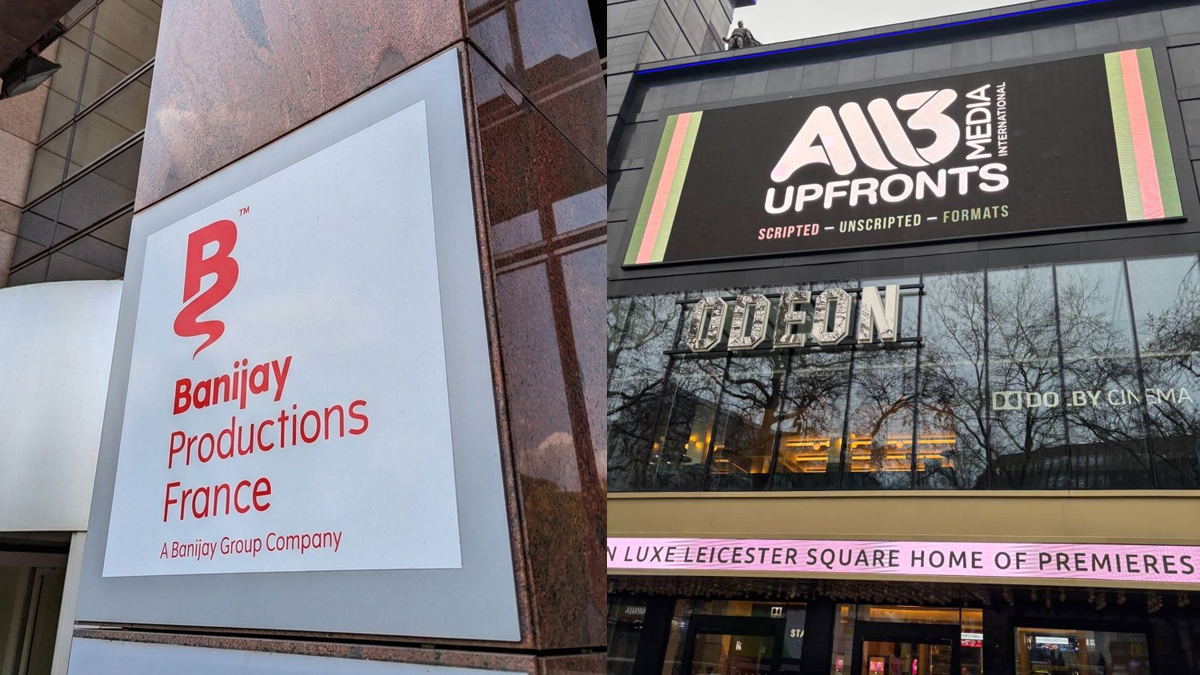
PARIS: Six years after acquiring Endemol Shine at the height of the pandemic, Banijay has struck again. The European production heavyweight is merging with All3Media in a deal that will create a television titan with $6.65 billion in revenue and redraw the contours of a fast-consolidating market.
The combined company will trade under the Banijay name and be owned 50 per cent each by Banijay Group and RedBird IMI, which acquired All3Media in 2024. The transaction is expected to close by autumn, subject to regulatory approvals.
Banijay Entertainment CEO Marco Bassetti, will take the top job at the enlarged group. All3Media CEO Jane Turton becomes deputy CEO. RedBird IMI CEO Jeff Zucker will serve as chairman.
The logic is scale. Broadcasters are commissioning less, streamers are tightening budgets and global buyers are fewer but bigger. Against that backdrop, heft matters. The merged entity will generate roughly $6.65 billion in revenues based on 2024 figures, giving it sharper elbows in rights negotiations and deeper pockets for franchise-building.
“Entrepreneurialism, ambition and creativity” remain core to Banijay’s DNA, Bassetti said, flagging plans to invest more heavily in new intellectual property, live events and emerging platforms. Turton struck a similarly bullish note, pointing to All3Media’s journey from a 2003 start-up to a global supplier of hit formats and high-end drama.
Between them, the two groups control a formidable slate. Banijay’s catalogue spans MasterChef, Big Brother, Survivor, Black Mirror, Peaky Blinders and Deal or No Deal. All3Media’s labels include Studio Lambert, producer of The Traitors and Squid Game: The Challenge; Two Brothers, behind The Tourist; and Neal Street, currently producing the forthcoming Beatles biopics directed by Sam Mendes for Sony.
The back catalogue is equally muscular. Banijay Rights holds some 220,000 hours, while All3Media International adds around 35,000 hours, forming one of the industry’s largest libraries.
Banijay, controlled by French entrepreneur Stéphane Courbit and listed in Amsterdam, counts more than 130 production companies across 25 territories. All3Media operates over 40 labels, with strong positions in the UK, US and Germany. The enlarged group will also lean into live entertainment, building on Banijay’s Balich Wonder Studio, which produced the opening ceremony of the Milan-Cortina Winter Olympics, and the Independents.
The deal marks a shift in tone. As recently as October, Bassetti suggested that mergers and acquisitions were not a priority. But the drumbeat of consolidation has grown louder. Mediawan has moved for Peter Chernin’s North Road. David Ellison’s Paramount has agreed to a $110 billion takeover of Warner Bros, with plans to combine HBO Max and Paramount plus. ITV has explored selling its media and entertainment arm to Comcast-owned Sky, though talks have reportedly slowed.






