iWorld
AT&T and Discovery agree to merge media assets, form new streaming giant
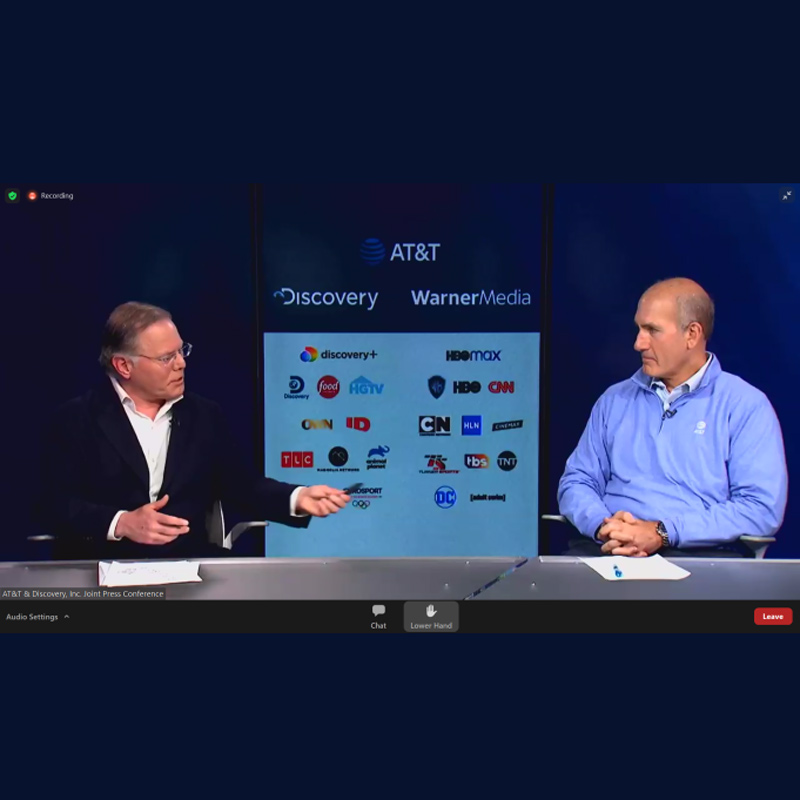
KOLKATA: Paving the way for a blockbuster merger and acquisition deal, AT&T and Discovery Inc. have agreed to combine their media assets. The new company formed as part of the deal will be led by Discovery president and CEO David Zaslav. The move will create the world’s second-largest media company by revenue after Disney.
The combination will be executed through a complex all-stock transaction called the Reverse Morris Trust, under which WarnerMedia will be spun or split off to AT&T’s shareholders via dividend or through an exchange offer or a combination of both and simultaneously combined with Discovery. According to the latest reports, the deal will close in 2022, subject to shareholder and regulatory approvals.
In connection with the spin-off or split-off of WarnerMedia, AT&T will receive $43 billion (subject to adjustment) in a combination of cash, debt securities and WarnerMedia’s retention of certain debt.
AT&T’s shareholders will receive stock representing 71 per cent of the new company; Discovery shareholders will own 29 per cent of the new company. The new company’s Board of Directors will consist of 13 members, seven initially appointed by AT&T, including the chairperson of the board; Discovery will initially appoint six members, including CEO David Zaslav.
Giving rise to a content powerhouse, the merged entity will bring together brands like HBO, Warner Bros., Discovery, DC Comics, CNN, Cartoon Network, HGTV, Food Network, the Turner Networks, TNT, TBS, Eurosport, Magnolia, TLC, Animal Planet, ID.
“The new company will compete globally in the fast-growing direct-to-consumer business — bringing compelling content to DTC subscribers across its portfolio, including HBO Max and the recently launched discovery+,” an official statement read.
More to come…

iWorld
Telcos push for unified rules as spam shifts to OTT platforms
Over 80 per cent fraud moves online, operators seek common framework.
MUMBAI: The spam may have left your phone network but it hasn’t left you alone. India’s telecom operators are once again dialling up the pressure for a unified regulatory framework, warning that fraud is rapidly migrating to internet-based platforms where oversight remains far looser. According to industry communication, a leading operator has written to multiple arms of the government including the Department of Telecommunications, the Ministry of Electronics and Information Technology and the Ministry of Finance arguing that tighter controls on traditional telecom networks are inadvertently pushing bad actors towards over-the-top (OTT) communication platforms.
The concern is not new, but the framing has sharpened. What was once an industry grievance is now being positioned as a consumer protection issue. Operators say that tackling spam in silos no longer works, as fraudsters seamlessly shift across platforms, exploiting regulatory gaps. The result: a moving target that traditional safeguards struggle to contain.
Executives point to a clear shift in fraud patterns. OTT platforms are increasingly being used for phishing links, impersonation scams and bulk unsolicited messaging, with industry estimates suggesting that over 80 per cent of spam activity has now migrated online. In this environment, the lines between telecom networks, messaging apps and financial fraud are blurring fast.
At the heart of the industry’s demand is a call for a technology-neutral regulatory framework, one that applies consistently across telecom and internet-based communication services. Operators argue that the absence of uniform safeguards, such as sender verification systems, robust spam filters and clearly defined accountability mechanisms, has created enforcement blind spots that fraudsters are quick to exploit.
The proposal is straightforward but far-reaching. Telcos are pushing for baseline anti-fraud measures across all communication platforms, alongside faster response systems and deeper coordination between ministries. Given the interconnected nature of telecom networks, digital platforms and financial systems, they argue that fragmented oversight only weakens the overall defence.
The broader issue is regulatory arbitrage, the ability of bad actors to hop between platforms based on which is least regulated at any given time. Without harmonised rules, operators say, efforts to curb fraud risk becoming a game of whack-a-mole.
As digital communication continues to expand, the debate is shifting from who regulates what to how consistently it is regulated. For now, telecom operators are making their case clear: in a world where spam travels freely, regulation cannot afford to stay fragmented.