iWorld
Astroworld hits Aamchi Mumbai as Travis Scott lights up the racecourse

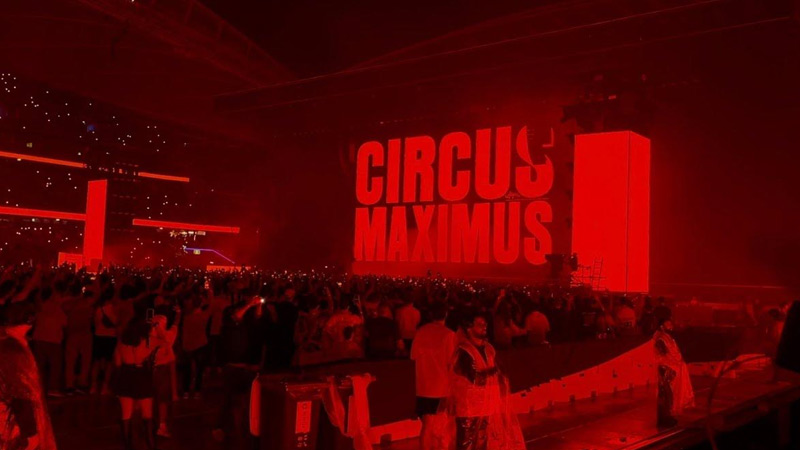
MUMBAI: Mumbai didn’t just attend a concert, it erupted into a supernova the moment Travis Scott touched down at Mahalaxmi Racecourse. On 19 November, the global hip-hop maverick, cultural disruptor and visual maximalist turned Mumbai’s skyline into a riot of fire, bass and unfiltered adrenaline as the Circus Maximus World Tour made its explosive stop in the city. Produced and promoted by Bookmyshow Live, the Mumbai show marked a defining moment for India’s live entertainment landscape and a rare move globally, as the artist returned to India within the same tour cycle purely to honour demand after two packed shows in Delhi last month.
This unprecedented momentum has done more than thrill fans; it has cemented India’s place on the global touring map, proving that the country is no longer just a stopover, it’s a stage worthy of the world’s biggest names.
The night opened with a hard-hitting set by Canadian rapper NAV, who spun viral hits like Lemonade, turning the grounds into a high-voltage pre-party long before Travis appeared. By the time the headliner was ready, Mumbai was already levitating.
When Travis burst on stage with ‘Hyena’, tens of thousands erupted in a roar so loud it shook the venue. From that very beat, there was no turning back.
Massive pyros shot skyward, basslines rolled like thunder across the racecourse, and fans plunged into spontaneous mosh pits as the artist unleashed his signature brand of cinematic chaos, a multisensory world that fused sound, visuals, narrative and raw hunger for release.
The Mumbai crowd matched every beat with ferocity. Waves of energy rippled across the grounds as fans screamed each bar from ‘Sicko Mode’, ‘Goosebumps’, ‘FE!N’, ‘Highest In The Room’, ‘Butterfly Effect’, ‘Antidote’ and tracks from Utopia.
At one point, Travis played ‘FE!N’ four times, each round louder than the last because the audience simply refused to let the anthem die.
Bookmyshow Live engineered one of the largest technical builds in Indian music history, transforming the racecourse into a global-grade arena anchored by India’s first all-black-steel VerTech stage, custom-built to Travis Scott’s touring specifications. Smoke cannons, flames, strobes and impeccably timed visuals fused into an almost psychedelic storm.
Across all zones, the energy was unbroken fans celebrated their mosh pits like badges of honour, with social media flooded by clips from across Mumbai’s most electrifying Monday night.
In classic Travis fashion, chaos turned communal when he pulled four ecstatic fans on stage. One held up a “Stormi for President 2040” poster; another arrived in a full sherwani, ensuring Delhi’s “Travis-wali Diwali” energy travelled west.
When Travis roared, “We in Mumbai and this s** already lit! Rep for the whole of India right here!”* the crowd detonated. During ‘Mamacita’, thousands lit up their phones, enveloping the arena in a breathtaking sea of white light. a rare collective hush in an otherwise explosive night.
“This showcase marks a pivotal moment for India’s live entertainment landscape,” said Bookmyshow chief business officer for live event Naman Pugalia. He credited civic authorities and fan demand for fuelling a show of this scale, calling it “a strong new benchmark for the entire industry.”
The India leg of the tour has proven that the country is now ready logistically, technically and culturally for the world’s biggest artists, and that the appetite for global-calibre music has never been more intense.
This was Travis Scott’s third show in India, and easily the most charged. The demand, the production, the fan culture, the mosh pits and the sheer scale of the performance underscore one truth: India is no longer watching global music culture from afar, it’s participating, shaping and amplifying it.
With the Circus Maximus World Tour, India hasn’t just welcomed a superstar. It has declared itself a world-ready destination for tours that push the limits of sound, scale and spectacle.
The future of live music here? Bigger than the bass that shook Mumbai.






