DTH
Arabsat denies giving signal to BeoutQ, demands apology from FIFA
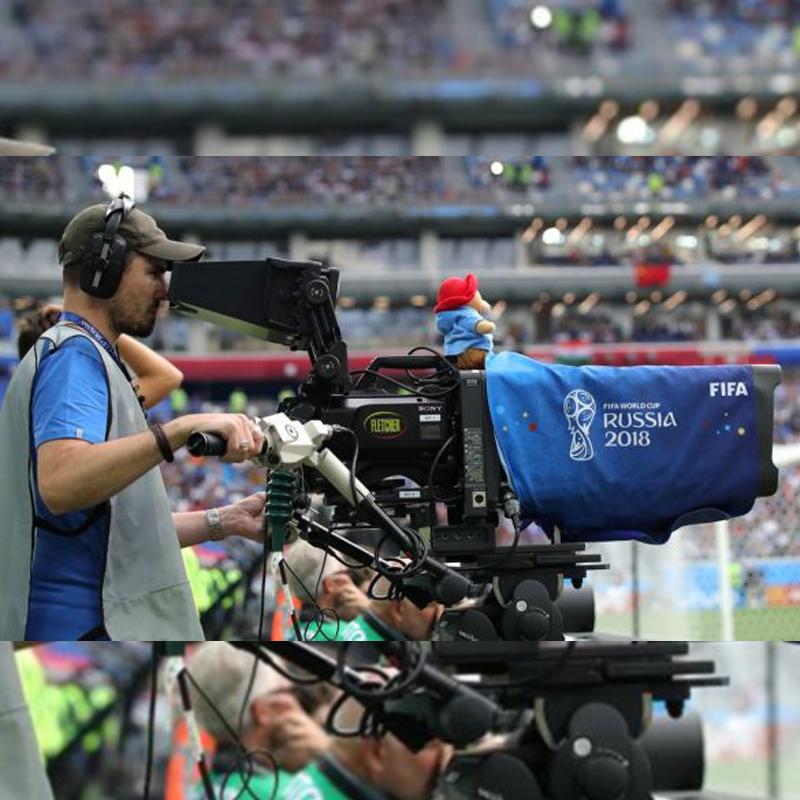
MUMBAI: A few days ago FIFA accused the Saudi Arabia’s satellite operator Arabsat of being involved in the act of transmitting pirated signals of the World Cup to BeoutQ. Arabsat president and CEO Khalid Balkheyour has strongly denied the involvement. Instead, Arabsat is demanding an apology from FIFA for its allegation.
In a letter it wrote to the body on 15 July, it said that seven independent satellite communications experts confirm that its satellite frequencies had not been used by BeoutQ. Balkheyour said, “Arabsat has always been confident that our satellite network has not been used by BeoutQ.”
“Nevertheless, we undertook a very costly investigation to eliminate any doubts and to provide evidence to share with FIFA and the world. Arabsat has been deeply offended and harmed by beIN’s and FIFA’s attacks,” he declared. “Now that FIFA has been proven wrong, it should apologise for making such offensive statements” he added.
BeoutQ users point their dishes to 26 degrees East, which either means an Arabsat slot, or its neighbour (at 25.5 deg East) Eutelsat 25B and its spacecraft partner Es’Hail 1. FIFA claims that BeoutQ was operating on Arabsat frequency 12341 MHz (and normally home to MBC ‘Pro Sports’ transmissions) for several World Cup matches and also 11996 MHz.
The experts showed that that frequency carried no video content at all dates and times mentioned by FIFA. Arabsat’s expert also added that blocking the frequency had no effect on BeoutQ’s pirate World Cup broadcasts, and that only legitimate broadcasts (e.g., BBC, Sky News and CNBC) were available on that. Saudi Arabia denies BeoutQ as an entity of the country.
BeoutQ users need to buy a dedicated ‘DreamBox’ satellite decoder receiver (for about 430 Saudi Riyals-[€98.60]). The marketing offer promises that buyers will also receive all of MBC’s (legitimate) sports channels and tournaments like Champions League, Premier League, Fifa World Cup’18, La Liga, Bundes Liga and many more.

DTH
Dish TV launches ‘Kuch chhota sa’ campaign for TV flexibilit
New campaign highlights 190+ channels, Always-On service, Rs 99 Freedom Pack.
MUMBAI- Sometimes, the smallest remote click can fix the biggest daily friction and Dish TV is betting on exactly that insight. The company has rolled out a new campaign built around the thought ‘Kuch chhota sa karne par, life hogi behtar’, turning everyday viewing annoyances into a case for simpler, more reliable television access.
The campaign taps into a familiar household reality: millions of viewers continue to rely on free-to-air channels but increasingly want the flexibility of premium content, often ending up with a patchy and inconsistent viewing experience. Dish TV positions itself as the middle path—a structured yet flexible alternative that promises continuity without complexity. At its core is the pitch of an “Always-On” service, designed to keep content accessible even when recharge timelines slip, effectively reducing one of the most common friction points in DTH consumption.
To strengthen this proposition, the platform is offering access to over 190 channels, alongside a flexible pricing hook through its Freedom Pack, starting at Rs 99. The pack is positioned as a seasonal companion particularly relevant during high-engagement periods such as cricket tournaments, school holidays and festive windows, when content consumption spikes but users may not want long-term commitments.
Conceptualised by Enormous, the campaign unfolds through two master films and three short edits rooted in slice-of-life storytelling. From a husband quietly navigating around his sleeping wife to siblings striking a compromise over a coveted window seat, the narratives lean into humour and relatability rather than heavy messaging. The underlying idea remains consistent: small adjustments can meaningfully improve everyday experiences.
The rollout spans a full 360-degree media mix, including television, digital platforms, on-ground activations, point-of-sale visibility, Google Display Network placements and influencer-led content, signalling a push for both scale and contextual engagement.
As viewing habits continue to evolve in a hybrid ecosystem of free and paid content, Dish TV’s latest play reflects a broader industry shift where reliability and flexibility are increasingly positioned as differentiators, not just add-ons. In a market crowded with choice, the brand’s wager is simple: sometimes, it’s the smallest tweak that keeps audiences tuned in.