Jobs
Apple’s success in India shows manufacturing as key to employment: Ashish Dhawan

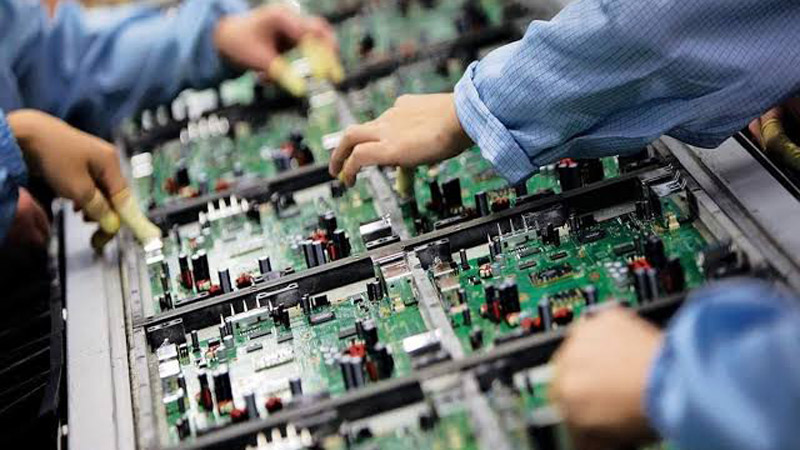
Mumbai: The Convergence Foundation (TCF) founder-CEO Ashish Dhawan emphasised India’s success in electronics manufacturing as a clear sign of the country’s potential to boost job creation. Dhawan highlighted Apple’s rapid expansion in India, with its 29th factory being established in the country in just two to three years.
“Many doubted India’s capability in manufacturing, questioning our productivity. But Apple’s success shows we can make it happen. This should instill confidence in India’s capacity for large-scale electronics production,” Dhawan stated.
He urged stakeholders to view this success as a step toward addressing India’s labour-intensive exports gap, stressing the country’s demographic advantages and lower labour costs compared to China. However, he cautioned that significant reforms are still needed, particularly around reducing regulatory hurdles, improving ease of doing business, and investing in infrastructure.
Dhawan stressed the importance of tying manufacturing growth to job creation. In a conversation with Foundation for Economic Development (FED) founder-director Rahul Ahluwalia, he pointed out that while sectors like automobile manufacturing have become more capital-intensive, industries like electronics assembly and apparel can create more jobs, which is critical for India today.
“The government’s role in enhancing competitiveness has been vital,” Dhawan said, crediting both central and state governments for their efforts to improve labour and land policies. “Business leaders are calling for competitiveness, and the government is responding.”
Dhawan also urged India to set its sights on matching the success of East Asian economies like South Korea, Taiwan, and Vietnam. He cited Uttar Pradesh as an example, pointing out the stark difference in exports between the state and Vietnam, despite UP’s much larger population. Dhawan called for a strategic push to capture the world market in labour-intensive sectors, comparing India’s performance with East Asian benchmarks.
Dhawan further advocated for India to become the world’s skills hub. He pointed out that India already leads in global remittances, receiving $120 billion annually, and projected this could grow to $300 billion if India strategically sends more skilled workers abroad.
He also called for government-to-government arrangements to facilitate temporary work visas in OECD countries, where 50 million jobs are expected to open up over the next two decades. India, Dhawan argued, is well-positioned to supply skilled labour in sectors like healthcare, domestic services, and more.