iWorld
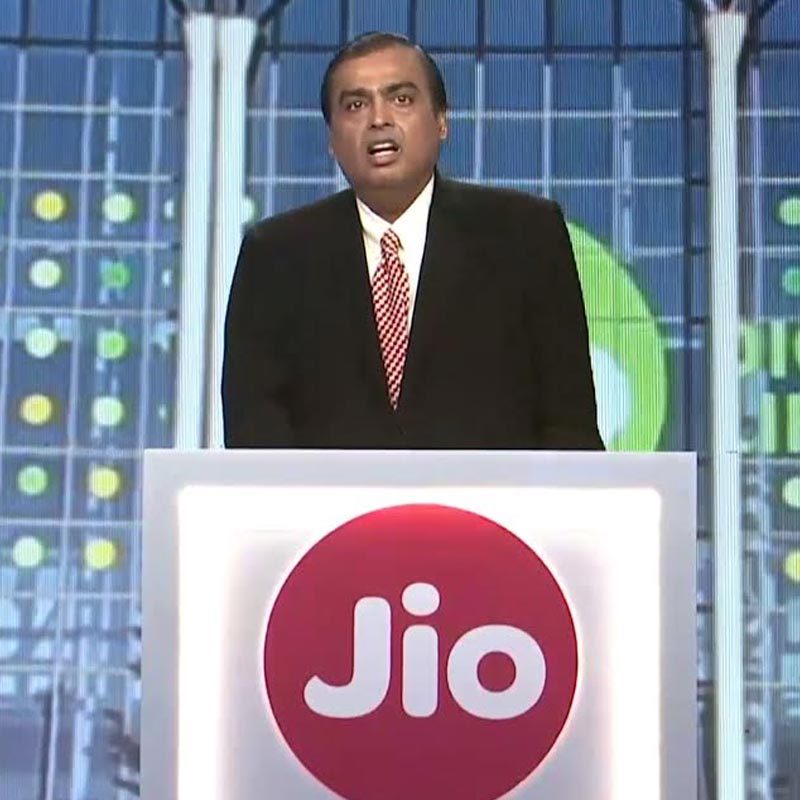
Ambani unveils Jio launch, rollout and tariffs
MUMBAI: It promised a lot and it delivered. Reliance Industries Ltd’s 39th annual general meeting saw chairman Mukesh Ambani unveil the roadmap ahead for what is hoped will be the most significant change agent for India’s telecom, broadband business.
Amongst the most significant was the announcement that it will be a voice-free-low data cost provider of 4G LTE services geared for video delivery.
“All over the world operators charge for either data or voice. We have decided to make our voice services free and will never charge for it anytime now or in the future. Jio makes India the highest quality lowest data rates country in the world,” he said.
While other telcos like Airtel, Vodafone, have been offering data plans at Rs 250 per GB, Ambani said Jio’s data plans will be delivered at Rs 50 per GB. “And these will go down the more data you consume,” he informed RIL’s enamoured and enthusiastic shareholders at Mumbai’s Biral Matushree Auditorium this morning. “Your apps and downloads can be happening when you sleep at night at no cost to you.”
He also stated that data will be free on its 4G LTE network at night.
Only 10 plans ranging from Rs 19 to 4999 offering free voice calls and 100 MB to 75 GB a month respectively are on offer. “There are more than 22,000 plans on offer across India from the various telcos. It’s very confusing for the consumer. We wanted to keep it simple – hence just 10 plans,” said Ambani.
Reliance Jio says that it is looking at simplifying billing, sign ups to its services. “We have reengineered the sign up process to e-KYC and it will be linked to your Aadhar card. The process will take a customer 15 minutes and you will walk away with your active connection,” said Ambani.
He also announced that subscription to Reliance Jio’s apps – valued at Rs 15,000 – was being given away to subscribers free until 31 December 2017 .
Students would also have an offer which will provide them with 25 per cent more data at the same price. Ambani said Jio was in the process of connecting a majority of India’s schools and colleges so that students could have access to broadband wifi in their classrooms. The company was in the process of setting up a million wifi hot spots across the country.
Ambani pointed out that Jio was being officially launched from 5 September 2016 with a welcome offer that all of Jio services will be available to Indians free until 31 December 2016. One of the reasons for this, he expressed, was that the company had been surprised by the way villagers had taken to the internet. And he wanted India’s rural heartlands to experience mobile broaband on 4G LTE for a few months.

Gaming
Bluestone FY26 revenue rises to Rs 2,436 crore, turns profitable
Q4 profit at Rs 31 crore, full-year profit at Rs 13 crore vs loss last year.
MUMBAI: From sparkle to numbers, Bluestone seems to be polishing more than just jewellery this year. Bluestone Jewellery and Lifestyle Limited reported a sharp turnaround in FY26, with revenue from operations rising to Rs 2,436 crore (Rs 24,364 million), up from Rs 1,770 crore (Rs 17,700 million) in FY25. The company posted a full-year profit of Rs 13 crore (Rs 131.79 million), a significant recovery from a loss of Rs 222 crore (Rs 2,218 million) a year ago.
Total income for the year stood at Rs 2,486 crore (Rs 24,860 million), compared to Rs 1,830 crore (Rs 18,300 million) in the previous year, reflecting both topline growth and improved operational momentum.
The March quarter, however, told a more nuanced story. Revenue from operations came in at Rs 681 crore (Rs 6,814 million), down from Rs 748 crore (Rs 7,486 million) in the year-ago period, though higher than Rs 461 crore (Rs 4,613 million) in the preceding December quarter. Net profit for Q4 stood at Rs 31 crore (Rs 311.81 million), compared to Rs 68 crore (Rs 688 million) a year earlier, but a clear reversal from a loss of Rs 51 crore (Rs 512 million) in Q3.
Margins were shaped by higher input costs, with raw material consumption rising to Rs 2,204 crore (Rs 22,043 million) for the full year, alongside employee benefit expenses of Rs 282 crore (Rs 2,824 million) and finance costs of Rs 210 crore (Rs 2,104 million). Other expenses came in at Rs 371 crore (Rs 3,715 million), slightly lower than Rs 393 crore (Rs 3,938 million) in FY25.
On the balance sheet front, total assets expanded to Rs 4,961 crore (Rs 49,610 million) as of March 31, 2026, from Rs 3,532 crore (Rs 35,322 million) a year earlier, driven largely by a surge in inventories to Rs 2,672 crore (Rs 26,718 million). Equity also strengthened to Rs 1,803 crore (Rs 18,030 million), nearly doubling from Rs 911 crore (Rs 9,107 million).
Cash flows reflected the cost of growth. Net cash used in operating activities stood at Rs 199 crore (Rs 1,990 million), while investing activities saw an outflow of Rs 239 crore (Rs 2,392 million). Financing activities, however, generated Rs 497 crore (Rs 4,971 million), helping the company end the year with cash and cash equivalents of Rs 108 crore (Rs 1,075 million), up from Rs 49 crore (Rs 487 million).
Earnings per share for FY26 came in at Rs 1.10, a sharp improvement from a negative Rs 79.74 in FY25, underlining the shift from losses to profitability.
With revenue scaling up, costs still glittering on the higher side, and profitability finally back in the black, BlueStone’s FY26 performance suggests a business mid-transition less about shine alone, and more about sustaining it.