Hollywood
Amazon bets on AI studio to slash costs and speed up film making
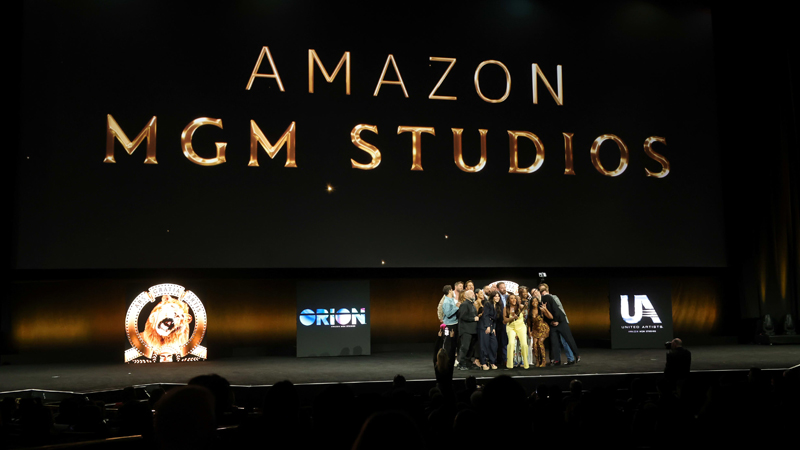
SEATTLE: Amazon is rolling out a new artificial intelligence initiative at Amazon MGM Studios to accelerate film and television production, as soaring budgets squeeze output and the entertainment industry braces for disruption.
The company has set up an internal unit dubbed AI Studio, led by Albert Cheng, a veteran entertainment executive, to develop tools designed to cut costs and fast-track creative processes. A closed beta programme will launch in March with selected industry partners, with early results expected by May.
Cheng described the unit as a small, agile “startup” operating under founder Jeff Bezos’s “two pizza team” philosophy, made up largely of product engineers and scientists alongside a smaller creative and business group.
Amazon is publicly embracing AI to tackle the rising expense of producing shows and films, which has limited the number of projects studios can fund. Cheng said the technology would accelerate production but not replace human creativity, stressing that writers, directors, actors and designers would remain involved at every stage.
The move comes amid growing unease in Hollywood, with leading actors voicing fears that AI could erode jobs and reshape the industry.
Amazon has also been pushing AI adoption across its businesses following the largest layoffs in its history, cutting around 30,000 corporate roles since October, including positions at Prime Video. The company pointed to productivity gains from AI as one factor behind the restructuring.
At Amazon MGM Studios, the AI team is focusing on tools that bridge the gap between consumer AI applications and the precision required for cinematic production, including improving character consistency across scenes and integrating with industry-standard creative software.

Hollywood
Paramount seeks FCC nod for foreign-backed $110 billion WBD deal
Gulf funds back merger as foreign stake nears 50 per cent, control stays with Ellison
NEW YORK: Paramount Global has approached the Federal Communications Commission seeking approval for foreign investments tied to its proposed $110 billion acquisition of Warner Bros. Discovery, marking another key step in one of the biggest media deals in recent years.
According to regulatory filings made public this week, the investment backing the deal includes major Gulf sovereign funds such as the Public Investment Fund, the Qatar Investment Authority and L’imad Holding Company. Together, foreign investors are expected to hold just under 50 per cent of Paramount’s equity once the transaction is complete.
Despite the sizeable international backing, Paramount has made it clear that voting control will remain with the family of chief executive David Ellison, ensuring the company stays firmly under US control as required by broadcasting rules.
A company spokesperson described the FCC filing as routine for transactions involving foreign capital and stressed that it does not impact the closing of the deal. Under US law, any significant foreign ownership in broadcast licence holders must undergo regulatory review.
The merger itself has already cleared a major hurdle, with Warner Bros. Discovery shareholders approving the deal on 23 April. The transaction values the company at $31 per share, a 147 per cent premium to its earlier trading price, reflecting strong strategic intent behind the tie-up.
If completed, the combined entity will bring together a vast portfolio including Warner Bros. film studios, HBO Max, and networks such as CNN, TNT and Discovery Channel. The deal is currently expected to close in the third quarter of 2026.
However, scrutiny is intensifying. The US Department of Justice has issued subpoenas seeking details on the merger’s potential impact on cinema competition, streaming services and content licensing. Reviews are also anticipated in international markets, including the United Kingdom.
There is also a financial safety net built into the agreement. If regulators ultimately block the deal, Paramount would face a $7 billion break-up fee. Additionally, the company has taken on $2.8 billion in obligations previously owed by Warner Bros. Discovery to Netflix following an earlier terminated arrangement.
Paramount maintains that easing foreign ownership barriers will unlock fresh capital and strengthen its ability to compete in a rapidly evolving media landscape. For now, the spotlight remains on regulators, whose decision will determine whether this global media consolidation moves from script to screen.