I&B Ministry
AIR to broadcast special to mark one year of ‘Mann Ki Baat’
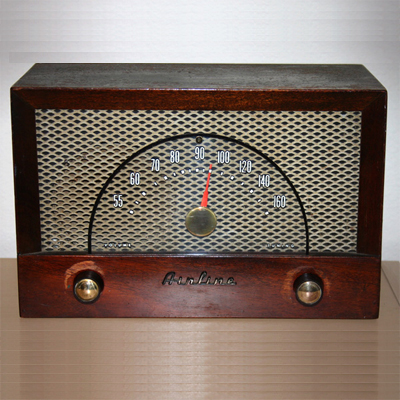
NEW DELHI: All India Radio (AIR) will broadcast Mann Ki Baat: Ek Saal Jan Judao Ka to mark the completion of one year of the monthly radio broadcasts by Prime Minister Narendra Modi.
The hour-long programme will be aired at 9.30 pm on 5 October by all capital AIR stations, all multi-channel stations, all FM Gold & FM Rainbow channels and Local Stations.
The show will be also available via live streaming on allindiaradio.gov.in and it can be also heard by downloading AIR’s mobile app available for Windows, Android or iOS platform.
The first broadcast of Mann Ki Baat was on 3 October last year.
The programme has been conceptualised by AIR Delhi as a platform for myriad voices, ranging from the remotest outpost of the country to the heart of its capital to a diaspora viewpoint.
It is scheduled under the National Programme of Talks (Hindi), a weekly programme of talks and discussions on the National Channel.
An AIR spokesman told Indiantelevision.com, “We are hopeful of presenting a bouquet of authentic voices from the rustic farmer in this attempt to reflect with authenticity what the public really expects from its Prime Minister. The aim is to cull out the areas that people want the Prime Minister to focus on. This programme will have elements of various radio formats such as Phone-in, Radio-Bridge, Vox populi etc. to showcase a participatory audio asset.”
The broadcast of the programme will be followed by a survey to be carried out by 46 units of Audience Research Units of AIR located at different places to cover varied linguistic and geographical zones of India. This, AIR hopes, will accurately gauge the impact of one year of continuous personal contact of the Prime Minister with his people through various modes of dissemination.
Mann Ki Baat has once again connected people with the radio and made them realise its importance for such a vast country that resides not only in metros and cities but in remote corners of the villages and tribal areas, where satellite television channels are yet to reach.
In its endeavour to maximise the reach of the programme, AIR relays it in all regional languages apart from Hindi, Urdu and also in large number of dialects spoken in remote parts of India.
Mann Ki Baat thus has the vastest disseminated broadcast and reaches over 99 per cent of India’s population through multifarious avenues as DTH, live streaming, mobile applications, terrestrial as well as satellite channels.
In addition to the programme slated for tonight, AIR broadcast Mann Ki Baat: Aatmiya Samvaad Ka Ek Varsh, which was a special edition of its much acclaimed programme Post Box 111, which is based on the unprecedented inflow of letters/mails from listeners to AIR as part of the first anniversary. The special programme was a recap of all episodes of both Mann Ki Baat and Post Box 111.
Post Box 111 is broadcast every Sunday at 11 am on FM Rainbow Network and the medium wave national hook-up.

I&B Ministry
Government sets up AI governance group to steer policy
AIGEG to align ministries, assess jobs impact, guide AI deployment.
MUMBAI: If artificial intelligence is the engine, the government is now building the dashboard and making sure everyone reads from the same screen. The Centre has constituted a new inter-ministerial body to coordinate India’s approach to AI, formalising a key recommendation from its governance framework and the Economic Survey. The AI Governance and Economic Group (AIGEG), set up by the Ministry of Electronics and Information Technology, will act as the central platform to align AI-related policy across ministries, regulators and departments, an attempt to bring coherence to what has so far been a fragmented and fast-evolving landscape.
The group will be chaired by union minister Ashwini Vaishnaw, with minister of state Jitin Prasada as vice chairperson. Its composition reflects both technological and economic priorities, bringing together the principal scientific adviser, the chief economic adviser, and the CEO of NITI Aayog, alongside key secretaries from telecommunications, economic affairs and science and technology. A representative from the National Security Council Secretariat is also part of the group, while the MeitY secretary will serve as member convenor.
At its core, AIGEG is designed to do two things: coordinate and anticipate. On the policy front, it will review existing regulatory mechanisms, issue guidance across sectors and ensure companies remain compliant with evolving legal frameworks. Beyond that, it will oversee national initiatives on AI governance, with a focus on enabling responsible innovation rather than merely regulating it.
The economic dimension is equally central. The group has been tasked with assessing how AI-driven automation could reshape jobs identifying which roles are most at risk, where those impacts may be geographically concentrated, and whether technology will augment or replace human labour. Based on these assessments, it will develop mitigation strategies and transition plans, signalling a more proactive stance on workforce disruption.
In parallel, AIGEG will work with industry stakeholders to chart a long-term roadmap for AI adoption, categorising use cases into “deploy”, “pilot” or “defer” buckets depending on readiness factors such as data availability, skill levels and regulatory clarity. The aim is to move from broad ambition to structured execution deciding not just what can be built, but what should be built now.
The group will function as the apex layer in India’s AI governance architecture, supported by a Technology and Policy Expert Committee that will track global developments, emerging risks and regulatory priorities. Together, the two bodies are expected to shape both the pace and direction of AI adoption in the country.
In a landscape where technology often outruns policy, the creation of AIGEG signals an attempt to close that gap ensuring that India’s AI journey is not just rapid, but also coordinated, accountable and economically grounded.