News Headline
Advertisers weigh in on effectiveness of BARC’s integrated TV plus OOH measurement


MUMBAI: In a significant move, the Broadcast Audience Research Council (BARC) India recently announced the integration of TV and out-of-home (OOH) TV viewership in its media workstation software. The decision will allow BARC India subscribers to get a comprehensive understanding of the overall viewership.
Brands and marketers have welcomed the move for the viable opportunities it can create. However, a few of them point out that such ratings will be impactful only during big-ticket event-based OOH viewing.
Dentsu Aegis Network CEO greater south and chairman and CEO of India Ashish Bhasin is of the view that it will help marketers in making more informed decisions. He says, "I believe it is a step in the right direction. A lot of TV viewership, particularly around sporting events like IPL, happens outside of homes and the more research that we can get, the more clarity of data we can get, the more it helps the medium and also helps in making more informed choices."

L'Oreal head of media Neel Pandya feels that while it is too early to tell how the policy will fare, it is going to be interesting to see how the advertising culture will evolve accordingly. He says, “It’s a great move by BARC to include out of home TV viewership as a part of its offering. Over the years, the only large media available for mass audience have been TV and OOH. As urban India is spending more time out of their homes on weekends, this service will enable marketers to get a holistic picture of the audiences’ TV viewing habits. OOH is an attractive proposition nowadays, leading to its extensive use and a boom of OTT players in the country. The only hurdle for large advertisers to invest heavily in OOH is its measurement system. While it’s too early to tell, it will be interesting to see how advertising evolves to capture the attention of increasing OOH TV viewing audiences.”
The service will allow broadcasters and advertisers to uncover more value and insights into TV-viewing behaviours, both inside and outside the home. The data will also be available in the planning module for agencies to plan effectively and account for this audience.
RSH Global CMO Poulomi Roy is of the view that the integrated ratings will help the marketers during event-based properties like IPL but otherwise the impact is going to be negligible. She says, “Big ticket media properties like IPL & World Cup which have a homogeneous group of people with common sentiments viewing together will show better reach and hence, marketers who spend on these properties will get affected in a positive way. However, it is important to know the sample size and coverage area and lastly how the data will be interpreted. Barring these days when such properties are not airing, the impact of these measurements is negligible because for a consumer it will be forced viewing of whatever is served by the social hotspots.”
KMPG India partner and head, media and entertainment Girish Menon thinks that while the intent behind the decision is very good, one needs to think through how the measurement metric will work to cover a large number of people who will be watching at one place along with demography of those viewers.
He says, “The way we need to look at out of home viewing is in two types. One is event-related viewing, mostly relevant to sports, and the other is consumption in the hotel. For an event-based viewing, for example, if you go to a restaurant, 50 people might be watching (from one screen). How do you really measure the number in such case? If you look at hotels, that model is very different. There is a reasonable chunk of the transient population that means, a person either flips through channels to pick up something interesting or typically goes to his favourite channel. Either way, it is not appointment viewing. But at least brand loyalty will have a larger play. So, therefore it is slightly more advantageous to larger and more well-known channels. There we benefit at the channel level, not necessarily at the programme level.”
Menon says that the way advertising works in India is ratings-based in terms of reach, people and demography. “Essentially, it will add to those ratings. Therefore from an advertiser’s perspective, it is a little bit better because it expands the population the advertisers will be able to target. But at the end of it, it benefits the advertisers like all other measurement systems.”
BARC had started the OOH TV viewership management in 2018, in Delhi, Mumbai and Bangalore. The council has also announced the expansion of this service to 120+ urban towns as well. This also comes at a time when BARC India has expanded its panel to 40,000 metered homes within the committed timeline of March 2019




NEW DELHI: Hamdard Laboratories gathered a cross-section of India’s achievers in New Delhi on Friday, handing out the Hakeem Abdul Hameed Excellence Awards to figures who have left their mark across healthcare, education, sport, public service and the arts.
The ceremony, attended by minister of state for defence Sanjay Seth and senior officials from the ministry of Ayush, celebrated individuals whose work blends professional success with a sense of public purpose. It was as much a roll call of achievement as it was a reminder that influence is not measured only in profits or podiums, but in people reached and lives improved.
Among the headline awardees was Alakh Pandey, founder and chief executive of PhysicsWallah, recognised for turning affordable digital learning into a mass movement. On the sporting front, Arjuna Awardee and kabaddi player Sakshi Puniya was honoured for her contribution to the game and for pushing women’s participation onto bigger stages.
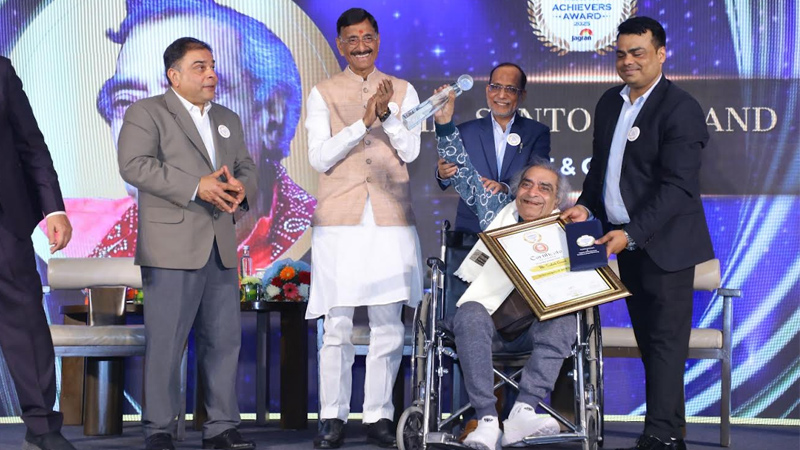
The cultural spotlight fell on veteran lyricist and poet Santosh Anand, whose songs have echoed across generations of Hindi cinema. At 97, Anand accepted the honour with characteristic humility, reflecting on a life shaped by perseverance and hope.
Healthcare honours spanned both modern and traditional systems. Manoj N. Nesari was recognised for strengthening Ayurveda’s place in national and global health frameworks. Padma shri Mohammed Abdul Waheed was honoured for his research-backed work in Unani medicine, while padma shri Mohsin Wali received recognition for his long-standing contribution to patient-centred care.
Education and social development also featured prominently. Padma shri Zahir Ishaq Kazi was honoured for decades of work in education, while former Meghalaya superintendent of Police T. C. Chacko was recognised for public service. Goonj founder Anshu Gupta received an award for his dignity-centred rural development initiatives, and the Hunar Shakti Foundation was honoured for empowering women and young girls through skill development.
The Lifetime Achievement Award went to former IAS officer Shailaja Chandra for her long career in public healthcare and governance, particularly in the traditional systems under Ayush.
Speaking at the event, Hamdard chairman Abdul Majeed said the awards were a tribute to those who combine excellence with empathy. “These awardees reflect Hakeem Sahib’s belief that healthcare, education and public service must ultimately serve humanity,” he said.
Minister Seth struck a forward-looking note, saying India’s young population gives the country a unique opportunity to become a global destination for learning, health and wellness by 2047.
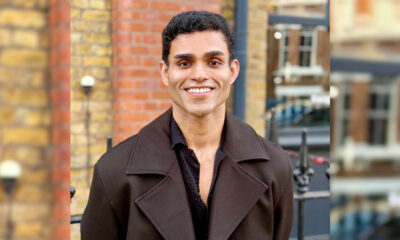
The ceremony also featured the trailer launch of Unani Ki Kahaani, an upcoming documentary starring actor Jim Sarbh, set to premiere on Discovery on 11 February.
Instituted in memory of Unani scholar and educationist Hakeem Abdul Hameed, the awards have grown into a national platform that celebrates those building a more inclusive and resilient India. For one evening at least, the spotlight was not just on success, but on service with substance.