eNews
Aasheesh Sharma turns the page at Outlook; joins as digital editor

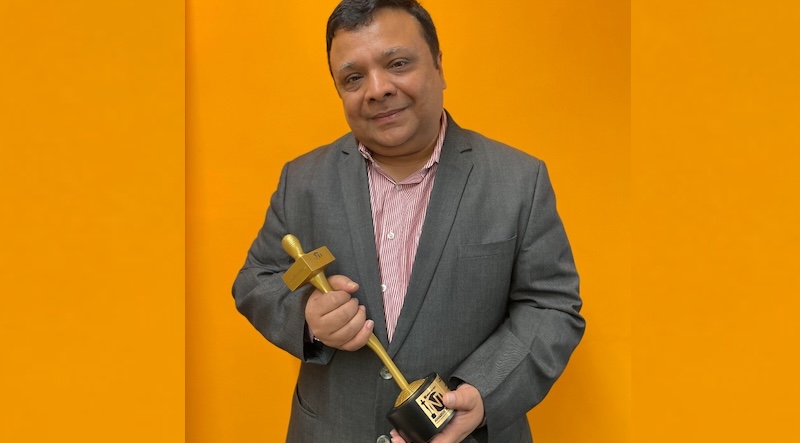
NEW DELHI: A new year, a new masthead — and a familiar byline with sharper elbows. Aasheesh Sharma has joined Outlook as digital editor, marking both a personal reset for 2026 and a symbolic moment for a magazine turning 30 and refusing to go quietly into middle age.
After nearly four years with the TV9 Group — most recently as deputy editor and copy head at News9 Plus, the world’s first news OTT platform — Sharma is stepping into his third professional decade at what he calls an “iconic media brand”. He landed just in time for Outlook’s 30th anniversary double edition, a statement issue packed with heavyweight writers and unapologetically high-brow ambition.
Under editor Chinki Sinha, Outlook is doubling down on what once made it indispensable: sharp ideas, long reads and intellectual swagger. Recent issues have featured names such as Perumal Murugan, Pico Iyer, Amitava Kumar, Janice Pariat and Sudarshan Shetty — not exactly clickbait fodder, and proudly so. Sharma’s brief is to push that legacy through a digital-first filter, without sanding off its edges.
The move crowns a career spanning nearly three decades across wires, newspapers, television, digital platforms and OTT. Sharma has worked with Hindustan Times, India Today, NDTV, IANS, Mail Today and Apeejay Education Society, editing everything from front pages and anniversary issues to op-eds, features and magazine covers. He has written on politics, sport, books, art and culture — often in the same breath — and is known in newsrooms as a meticulous desk hand with a flair for packaging and punch.
At TV9, he also fronted The Storytellers, a long-form interview show on books and authors, winning an Indiantelevision.com News Television Award for OTT programming in December 2023. It burnished his reputation as an editor comfortable straddling seriousness and showmanship — a useful skill as media houses chase depth without losing eyeballs.
Outlook, meanwhile, is signalling intent. In an age of shrill opinion and thin gruel journalism, it is betting that ideas still matter — provided they are well edited, well designed and smartly distributed. Sharma’s role is to make sure the pixels carry as much weight as the print once did.
A fresh year, an old magazine, and an editor who has seen every format reinvent itself at least twice. If journalism is cyclical, this feels less like a leap of faith and more like muscle memory. The newsroom lights are on — and Outlook, once again, is sharpening its view.