News Broadcasting
Aaj Tak lines up mega programming fare for year end

MUMBAI: As the year draws to a close, special programming has been lined up by Aaj Tak, which will capture the essence of the year that was, and look into what the future has in store. Spanning over 30 and 31 December, the programming will have a mix of information, insight and entertainment.
Some of the he major segments comprising a mix of the serious, the satirical and humorous are as follows:
Sabse Tez – This 30-minutes programme would focus on the personalities from the fields of politics, sports, entertainment and business, who were in the limelight for all the right reasons. Using the quintessential by-line of the channel, the “sabse tez” personalities would be nominated on the basis of their intelligence as well as their ability to have done quickly the right thing at the right time. This will be aired on 30 December at 10:30 pm with a repeat telecast on 31 December at 9:30 am and 2:30 pm.

Kismat Aapki Cards Hamare – The two-hour live program would be Aaj Tak’s way of looking at the future and what all 2005 has in store for big personalities as well as our viewers. Astrologer Meenakshi, will be in the studios to present an in-depth and engrossing chat as to what the stars have to say about the future. The future of famous people like Sonia Gandhi, Shahrukh Khan, Anil Ambani, Sushmita Sen would be discussed as also the future of all the star signs. This will be aired on 31 December from 6 pm to 8 pm.
Socha Na Tha – The program would encapsulate some major events and controversies that happened in 2004 that no one had anticipated. The program would be done in a tongue-in-cheek manner with the right mix of humour, sarcasm and responsible news analysis. This will be aired on 31 December from 10 pm to 11 pm.
Agar Aisa Hota – This will be a half hour program hosted by comedian Jaspal Bhatti. As the name suggests, the program will try to vision how things would have been in case certain things would have worked out a certain way. For example actress Mallika Sherawat once said during the year that she should be made the Censor board chief. Also there are examples like, had Ambani been poor, how would they have fought, what would happen had Sonia been the prime minister? This will be aired on 31 December at 9:30 pm with a repeat telecast on 1 January at 9:30 am and 2:30 pm.
Khabar Matlab Aaj Tak – This show will highlight some of Aaj Tak’s major news breaking stories that had political or social fallouts. This show will run through the day. For example Miss India Laxmi’s crown was taken back after it was first reported on Aaj Tak that she is married; 30 Delhi Police officials were suspended after Aaj Tak caught these officials on camera taking bribes, Uma Bharati first lashed out against Pramod Mahajan in an exclusive interview to Aaj tak thereby leading to political fallouts that ultimately resulted in her ouster from the BJP. This will aired on 31 December throughout the day.




News Broadcasting
CNN-News18 to host Fury in the Gulf conclave on West Asia crisis
Three-hour summit to unpack geopolitical fallout and impact on India
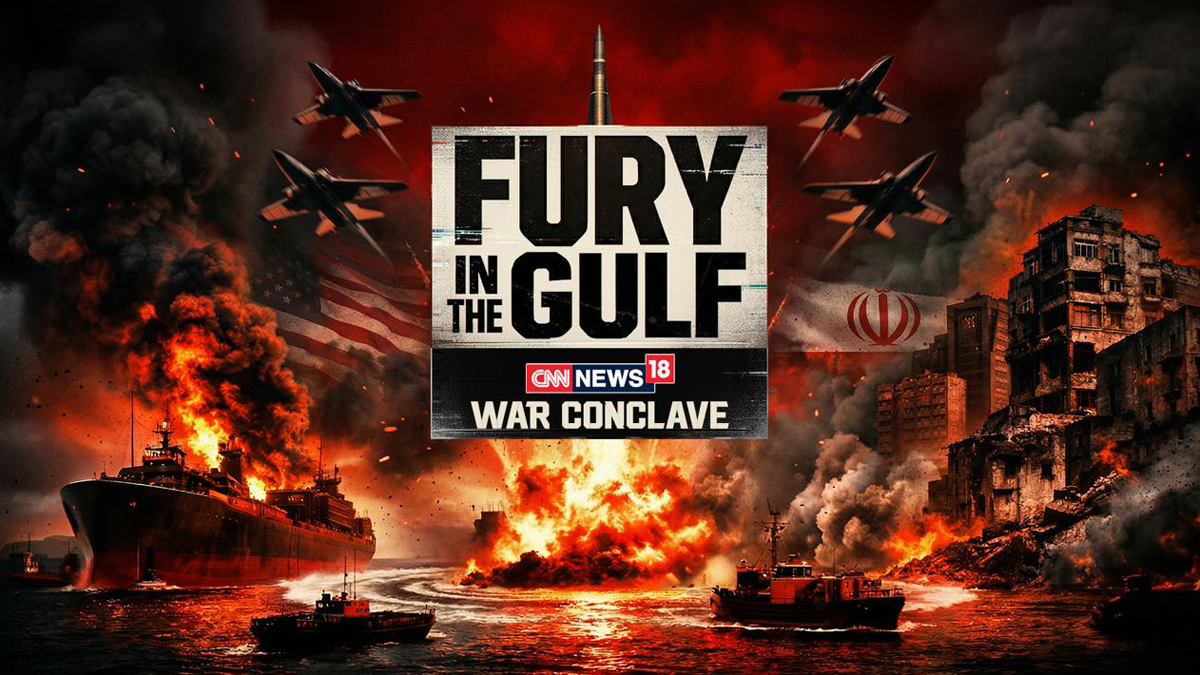
MUMBAI: CNN-News18 is set to host a special three-hour broadcast, Fury in the Gulf – War Conclave, on April 7, aiming to decode the escalating West Asia crisis and its far-reaching implications for India.
Scheduled from 4:00 PM to 7:00 PM, the conclave comes at a time when tensions between Iran and the United States are reshaping global geopolitics and triggering economic uncertainty. With India’s deep energy ties, trade links and large diaspora in the Gulf, the developments carry significant domestic relevance.
Built around the theme ‘Conflict, Consequences, and The Future,’ the programme will feature six curated sessions combining one-on-one interviews and panel discussions. The focus is to cut through the clutter and offer viewers a clearer understanding of the fast-evolving situation.
Key sessions include ‘Diplomacy in Times of War’ featuring Shashi Tharoor, and ‘World After the Iran Conflict’ with voices such as Ram Madhav, Reuven Azar, representatives from the European Union and the Iranian Deputy Envoy. Another session titled ‘Another Dunkirk?’ will bring together K. J. S. Dhillon and Jitin Prasada among others.
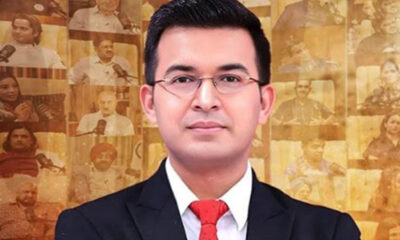
CNN-News18 editorial affairs director Rahul Shivshankar said, “In times of war, clarity becomes the most powerful tool. Fury in the Gulf – War Conclave brings together credible voices to address the questions and confusion that arise amid an overwhelming influx of information.”
He added that the initiative is aimed at delivering “facts, perspective, and insight” at a time when misinformation can easily cloud public understanding.
Echoing the sentiment, CNN-News18 CEO– English and business news Smriti Mehra said the conflict marks a defining global moment, with consequences that extend well beyond the region. She noted that the conclave seeks to present the crisis with “depth, nuance and responsibility” so audiences can better grasp its real-world impact.
As geopolitical tensions continue to dominate headlines, the conclave positions itself as an attempt to bring order to the noise, offering viewers a structured, insight-led look at a complex and rapidly shifting global situation.






