
Movies
India has more than content, it has context: Gajendra Shekhawat at FICCI FRAMES
Culture minister says human creativity, local stories and trust will shape India’s media moment


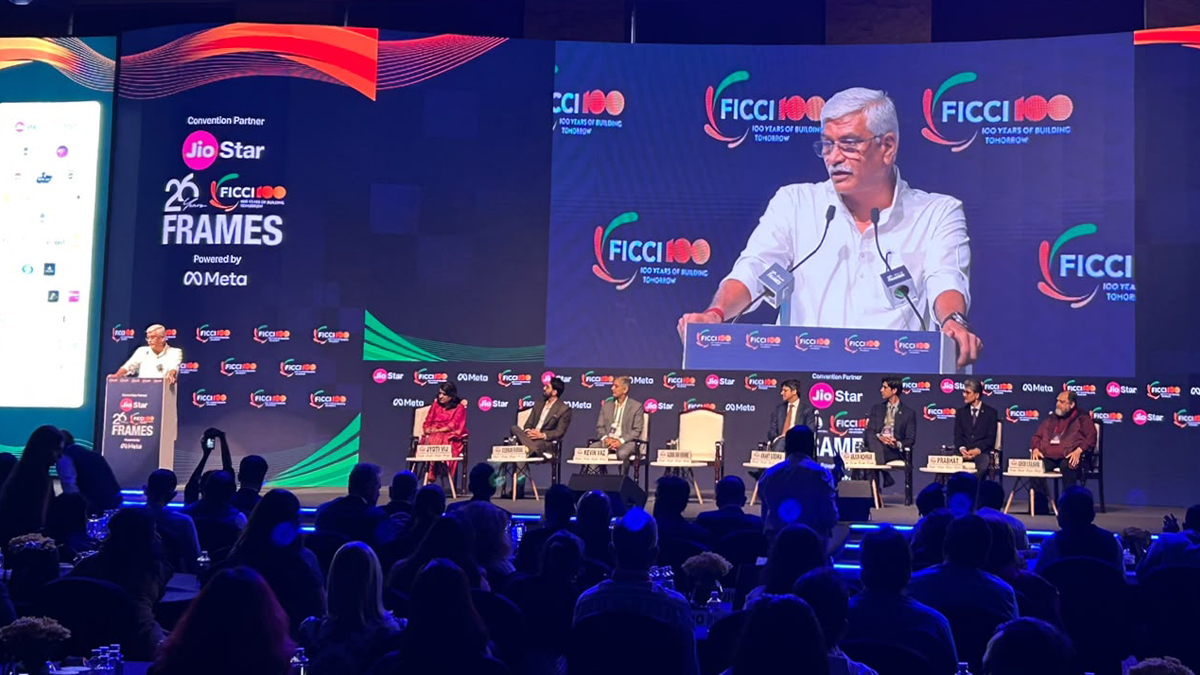
MUMBAI: The future of Indian storytelling may be powered by technology, but Gajendra Singh Shekhawat believes its soul must remain human. Addressing FICCI FRAMES 2026 in Mumbai, the union minister of culture called on India’s media and entertainment industry to move beyond being a large content market and establish itself as a global creative leader built on originality, trust and human creativity.
Speaking at the 26th edition of FICCI Frames, being held on 29 and 30 September at the Grand Hyatt, Shekhawat said the industry was entering a period of unprecedented change, with artificial intelligence, digital platforms and new forms of content creation reshaping how stories are made, distributed and consumed.
The minister said the transformation also presents an opportunity to create a new category of content centred on human creativity.
“I feel that in the next two to three years, a time will come when the whole world will start looking towards low-AI content, no-filter content, or human-only content,” Shekhawat said.
He cautioned, however, that the opportunity should not come at the cost of the next generation’s creativity. As technology becomes increasingly embedded in the creative process, he said the industry must work equally hard to ensure that human imagination does not diminish.
Shekhawat began his address by reflecting on the traditional lighting of the lamp at the opening of the event. He said Indian philosophy has historically viewed the lamp not merely as a source of light, but as a symbol of knowledge, introspection, hope, direction and transformation.
He used the symbolism to underline the scale of change facing the media and entertainment industry.
According to Shekhawat, the pace of change has accelerated dramatically, with more transformation taking place in the past decade than in the previous century. He expects the next few years to bring an even greater shift.
Against this backdrop, he said media and entertainment have an increasingly important role to play because stories can influence how people understand cultures, places and one another.
“A single story doesn’t merely entertain us; it fundamentally changes our perspective, our way of thinking, and builds our opinions regarding a topic, an object, or a place,” he said.
That, he added, makes the theme of FICCI Frames 2026, ‘India’s Media Moment: Creating Value in an Age of Infinite Content’, particularly relevant.
Shekhawat said the industry no longer faces a shortage of content. Instead, the challenge is creating work with meaning, depth, originality and a strong human connection.
“Attention is limited, but choice is limitless, and trust is the key,” he said, stressing that maintaining audience trust must remain a priority.
He argued that India’s advantage goes well beyond its large audience base. The country has a vast cultural history, linguistic diversity, young creative talent, technical capabilities and a storytelling tradition that stretches back thousands of years.
“India doesn’t merely possess content. India possesses context,” Shekhawat said.
He traced that storytelling heritage from the cave paintings of Bhimbetka and oral traditions to literature, sculpture, painting, folk arts and cinema, and now to OTT, gaming and music.
While the mediums have changed, he said, India’s storytelling consciousness has remained constant.
For Shekhawat, this makes the current media opportunity much larger than entertainment. It can simultaneously contribute to culture, economic growth, employment, India’s global standing and tourism.
“This is our creative dividend, this is our creative capital,” he said.
Shekhawat outlined three broad shifts that he believes India’s media and entertainment sector needs to make over the coming decade.
First, India needs to move beyond being a consumer of content and work towards becoming a global leader in content creation and creativity.
Second, the industry must look beyond audience scale and focus on creating content with stronger intellectual property.
Third, stories on screen should connect more closely with the experience of visiting real locations across India, creating a link between entertainment and tourism.
The minister said successful stories can encourage people to travel, while tourism can generate prosperity for local communities.
Shekhawat also highlighted India’s linguistic diversity as one of its biggest creative strengths.
Using Rajasthan as an example, he noted that cultural differences can emerge over relatively short distances, with changes in food, clothing, dialect and environment.
He said India’s languages and folk traditions should not be treated simply as different methods of expression. They carry distinct perspectives, memories, emotions and social histories.
Digital platforms are now making it easier to take these local stories to international audiences. Subtitling, dubbing, AI-powered translation and transliteration have reduced many of the traditional barriers created by language.
“Earlier language used to be considered a boundary, language is no more a boundary now. Today, language can serve as a bridge,” he said.
The bigger challenge, according to Shekhawat, is ensuring that local stories can travel globally without losing their cultural identity.
He stressed that India does not need to alter or manufacture its cultural distinctiveness to appeal to international audiences.
“Our success lies not just in going global, but in remaining original while going global,” he said.
Shekhawat also highlighted the growing relationship between content and tourism.
A film, series or digital story can inspire audiences to visit the locations they see on screen. But this creates an obligation to ensure that the real-world experience matches what audiences have been shown.
He warned that a significant gap between representation and reality could influence perceptions of an entire destination.
The difference today is that tourists and travellers can immediately share those experiences online. A single positive or negative comment can potentially affect how future visitors perceive a location.
This makes authenticity increasingly important for destinations seeking to benefit from their portrayal in films and other content.
Shekhawat also pointed to the democratisation of content creation. With smartphones, cameras and digital platforms widely available, individuals can now create and distribute work without relying entirely on traditional media infrastructure.
An independent filmmaker can shoot a film on an iPhone, while folk singers, artists, animators, game designers and travel creators can turn their skills into livelihoods, he said.
This expansion of access has created a much wider creative economy, but it also brings intense competition for attention.
Shekhawat said the government, industry, creators and other stakeholders need to work together to ensure that the competition does not undermine the sustainability of the sector.
The minister’s larger message at FICCI Frames 2026 was clear: India’s opportunity is not simply to make more content or reach more viewers. It is to turn its deep cultural heritage, creative talent and technological capabilities into globally relevant stories without losing what makes them distinctly Indian.






