Hindi
Filmmakers debate attention economy and theatre revival at Content Hub
Creators say conviction, authenticity and community viewing still drive cinema.


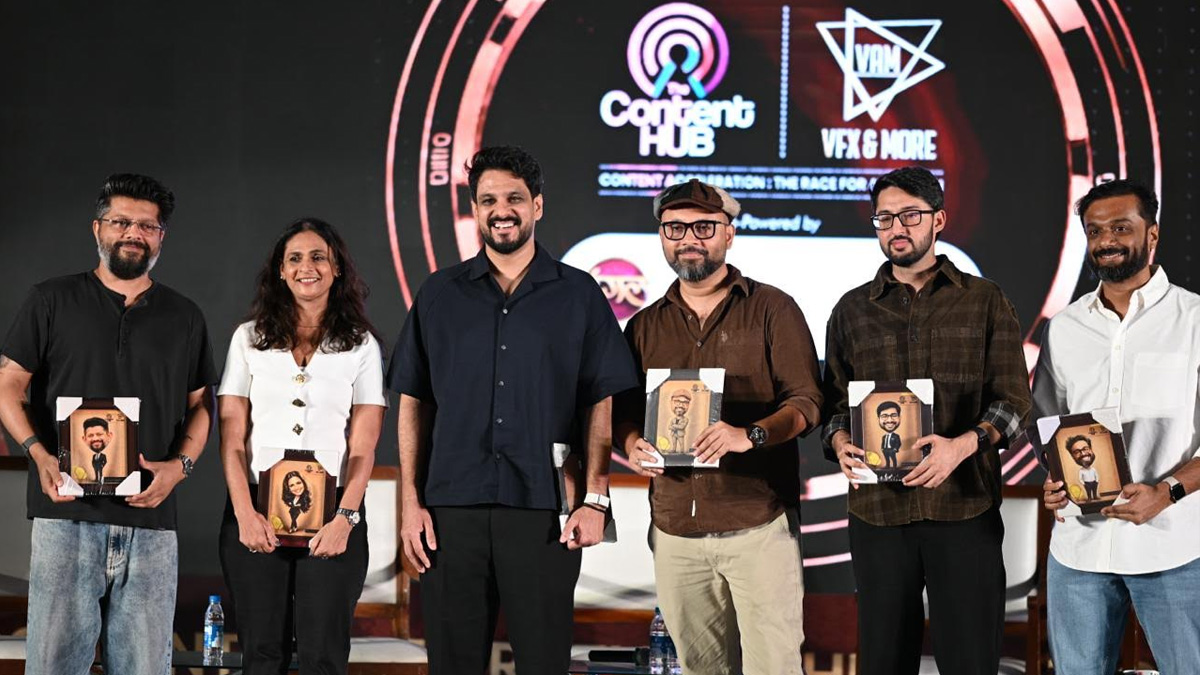
MUMBAI: In an age where reels scroll faster than film credits, a room full of filmmakers gathered to answer one looming question: what still gets audiences to put their phones down and walk into a cinema hall? That question sat at the centre of a packed discussion at The Content Hub x VFX & More Summit and Awards 2026, where filmmakers, writers and creators unpacked the rapidly shifting dynamics of storytelling, audience behaviour and the race for attention in the AI era.
The session, chaired by Indian Television Dot Com founderand editor in chief Anil Wanvari, featured insights from filmmakers and writers including collaborators associated with projects such as Black Warrant, regional breakout hits and mainstream studio-backed cinema. The broader consensus was clear: algorithms may influence visibility, but conviction still drives storytelling.
A recurring theme through the discussion was that creators can no longer rely on formulas or trend-chasing to guarantee success. Panellists argued that the most successful films in recent years have been deeply personal works shaped by a filmmaker’s own creative voice rather than market calculations.
Films such as Animal, Sayara and Durandar were cited as examples of projects where audiences connected with emotional authenticity and distinctive filmmaking grammar rather than conventional commercial packaging. Speakers stressed that audiences today can immediately sense when storytelling feels manufactured.
The conversation also turned towards the growing fragmentation of entertainment. With creators like Samay Raina commanding massive digital audiences and competing for consumer attention alongside films, streaming platforms and gaming, filmmakers acknowledged that cinema is no longer competing only with cinema.
Yet, rather than viewing digital creators as threats, the panel described the shift as a reflection of changing audience habits. Entertainment options have multiplied dramatically, but viewers still respond to compelling storytelling, emotional honesty and shared cultural experiences.
One filmmaker pointed out that viral digital content often succeeds because of its emotional rawness and relatability, qualities that traditional filmmakers can also learn from. Another observed that audiences are willing to commit time to long-format storytelling if the emotional stakes are strong enough, referencing the continued success of expansive theatrical films despite assumptions about shrinking attention spans.
Theatre-going itself emerged as a major talking point. Several speakers argued that cinema halls can still thrive if filmmakers create experiences that feel communal, immersive and emotionally engaging. Theatrical viewing, they said, is less about spectacle alone and more about creating moments audiences want to collectively experience, discuss and revisit.
Even intimate dramas can generate powerful theatrical engagement if the storytelling, sound design, performances and emotional texture come together effectively. Frost/Nixon was referenced as proof that scale alone does not define cinematic experience.
The panel also reflected on how younger audiences are increasingly open to rooted and regional storytelling, thanks in part to the wider exposure created by OTT platforms. Stories grounded in local culture, folk traditions and environmental themes were discussed as examples of content that found cross-generational appeal despite initial concerns about niche appeal.
Studio relationships and creative freedom also came under discussion. Filmmakers working with Dharma Productions described an environment where directors remain closely involved across scripting, casting, marketing and visual design, with the emphasis remaining on making the strongest possible film rather than chasing algorithmic trends.
The panellists repeatedly returned to one central idea: the industry’s biggest challenge may not be competition from creators, platforms or changing consumption habits, but the creative choices filmmakers make themselves.
One speaker used Lagaan as an example, arguing that Indian cinema still has room for ambitious, emotionally rich theatrical storytelling if creators are willing to take bold narrative risks rooted in conviction.
The session closed on an optimistic note. Even in a world flooded with endless content, filmmakers maintained that audiences continue to seek stories that feel emotionally truthful, culturally rooted and worth experiencing together. In the attention economy, they suggested, authenticity may still be the sharpest screenplay of all.