
Hindi
FICCI FRAMES 2026 explores what makes audiences return to cinemas
Panel examines audience trust, storytelling, marketing and changing theatrical economics


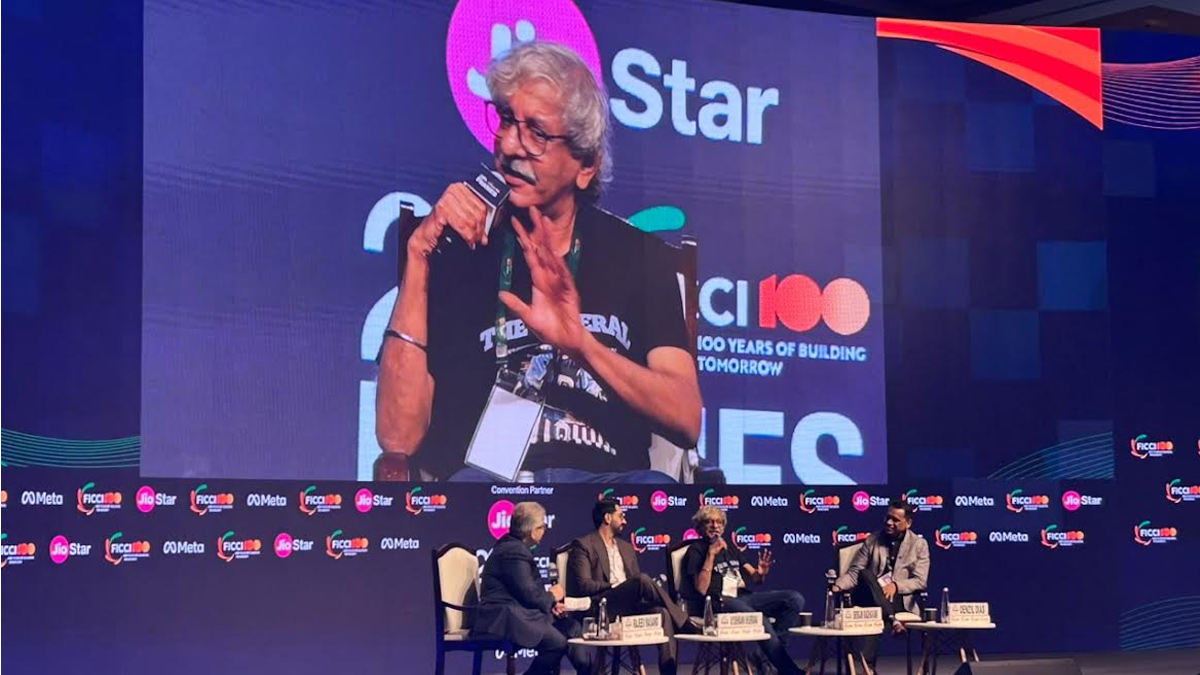
MUMBAI: The big screen may be facing smaller attention spans, but cinema still has one trick streaming cannot quite replicate, making strangers react to the same story at the same time. At FICCI FRAMES 2026, the panel ‘Cinema at Crossroads – The Rules of the Big Screen’ explored what makes audiences leave their sofas, buy a ticket and choose the collective theatre experience in an age of streaming, changing economics and seemingly endless content.
The discussion brought together actor and FICCI FRAMES Ambassador Ayushmann Khurrana, filmmaker and screenwriter Sriram Raghavan and Denzil Dias, VP and Managing Director – India Theatrical, Warner Bros Discovery, with Rajeev Masand, Chief Operating Officer, Dharma Collab Artists Agency (DCAA), as moderator.
Rather than treating streaming as a simple threat to theatrical cinema, the discussion examined a more fundamental question: what makes a film worth leaving home for?
The answer, across the conversation, repeatedly came back to connection and trust. A theatrical film has to establish a relationship with its potential audience before the lights go down. That connection can come from the filmmaker, the actors, the subject, the marketing around the film or, increasingly, from people who have already watched it.
In a crowded entertainment market, audiences have more options than ever before. A film therefore has to give them a reason to choose it over the thousands of other pieces of content competing for their time.
One of the key points discussed was the importance of identifying the audience for a film before approaching the business of releasing it.
Theatrical performance is not simply a question of putting a film into as many screens as possible. The panel examined how distributors and studios need to understand who a film is being made for, where those viewers are and how to create a pathway between the film and its intended audience.
That process can be particularly important for films that do not arrive with the conventional advantages of a major star-led release or a huge marketing campaign.
A film can begin with limited awareness, restricted screenings and a modest promotional push, but audience response can alter its trajectory. Once viewers discover a film and begin talking about it, the response itself can become part of the marketing engine.
This creates a different equation for theatrical cinema. Instead of assuming that the largest opening campaign automatically produces the largest impact, the industry can focus on finding the right audience and building a connection strong enough to encourage that audience to return and bring others with it.
The panel also looked at the role of marketing in determining how audiences perceive a film before they watch it.
A strong story can still struggle if audiences do not know what the film is, why it is different or whether it is meant for them. Marketing therefore becomes more than simply advertising a release date. It becomes the bridge between the film and its audience.
The discussion highlighted the need to communicate the central proposition of a film clearly and reach audiences through the spaces where they already spend their time.
That can mean understanding audience behaviour, identifying the communities most likely to respond to a particular story and ensuring that the film’s identity is not lost in a crowded release calendar.
Once that connection is created, distribution becomes the next piece of the puzzle.
A film needs to be available where its audience is willing to watch it, with the right screens and show timings supporting that demand. The theatrical business, therefore, works as a chain: discover the audience, create awareness, build interest and then make access convenient enough for that interest to turn into a ticket purchase.
Another major thread was the changing relationship between stars and stories.
The discussion explored how the traditional star system is no longer necessarily enough to guarantee a theatrical draw. With audiences exposed to global cinema, streaming platforms, short-form content and multiple entertainment choices, familiarity with an actor can create awareness, but a distinctive story still needs to provide the reason to watch.
Authenticity also emerged as an important element. Films built around subjects that feel genuine and creatively specific can establish their own identity rather than relying entirely on scale.
That becomes particularly relevant for filmmakers working with different genres and audiences. A romance does not have to compete on the same terms as a horror film, just as an intimate drama does not need to imitate a large-scale spectacle. Each film can have a different theatrical proposition depending on its story, audience and intended experience.
The discussion also touched upon the idea that a film’s creative identity needs to be established from the beginning. The story, the filmmaker, the actors and the way the project is positioned all contribute to determining what kind of audience the film can attract.
For all the discussion around changing audience habits, the panel returned to one thing that remains uniquely theatrical: collective emotion.
A film watched at home can be convenient, personalised and available instantly. But a theatre brings hundreds of people into the same room, watching the same frame at the same moment.
A laugh spreads across the auditorium. A scream can trigger another scream. Silence can become part of the scene. A dramatic moment can generate an immediate collective response.
That shared reaction is not merely an additional feature of cinema; it can become part of the experience itself.
The panel considered this communal aspect particularly important when thinking about why audiences continue to make the effort to visit cinemas. The theatrical experience turns an individual act of watching into a social event.
This also means that the value of a theatrical release cannot always be measured only by the film itself. The atmosphere around the film, the audience reaction and the conversation that develops afterwards can influence its journey.
The discussion also examined the economics of filmmaking and how the industry can approach risk differently.
One way of looking at a film is to begin with its potential box-office performance. But another approach is to start with the story, establish the price at which it can realistically be made and then identify the audience that can support that investment.
In this model, the business follows the creative proposition more closely.
The film’s cost, scale, genre and audience become interconnected decisions. Once the intended audience is understood, the marketing and distribution strategy can be built around reaching that audience rather than attempting to appeal indiscriminately to everyone.
This approach also recognises that not every film needs to be a mass-market blockbuster to have a theatrical life.
A film can succeed by finding a specific audience and giving that audience a compelling enough reason to watch it in cinemas. The challenge is making sure the industry can identify that audience, reach it efficiently and provide enough access for demand to translate into theatrical viewing.
The conversation also questioned the assumption that theatrical success is exclusively the domain of large films.
Scale can certainly create an event, but a smaller or more specialised film can generate significant audience engagement when its story finds the right viewers.
That makes audience intelligence increasingly important. Understanding viewing habits, preferences and responses can help filmmakers and distributors make more informed decisions about where and how a film should be positioned.
Theatrical cinema, in this sense, becomes less about a one-size-fits-all release strategy and more about matching the film to the audience.
The same principle applies to marketing. A film that depends on word of mouth may require a different campaign from a major franchise release. A genre film may need to communicate its emotional hook differently from a drama driven by its performers or subject.
Streaming has changed the baseline for audience expectations. Viewers are accustomed to having enormous choice at their fingertips, making the value of attention harder to capture.
The panel’s discussion therefore pointed towards a broader shift in how theatrical cinema needs to think about competition.
The competition is not simply another film releasing on the same Friday. It is everything else an audience can do with its time.
A theatrical release requires planning, travel, a ticket purchase and a commitment of several hours. For audiences to make that choice, the film needs to offer something they believe is worth the effort.
That could be spectacle, emotion, suspense, humour, a compelling performance, a distinctive story or simply the pleasure of experiencing a film with other people.
Theatrical cinema consequently has to sell not only the movie, but the experience surrounding the movie.
The discussion at FICCI FRAMES 2026 ultimately moved away from the idea of a straightforward cinema-versus-streaming battle.
Instead, it examined how the theatrical ecosystem itself is changing as audiences become more selective and the supply of entertainment continues to expand.
The fundamental challenge is not merely to get people into theatres once. It is to create enough trust and connection for them to keep choosing the big screen when they have countless alternatives at home.
That puts the audience at the centre of the theatrical equation from the moment a story is developed to the way it is marketed, distributed and experienced.
The rules of the big screen may be changing, but the panel suggested that one rule remains stubbornly relevant: audiences still respond when a story gives them a reason to care.
And when that story makes them laugh, gasp, cry or cheer alongside a room full of strangers, the cinema experience becomes more than watching a film. It becomes the story continuing beyond the screen.






