Connect with us

MAM

Xaxis, M’Six and Lemma join hands to drive sales growth for brands through programmatic DOOH campaign

Published

on

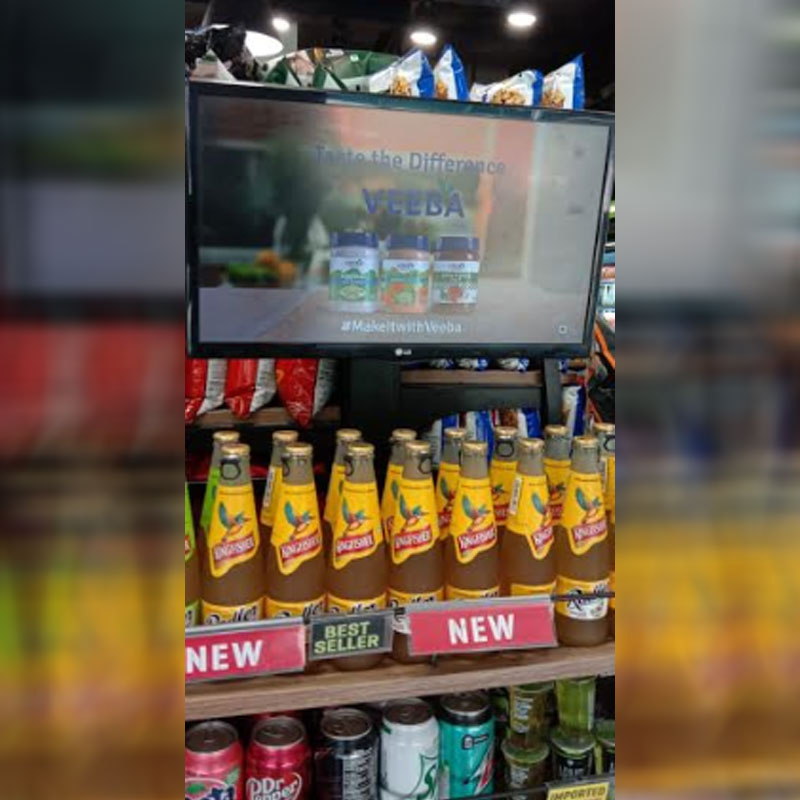
MUMBAI: Xaxis, the outcome media company and GroupM’s advanced programmatic arm, in partnership with m/SIX and Lemma recently announced the results of their pioneering digital out-of-home (DOOH) campaign for Veeba Sauces. The campaign showcased a new real-time audience targeting and measurement capabilities for out-of-home advertising and helped increase in-store sales by more than 15 per cent.

Identifying buying patterns among consumers for Veeba Sauces, Xaxis designed the campaign to target the upper-middle-class population in Delhi. With a host of competing brands, standing out in stores was also a challenge. To reach out to their target audience, customers were targeted at three key touchpoints at the supermarket: before they entered the store, at the store and at the billing counter. Using Xaxis’ proprietary platform intelligence the campaign gained richer insights and analysis of all audience dynamics, enabling attribution of the effects of the contextualized content strategy as well as its impact on brand engagement and in-store behaviour.

As consumer attention becomes increasingly elusive, Xaxis’ DOOH capabilities, allowed Veeba Sauces to build connections with target audiences in real-time and understand the direct impact of DOOH on the customer journey. By leveraging DOOH, brands can enjoy the benefits of digital display advertising, including data-driven targeting, measurement, and live creative updates, in localized, high-impact media sites. By 2021, digital is expected to account for 45 per cent of all outdoor media spend (WARC Global Ad Trends report, November 2018).

Advertisement

Veeba Food Services brand manager Ankit Sharma commented: “Xaxis presented us an opportunity to deliver programmatically digital out of home. With our fantastic product line-up, being able to display our message in target stores supported by mobile activity, remarketing to users who were within 20 meters of a DOOH location, was a smart approach. The campaign helped increase sales by 15% across the target 24/7 stores in Delhi. Moving forward, it is a channel we will be considering within our media mix.”

m/SIX India senior vice president Saket Sinha said: "M/SIX has always believed in outcome-based advertising and that connecting with walk-in consumers at a store is a critical part of the marketing funnel. By enabling brands to tap into the benefits of programmatic advertising, we were able to provide Veeba Sauces with a unique medium to reach consumers with eye-level messaging and cover an area far greater than what was possible through traditional OOH.”

Xaxis India country lead Bharat Khatri added: “Out-of-home advertising has always been an effective media channel to drive awareness for brands and now combined with programmatic technology this medium is more automated and measurable than ever before. We saw all the benefits of programmatic DOOH come to light, the ability to communicate in real-time through networked digital screens, Wi-Fi and mobile broadband to deliver contextually relevant messaging, and drive more immediate consideration, trial, and purchase. This is a compelling reason for brands to invest in DOOH.”

Advertisement

Lemma founder and CEO Gulab Patil said: “Mapping audience parameters and behavioural tendencies to locations has taken DOOH advertising to new heights. Furthermore, programmatic technology has enhanced DOOH outputs with dynamic creative rendering abilities that empower advertisers to leverage the essence of the surrounding. In this case, contextualized creatives for Veeba in sync with audience profile, placement & density influenced consumers in the last mile of the purchase journey, subsequently resulting in higher sales. Not only this, technology like ours provide data-mining opportunities that help brands garner information beyond mere exposures.


Click to comment

Leave a Reply

Your email address will not be published. Required fields are marked *

MAM

Cashless vs Reimbursement: Which Health Insurance Claim Process Is Easier?

Published

on

For the majority of people, the true test of health insurance is not when they purchase a policy but rather when they have to use it. Additional paperwork, approvals, and payments can add to the already stressful experience of a hospital admission. For this reason, selecting the appropriate plan is just as crucial as knowing how claims operate.

Cashless and reimbursement are the two primary methods of using mediclaim insurance while in the hospital in India. Both are valid, both are widely used, and both have advantages and limitations. The more important question is which is simpler in practice, particularly in an emergency, rather than which is “better” in theory.

To answer that fairly, it is important to look at how each process actually works inside hospitals, what challenges people face, and what kind of situations make one option smoother than the other.

Advertisement

What Does Cashless Treatment Really Mean in Practice?

Cashless care is often promoted as the most practical way to use health insurance, and in many cases, it truly is. Under this system, you visit a network hospital partnered with your insurer, where the hospital contacts the insurance provider on your behalf, submits your medical records, and requests approval for treatment. If the claim is approved, the insurer directly settles the covered portion of the bill with the hospital, and you only pay for non-covered expenses such as deductibles, co-payments, or room upgrades, which can be a major relief for families who may not be able to arrange large sums of money quickly.

However, cashless treatment is not always as seamless as it appears. Approval is not instant in every case, as the hospital must submit medical reports, estimated costs, and justification for the treatment. The insurer then reviews whether the illness is covered, whether waiting periods have been completed, and whether the procedure is medically necessary. As a result, there can be delays in approval, especially for planned surgeries, but once approved, cashless treatment remains financially smoother since you are not required to pay the full amount upfront.

How Does Reimbursement Actually Work on the Ground?

Reimbursement works in the opposite way, where you pay the entire hospital bill first and later claim the amount from your insurer. This option is commonly used when treatment takes place in a non-network hospital or during emergencies when immediate cashless approval is not possible. From a paperwork perspective, reimbursement requires more effort, as after discharge you must collect all documents—such as hospital bills, pharmacy receipts, diagnostic reports, discharge summary, and payment proofs—and submit them to the insurer within a specified time, usually 15 to 30 days. The insurer then reviews the claim based on your mediclaim policy terms and reimburses only the eligible amount, deducting any non-covered expenses like non-medical charges or excluded treatments.

Advertisement

Although this process is more demanding, it offers greater flexibility, as you are not limited to network hospitals and can choose any facility you trust, which can be especially useful in rural or smaller towns with limited network options. In sudden medical emergencies, however, most families prefer cashless treatment because it removes the need to arrange large sums of money upfront, shifting the financial burden to the insurer and hospital. That said, cashless treatment does not always work seamlessly in real emergencies—if the hospital is not part of the insurer’s network or if pre-authorisation is delayed, families may still have to pay first and later file for reimbursement. In such situations, reimbursement becomes unavoidable rather than optional, which is why experienced policyholders often say that the ease of a claim depends less on the method and more on the hospital, the insurer, and how well-prepared the family is with documentation.

Which Is the One That Has Less Paperwork?

Cashless treatment usually involves fewer documents for the patient, as most of the communication between the hospital and the insurer is handled by the hospital itself, and you mainly need to provide your policy details and ID. In contrast, reimbursement places a greater documentation burden on the policyholder, where missing or unclear documents can lead to delays or partial claim rejection, making the process feel more complex for many people. That said, some patients still prefer reimbursement because it gives them a greater sense of control over their bills and treatment decisions, rather than relying on insurer approvals within the hospital.

Which Option Works Better With Different Types of Hospitals?

Cashless treatment works best in large private hospitals that have dedicated insurance desks and strong coordination with insurers, and in metro cities, the process is usually smoother because hospital staff are familiar with health insurance claim procedures. On the other hand, reimbursement works better when treatment takes place in smaller hospitals, specialised clinics, or government facilities that may not be part of insurer networks, where cashless options may not even be available. This is why having a medical insurance plan that supports both options is important, as it provides flexibility instead of limiting you to a single rigid process.

Advertisement

Which One Is Financially Safer?

From a family’s perspective, cashless treatment is financially safer because you do not need to pay the entire bill upfront, which is especially important for middle-income families who may not have access to large emergency funds. In contrast, reimbursement can pose a financial risk when hospital bills are very high, as arranging the money in advance can be stressful and sometimes even require loans or support from relatives, even if the insurer eventually reimburses the amount. However, reimbursement is not inherently worse; it simply demands greater financial readiness and patience.

So Which Is Actually Easier?

The simple truth is that cashless is usually easier to use, while reimbursement tends to be more flexible. If your priority is convenience and immediate financial relief, cashless is the smoother option. On the other hand, if your priority is freedom to choose hospitals and independence from network restrictions, reimbursement may feel more practical. Ultimately, the ease of either process depends on how well you understand your mediclaim policy, how organised your documents are, and how effectively the hospital and insurer coordinate during treatment.

Why Not Make Any Claim Process Smoother?

Regardless of whether you choose cashless or reimbursement, a few key practices can make all claims easier, such as renewing your policy on time, keeping your policy details easily accessible, choosing network hospitals whenever possible, maintaining all medical records properly, and understanding the exclusions and waiting periods in your plan.

Advertisement

Conclusion

There is no single “perfect” claim process under health insurance. While reimbursement offers flexibility, cashless offers financial comfort. Rather than considering one of them to be always better, the approach that will be the best one is to understand both and apply them accordingly to the situation at hand.

When you have a good health insurance plan, you can easily go either way without being overly stressed. Insurance companies may also take an active part in making the cashless and reimbursement journeys easier, with the example of such insurance companies as Niva Bupa Health Insurance that focus on more open claims processes, network hospital assistance, and provide families with systematic guidance. Both operations have a chance to work, turning insurance into a support system in sad times. The bureaucratic necessity becomes a support system when families get knowledgeable and prepared and when insurance companies provide useful services. 

Advertisement
Continue Reading

Advertisement News18
Advertisement
Advertisement
Advertisement
Advertisement Whtasapp
Advertisement Year Enders

Indian Television Dot Com Pvt Ltd

Signup for news and special offers!

Copyright © 2026 Indian Television Dot Com PVT LTD

This will close in 10 seconds