
Brands
Working it out how jobs can help healing, says new cancer research


MUMBAI: Turns out, the daily grind can sometimes help the body heal. Fresh research from Memorial Sloan Kettering Cancer Center and Mayo Clinic is giving renewed weight to a simple but powerful idea: the right kind of work environment can make a measurable difference to life after a cancer diagnosis. Building on these findings, Publicis Groupe has announced the latest evolution of Working With Cancer, its global programme aimed at helping employers create open, flexible and recovery-forward cultures for employees living with cancer.
Launched at the World Economic Forum in Davos three years ago, Working With Cancer has since grown into a movement spanning more than 5,000 companies and covering over 40 million workers worldwide. What began as a voluntary pledge by employers is now reinforced by robust medical evidence highlighting the impact of sustained employment on health and wellbeing.
A new review led by Dr Victoria Blinder of Memorial Sloan Kettering and Dr Gina Mazza, Associate Professor of Biostatistics at Mayo Clinic, found a clear link between continued employment or a return to work after diagnosis and improved health-related quality of life. Crucially, the research points to workplace conditions such as flexibility, understanding and appropriate accommodations as factors that can shape these outcomes.
Among the findings: cancer survivors who remained employed reported around 28 per cent better overall quality of life five years on, with physical functioning nearly 29 per cent higher than those not working. In one study, employed participants were also 3.7 times less likely to report moderate-to-severe depressive symptoms and 2.4 times less likely to experience comparable levels of anxiety.
Turning evidence into action, Working With Cancer has now introduced an AI-powered coach designed to help employers apply these insights in real-world settings. Available to organisations that sign the pledge, the tool supports personalised guidance for employees, managers and HR teams, allowing companies to adapt benefits and workplace policies to individual needs while maintaining privacy and anonymity.
The AI system draws only from curated, expert-verified sources and company-uploaded policies, avoiding the risks of open internet health searches. Built with strict safeguards, it offers context-aware support without providing medical diagnoses, and retains no data beyond each session.
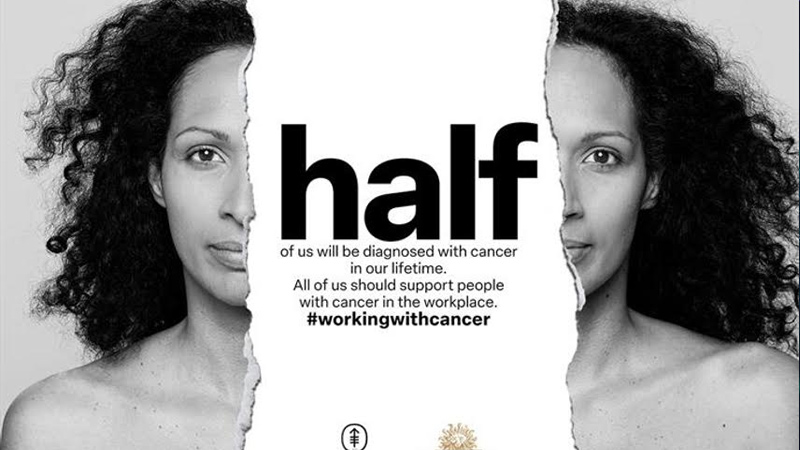
Alongside the technology rollout, Publicis Groupe is backing a global awareness campaign urging more employers to join the pledge. Created by Publicis Conseil and supported by up to $100 million in pro bono media, the campaign argues that employers are not bystanders in the cancer journey but can play a meaningful role in recovery and dignity.
Directed by award-winning filmmaker and stage IV cancer survivor Kailee McGee, the campaign film features survivors from companies including Walmart, L’Oréal, Pfizer, Barclays, Accenture and Carrefour, sharing how work helped them retain a sense of normalcy during treatment. The campaign will culminate in a Times Square out-of-home takeover on 4 February to mark World Cancer Day making the case that, handled right, work can be part of the cure, not the burden.






