Brands
Why is BFSI betting big on sports marketing?

MUMBAI: Raise your hand if you know who sponsored the last Mumbai Marathon? Sure everyone knows it was Standard Chartered Bank! Now, do you also know the main sponsor for the upcoming India England tour 2018? Not really, right? Advertisers in India have realised that they don’t have to rely on cricket to connect with their consumers anymore. And BFSI (banking, financial services and insurance) sector is the latest to have joined the bandwagon of sports marketing.
Generally, BFSI is promoted with a serious tone that is often depressing and rather boring. Life insurance in particular rides on the fear factor. It was only a few years ago that the BFSI sector began injecting humour into its brand communication.
The BFSI sector in India is shifting its focus to sports marketing and sponsorship from traditional events like festivals and occasions, to build its appeal with the new generation of consumers. The sector that has always endorsed and associated with individual sports personalities, is now looking at leveraging the popularity of sports by supporting smaller sporting events, especially city-based, non-cricket events.
While banks have always endorsed individual sports personalities, they are now looking at leveraging on the popularity of sports events such as marathons, football, wrestling and badminton among other sports.
YES Bank undertakes various health and fitness activities during yoga day and is also engaged with leading sporting leagues, management companies and sports clubs, PNB MetLife undertakes the PNB MetLife Junior Badminton Championship, IndusInd Bank organises the World Champions Programme – Cricket for the Blind while IDBI Federal Life Insurance has several leagues and sports of its own.
The popularity of sports in India is so high that even The Reserve Bank of India has partnered with cricketers Ishan Kishan, Umesh Yadav, KL Rahul, Deepak Hooda to promote banking services and its benefits. This is the first time that RBI has partnered with any sports personality to advertise and create awareness about the banking system and the importance of a bank account. In fact, in the recent FIFA 2018 World Cup, RBI ads were present throughout the tournament.
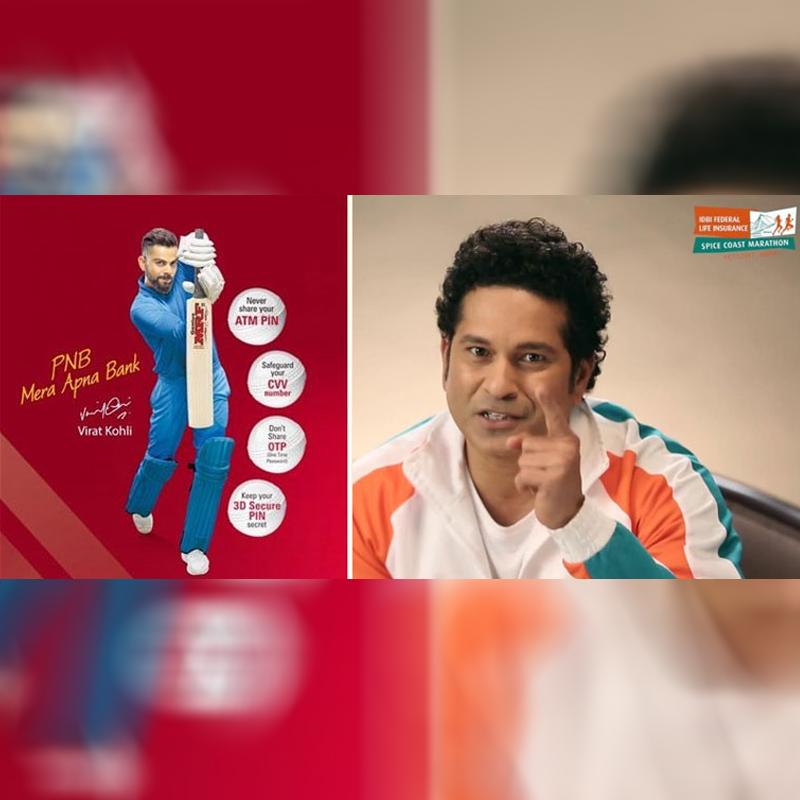
Earlier this year, State-owned Punjab National Bank roped in Indian cricket team’s captain Virat Kohli as brand ambassador to improve its image, which took a hit due to rising bad loans.
But what is it that attracts the BFSI sector to sports and athletes? Why is there an increasing trend of sports marketing by BFSI rather than having a celebrity on board? IDBI Federal life insurance CMO and head of products and strategy Karthik Raman thinks that sports helps to build a brand’s character and portray life insurance and banking service in a positive light rather than the depressing and boring sector.
IDBI Federal Life Insurance utilises the platform of sport as the mainstay of the marketing efforts to grow the brand. With a strong emphasis on sports and fitness, the company is title sponsors of four city marathons in Mumbai, Kochi, Kolkata and New Delhi. Master Blaster, Sachin Tendulkar is the face of all its four marathons. In addition to the mass participation sport of distance running, IDBI Federal also puts a strong focus on talent development and grassroots sports.
But what we are also observing is that banks are now unexcited about India’s most favourite sport cricket and rather moving towards badminton, marathon, tennis, football or kabaddi? It seems that badminton is becoming the most favourite game among banks to bet on followed by city run marathon and football. For IDBI, cricket is an expensive medium to invest in and is only for brands that have deep pockets. Raman says, “We didn’t want to do cricket because it’s been done to death and there are people with very deep pockets in the sport.”
According to a recent report by GroupM and SportzPower, the sports sponsorship in India grew at 14 per cent in 2017 where media investments contributed to 55 per cent of overall spends, followed by ground sponsorships. In the same year, GroupM’s This Year, Next Year advertising investment forecast revealed that Indian advertising expenses were at Rs 61263 crore, of which sports sponsorships contributed to 12 per cent of the overall ad spends. The sponsorship of non-cricketing events grew in 2017 where football grew by a considerable 64 per cent.
The future for sports marketing looks interesting but has its own challenges. Consumer engagement is one of the biggest challenges for brands and banks. With millennials switching to new platforms to access sports, the role of traditional media and sports marketing is changing. New and accessible ways to view sports, from mobile to social to VR, mean there is less incentive for fans to attend events in person, while more expectation is placed on sports stars to pull off an authentic natural voice for their brands.
The environment is extremely tough for small athletics events that rely on fan attendance for revenue generation to keep their sports afloat — requiring communicators and marketers to become more creative in the ways they promote sports to their target audiences.
Some banking institutes have now set up specialised sports vertical to aid sponsorships which can range anywhere between Rs 5 crore to Rs 25 crore depending on the association. The last six to eight years have been the most strenuous for the sports industry in India.
Increasing viewership for sports, participation and sponsorship in sports other than cricket, growth in rural viewership numbers and rising number of sports start-ups are the key trends driving the growth of sports marketing in India.
It sure is a lucrative business for banks as it gives them high visibility with minimal cost. What will be interesting however is if banks experiment with getting niche sports and international leagues and events in India.