Brands
Why does Dairy Milk continue to remain India’s favourite chocolate?

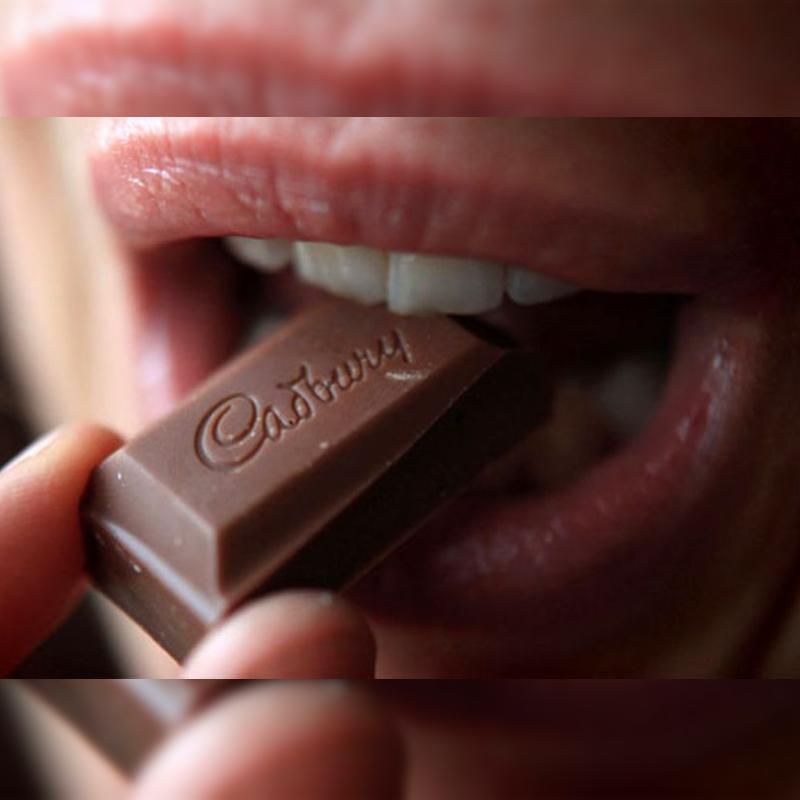
MUMBAI: Go to any store in India and ask the person to hand you a Cadbury. You are for sure to get a bar of Dairy Milk, wrapped in purple cover, in your hand. Such has been the company’s branding that chocolate has become synonymous with Cadbury, although it is a brand with many candies.
Cadbury Dairy Milk (CDM) was the first chocolate bar to have higher milk content than earlier ones when it was launched in the UK in 1905. By 1914, it had become Cadbury’s bestseller. But how did it become India’s favourite?
Cadbury India, now known as Mondelez India, began its operations here right after independence, in 1948, by importing chocolates.

In the land of gulab jamun and rasgulla, chocolate was an alien and expensive. Dairy Milk turned out to be a rather failed launch for the company. None but the crème de la crème could afford to buy an imported chocolate. Also, in the 70’s and 80’s, the brand was only available in certain areas and its ads usually showcased a working man coming back home with a chocolate bar in his pocket for his child. Dairy Milk was relegated as a product for children only.
In the 80’s, Cadbury decided to manufacture Dairy Milk in India just to ensure that the production cost comes down and it’s available at a cheaper price point for Indians. But, other chocolate makers were still selling at lower prices. With sales dipping, the team was desperate for a communication strategy.
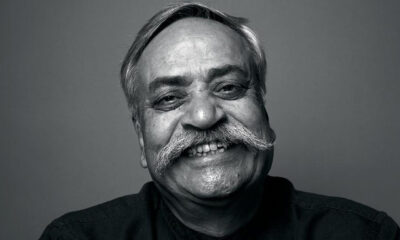
India’s ad-man Piyush Pandey from Ogilvy & Mather came to the brand’s rescue in 1991. He suggested that the brand needed a revamped identity and target the younger generation and adults. Ogilvy created the first iconic campaign for Cadbury titled, “Kuch meetha ho jaaye” in 1993 which continues to remain the favourite jingle of every 90s kid.
The campaign worked like a charm and Dairy Milk soon became every youth’s favourite chocolate. Suddenly, all these grownups — these responsible, serious grownups — had CDM bars in their hands. Batsmen, referees, grandfathers, policemen, teachers, pregnant women, college friends, lovers— the target group for Cadbury had changed and it was okay for adults to indulge now and that too in public.
There was no looking back. Since then, Dairy Milk has continued to remain every Indian’s go-to chocolate.
Through the years, Dairy Milk has been known for its loveable advertisements that make you want to sing along and do a little jig yourself. In the last decade, Dairy Milk has been positioned as something ‘meetha’ (sweet) — a strategy to counter traditional Indian sweets and the reach of local sweet shops. It comes as no surprise that Cadbury Dairy Milk is the most sold chocolate during festivals and special occasions.

Mondelez attributes the company’s strategy of constant innovation and evolving with Indian consumers as reasons for its growth. “In the beginning, we were just trying to say that chocolate is a nice treat for kids but today Dairy Milk is a mass brand and it is a part of everyone’s heart. We have made a huge change in communication right from talking to kids to being occasion specific to now a casual consumption product,” says Mondelez International associate director for chocolate equity, India and South East Asia Nitin Saini.
According to a recent market research report titled Branded Chocolate Market in India, the chocolate market is projected to grow at a CAGR of 17.8 per cent between FY 2017 to FY 2022. In the branded chocolate segment, Mondelez India has a whopping 65 per cent market share and its closest competitor is Nestle with 20 per cent market share.
Another aspect that works in favour of CDM is that it has few competitors in its category. Mars Inc’s Galaxy is the closest you can get but while CDM is available for Rs 10, Galaxy starts at Rs 25. The product’s success has even spawned cheap imitation chocolates at lower prices.
In the early 2000s, the company roped in star Amitabh Bachchan to promote it. Very soon, news about worms in CDM packets started leaking out and the company saw a 30 per cent dip in sales. The company lost no time in launching an aggressive campaign for its new tighter packaging which cost 10-15 per cent higher but did not hike the rates. It didn’t take long for consumer confidence to be back.
Mondelez has a strong distribution network in India and it is only growing every year. You visit a chemist shop, a drug store, a general store, supermarket, airport or a small pan-bidi shop, they all have a dedicated set of CDM bars to offer. In 2017, the chocolate giant had over 1000 distributors and 7000 sub-stockists who distributed products to small general stores and other retailers. Rural sales contributed about one-fifth of Mondelez’s sales in the same year which was 10 per cent higher than a year before. Mondelez currently has 350,000 outlets in 40,000 villages and sees the next phase of growth coming from hinterlands.
Though Dairy Milk cuts across all age groups and class, that seems to be changing now as chocolate and hazelnut confectionery, Ferrero Rocher, has come to be the latest favourite of the young and elite. Priced at Rs 430 for 12 pieces, the company faces a stiff competition from Dairy Milk that is India’s favourite festive gifting option. Come Diwali or Raksha Bandhan, and we see television and digital screens filled with Cadbury ads about making relationships stronger with something ‘meetha’.
Not only has CDM managed to break into a difficult market but has even maintained its lead. Riding on the back of extensive marketing, communication and distribution networks, it will take a gigantic effort to dethrone it.