MAM
Vizeum launches Binary, special advisory unit for media clients

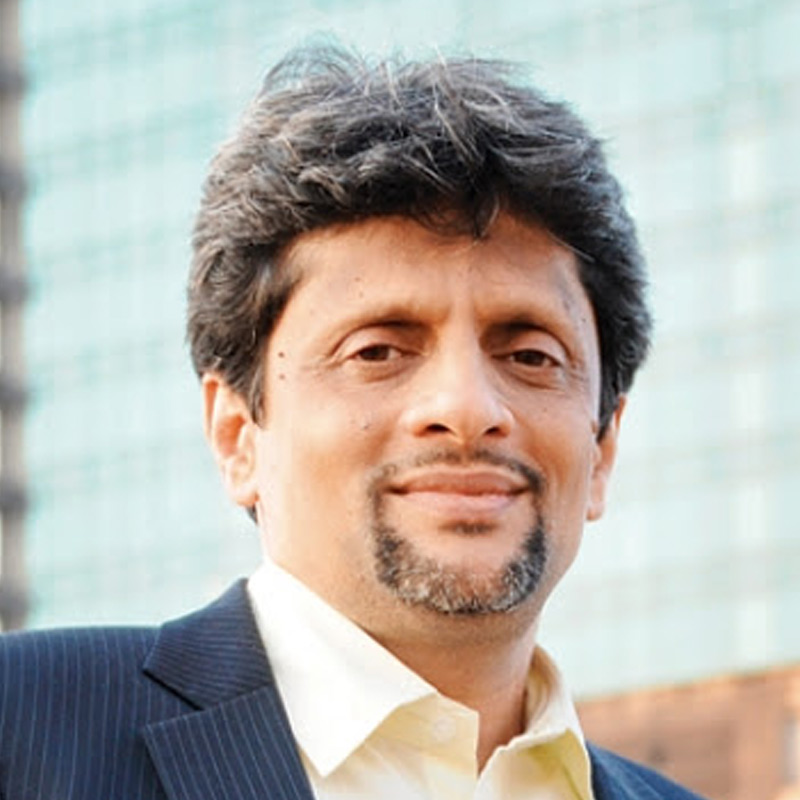
Mumbai: “Media business is, in the short term, headed for a tipping point, driven by the changing consumer-media interface,” emphasises Vizeum India MD Shripad Kulkarni, who strongly believes that media companies need a definitive transformation strategy in place now.
“While planning marketing communication for a media client, an agency’s focus is on acquiring new customers/ audience and retaining them. Thus, you have to wear very different hats,” Kulkarni states, speaking exclusively to indiantelevision.com.
Keeping these two point of views in mind, Vizeum has launched a strategic advisory and consultancy for media networks in the print/TV and radio domain. “We are currently establishing a separate specialist team outside our media planning and buying outfit to handle media clients, because it needs a unique orientation and perspective,” Kulkarni asserts. This unit will be headed by Shilpa Dhanu, who has over 20 years’ experience in media strategy and Marcom with TV channels.
The agency also caters to several major media clients including Viacom18. Dentsu Aegis Network strengths in Digital are unparalleled and this is a major advantage Vizeum has. With Isobar, iProspect WATConsult and Web Chutney they have a suite of companies specialising in every major aspect of digital depending on the need.
As an entrepreneur, Kulkarni has good experience in consulting and training media organisations such as Indian Newspaper Society, Sony Television, Red FM and many other media companies. Binary thus claims to have just the right combination of old-world learning and new-age solutions for the challenges faced by mainstream media.
The service would offer focused transformation strategies and customised solutions for TV channels, radio stations and print media. The service covers two modules which would be customised to each media network as per the specific need of the business. India is a market where mainstream media is still growing. So managing the transition is an immediate plan of action. But there must be a Digital Transformation Roadmap.
The Transition module covers four services :1) New age pricing and sales strategies for revenue maximisation titled RevenueMax; 2) A holistic marcom strategy relevant in the new milieu called True 3600; 3) Trainware to getting the team trained for the new age challenges and 4) Sales Assist: technology based real time sales support.
This will also include update on various happenings and trends across media, competitive analysis of rates across regional publications, analysis of ad spends by category for TV and print, special analysis of various databases like IRS/TAM/TGI are some of the specialised offerings of this advisory. Under this module, the special unit will also cater to the client’s creative requirements as per the marketing communications plans.
The transformation roadmap, likewise covers five stages : a digital review covering an audit, evaluating the business model and assessment of the new business model needs, content strategy, assessing routes for the ‘new company’, followed by digital transformation roadmap. “This is a unique Service and I am quite bullish on the business prospects,” Kulkarni added.
Kulkarni strongly believes that media companies, although are brands themselves, have special media management requirements that is distinct from a FMCG or automobile brand. “The fact that a brand comes to a media company to reach out to an audience differentiates it from a regular advertiser,” he said.
Vizeum India was recently awarded the media duties of one of the giants of film studio – Warner Bros Pictures. Following the win, the first movie from the Warner Bros slate that Vizeum worked on was “The Conjuring 2.” For the record, after the theatrical run of its recent release Batman v Superman, Warner Bros has now lined up as many as 15 new releases in 2016. Apart from this, the agency also caters to several major media clients including Viacom18.
To how media clients spend differently than other brands, Kulkarni added that films and television channels operate on different ecosystem altogether. “Speaking specifically of television channels, to start with, we consider how it can use its own channel differently, because at the end of the day the broadcaster is a medium of its own. Brands and advertisers come to a broadcaster, so that its his strength. Maximising own media is the starting point. The second question a broadcaster asks is how it can maximise its reach through its home network,” Kulkarni explains.
Keeping a clear idea of the end goal makes the planning sharper and more efficient. “The broadcaster needs to be sure of what it is chasing — new audience, or the channel’s loyal audience or home network. The media planners then need to ask if its client’s chasing the end goal through one property or multiple property, and what will get it tune ins. That’s the single-minded proposition. Because, once the tune-in happens, the channel, and the program take care of the rest,” Kulkarni adds.
In that way films and channels are similar; in both cases the opening week or weekend (for the former) makes a huge difference.
As per industry guesstimates, on an average, a leading GEC spends Rs 25 to 30 crore worth of media within its home network in the first two to three weeks of a show launch. If one were to monetise the value of the media, the channels’ use in it own network, it is the value of the advertising opportunity the broadcaster has lost. Beyond this, a channel can spend close to Rs 1 crore–5 crore if ‘across network’ promotion is involved, which would include outdoor and on-ground activation as well. This figure may rise up to Rs 10 crore if the channel’s home network isn’t strong enough.