MAM
Virtual Reality: What’s in it for marketers?


MUMBAI: In the marketing industry, digital era is not something being anticipated but a reality that has arrived and the way one interact with digital content is also changing rapidly especially through the advent of virtual reality (VR) and augmented reality(AR).
The terms are often thrown in the air by marketers when citing examples of latest technology in marketing, but what few realize the ground zero report on the actual work and its effectiveness done using VR and Augmented reality as a marketing tool.
And who better to vouch for it than Ashish Limaye the chief operating officer of Happy Finish, a creative post production studio media agency that dabbles heavily in VR, CG and AR.


With a global presence of over 12 years, Happy Finish headquartered in the United Kingdom has managed to bag substantially big name clients since it entered the Indian market five years ago. The studio works closely with other creative agencies and caters to specific skillsets that a campaign requires while also having several clients of their own to boot.
“We work with almost all the leading brands including brands like Unilever, Nestle and Marico to Coke and Pepsi in the beverage section,” points out Limaye, adding, “In the automobile section we work with Maruti Suzuki, Tata Motors, Toyota, and Renault.”

Adapt or perish
The single largest shift in the paradigm that Limaye has noticed in the last one year is the completely insulated channels that brands have established with consumers irrespective of any external stakeholders. “When I say stakeholders, I mean magazine, television, billboards etc. And this insulated channel is possible through smartphones that have penetrated the Indian market,” points out Limaye. “The shift which is happening is from all the above-the-line conventional paid media to a ‘owned by the brand’ media, which also generates organic reach through social media without spending a penny.” Coupled with the data points that smartphones facilitate, brands can now directly target their consumers and know them like never before -.not as part of some mass, but by name age and behaviour and preference. As smartphones and other smart devices can easily be used to access VR environment, its use in marketing will grow manifold in the coming years.

Scope for VR in marketing
When asked about the scope for VR and augmented reality he sees in marketing in India, Limaye points out the major challenges that today’s marketers are facing with conventional mediums of communication. “There are two constants in this day and age: one if that media is getting fragmented, and second, consumer attention is getting more fragmented. Today, the consumer is bombarded with so many different media and it has become extremely tough establishing a dialogue with them. And that is where VR becomes extremely advantageous to marketers as it allows you to engage the consumer on a one-on-one basis.”
To sum it up he adds, “Firstly, VR helps brands with a significant amount of credibility through immersive experience, which otherwise is not possible as effectively. Secondly it also allows to communicate the entire value chain with the customer, through multiple channels — be it retail, or post sale etc; from the factory to the showroom and then road.”
Limaye explains with an example. “Suppose a telecom is launching their 4G services. With the past record of 3G services not being so favourable with people complaining of call drop, there is a lot of doubt in the market on how well the 4G will do. To counter that a marketer can create an immersive experience of a user in the 4G service and share it with prospective consumers to add credibility to 4G services.”

VR Vs AR:
While VR has been cited several times for its use in experiential marketing, it is easy to confuse it with augmented reality. Limaye defines the two in a simple sentence: “Augmented reality is when I import an external element into my world, while virtual reality allows me to travel to that world.”
The biggest differentiating factor is that augmented reality can be consumed by more than one person at a time. “You can project a car on a table while sitting in coffee shop and show to a client or a buyer the inside of the car, its interiors, how it functions and drives. That’s augmented reality.”

Another good example of clever use of augmented reality in a marketing campaign is what can be done for the online furniture brands like Pepperfry. “It allowed consumers to scan their living room and feed the information to their app, and then place furniture items wherever you like with the use of augmented reality to see what looks like where.”

Adoption amongst brands:
In India, the adoption of the technology is picking up fast. Limaye says he gets at least two to three requests daily from several big and small brands when it comes to VR, although he does acknowledge the presence of a learning curve that the industry is going through for this fairly new technology. “While there are brands interested in trying these out, when you ask them what exactly they want to do with it. They have no answer.”
The area in which the marketers are falling behind is the lack of creative approach when working with VR and augmented reality. “You can’t be using VR for the sake of it just to sound cool or be counted amongst those who are progressive in the industry. There has to a communicative objective that the use of VR must fulfill,” Limaye said.
The brands which have come forward in using VR and AR come from FMCG sector, beverages like Pepsi and Coke, tourism and travel, and of course automobiles. Currently 30 per cent of Happy Finish’s client base for VR is from the automobile sector.

Accessibility and cost:
While VR and AR paves way for endless possibility in use of the technology for marketing purpose, one can’t help but question if India is ready for it in terms of the accessibility of the experience. Can brands only target niche consumers or go brand to brand with it?
Knowing that similar questions have been bothering the industry for quite sometime, Limaye says: “It is a myth that you need a high-end headgear to access Virtual reality. You can access it in many ways. Firstly you have Google Cardboard, which is priced as low as Rs 100. Secondly you can access it using YouTube and Facebook that have started their 360 degree videos. Your mobile or your smart device – be it laptop or iPad – then becomes your window to the virtual reality. All one needs to do is shoot 360 media and put it up. Thirdly, if one has a budget to spare, one can go for head gears for a more complete experience. I can see big spending brands keep a gear at their showroom for showcases etc, or for B2B communication. So the distribution challenge is being dealt with in every level.”

The ROI Factor:
So how much should a marketer going for VR budget for their new campaign? Typically, the feeling is that use of a new technology is more expensive as one has to set in place the infrastructure for it. But Limaye disagrees.
Though the average budget is subjective to the brands need but for a decent campaign which includes an app development and a live action shoot, a budget of Rs 1 to s 1.5 crore is good enough for a good immersive experience using VR. That also reflects in the ROI.
“I have metrics in place for how many people have downloaded an app, what feature they are interested in and I can even have a call to action post their immersive experience and directly lead the campaign to sales. The call to action is also well monitored and measure. When it comes to ROI, the investment too is very less when you compare it to mediums like television. To reach the Hindi Speaking Market with TVC, a marketer needs to have at least Rs 2 to 3 crore budget to reach a decent TRP number. But this is not needed when I am talking about a VR campaign while still reaching out to the relevant audience.”
“The quality of engagement is much higher as compared to other mediums, and the cost of acquisition of the customer’s attention is much lower, and the absolute spend is also lower. In all these metrics, the ROI is much higher,” Limaye adds in parting.





MAM
PwC India announces leadership change in Deals practice
Shashank Jain steps down as co-leader after nearly three decades with the firm.
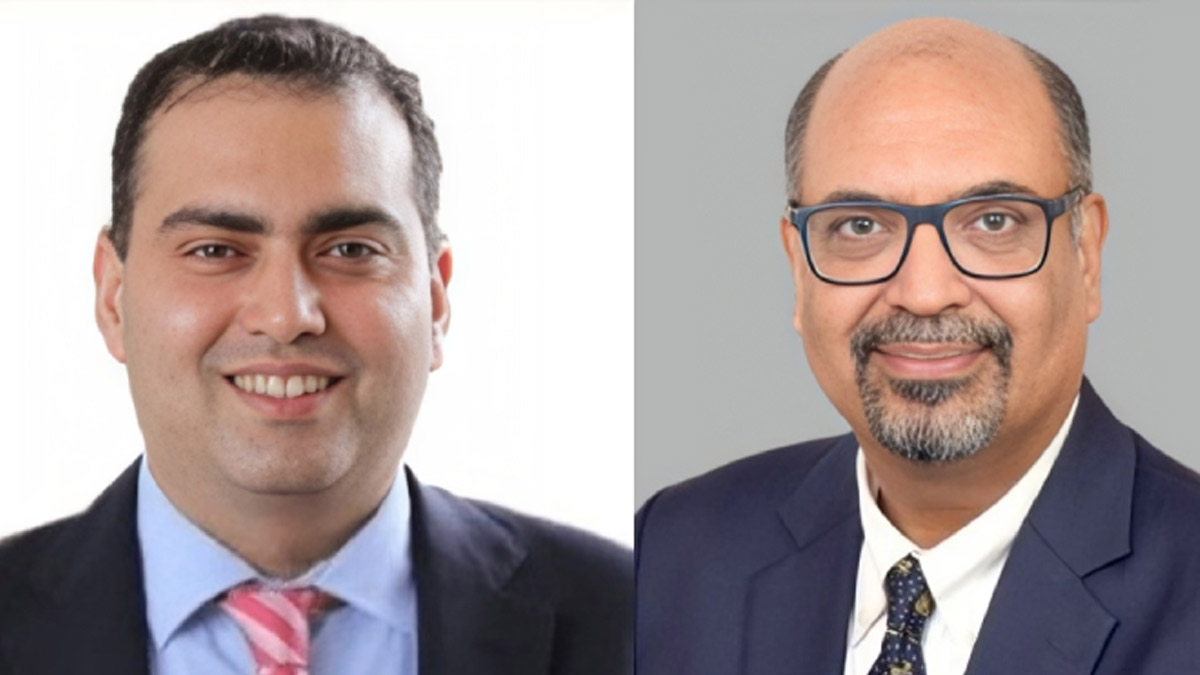
MUMBAI: When one dealmaker steps off the pitch, another is ready to take the baton because in the fast-moving world of transactions, the game never really stops. PwC India has announced a leadership transition in its Deals practice, with Shashank Jain stepping down from his role as co-leader to pursue an opportunity in the industry. The practice will continue to be led by Mohit Chopra, ensuring continuity and sustained growth momentum.
PwC India partner and leader for advisory dinesh Arora paid tribute to Jain’s contributions. “We deeply appreciate the significant contributions made by Shashank over close to three decades he has spent with PwC, particularly his defining role in shaping and strengthening our Transaction Services practice in India,” he said. Arora highlighted Jain’s support for clients through some of the most complex and significant transactions in the Indian market, noting his deep technical expertise, sound judgment and nuanced understanding of the evolving M&A landscape.
The Deals practice remains a key growth driver for PwC India, and the firm expects continued expansion under Mohit Chopra’s leadership. He will continue to guide clients through complex transactions and transformational business moments, building on the strong foundation established over the years.
Reflecting on his journey, Shashank Jain said, “I have had an exceptional journey at PwC. I owe my growth and learning to the nurturing environment and leadership development that PwC provided.” He added that he had been working closely with Mohit and the larger team to ensure a smooth transition and expressed confidence that Chopra would take the Deals practice to newer heights.
From intern to respected deals leader, Shashank Jain has clearly closed many successful transactions and now, it seems, he’s ready to strike a new deal of his own.









