MAM
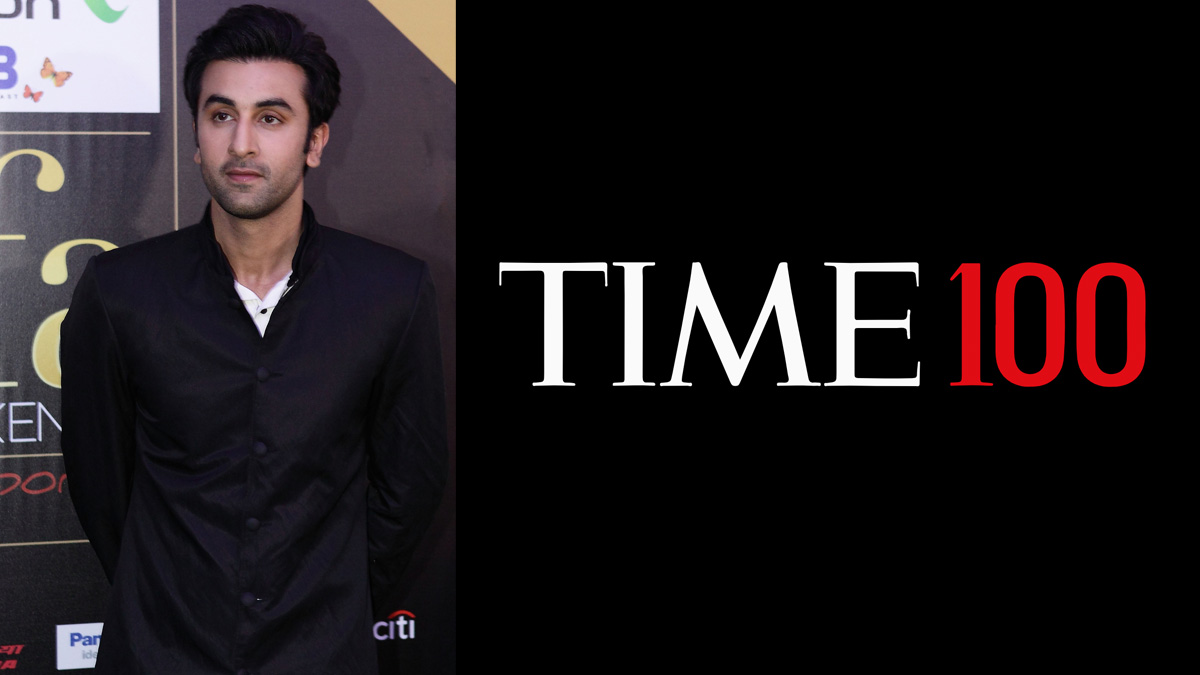
TIME100 2026 list names Sundar Pichai, Vikas Khanna, Ranbir Kapoor among global icons
Indian leaders across tech, cinema and cuisine feature on TIME’s list
MUMBAI: TIME has unveiled its 2026 TIME100 list, spotlighting some of the world’s most influential figures, with a strong Indian presence cutting across technology, entertainment and culinary arts.
Among those featured are Sundar Pichai, Vikas Khanna, Ranbir Kapoor and Neal Mohan, alongside public figures such as Zohran Mamdani.
The profile of Pichai highlights his role in taking artificial intelligence to the masses, with Andrew Ng noting that few leaders have expanded access to AI at such scale. Since becoming CEO in 2015, Pichai has steered Google towards a more agile, innovation-led approach, rolling out products like AI Studio and Gemini that are now used by billions globally.
Chef Vikas Khanna is described as a cultural bridge-builder, with Eric Ripert praising his ability to connect people through food while championing Indian traditions on a global stage. His New York restaurant, Bungalow, is positioned not just as a dining space but as a storytelling platform rooted in heritage and memory.
In the entertainment space, Ranbir Kapoor earns recognition for reshaping cinematic storytelling with restraint and emotional depth. Writing his profile, Ayushmann Khurrana notes that Kapoor’s performances quietly redefine audience sensibilities, making him a cultural voice for a changing India.
The annual TIME100 list brings together leaders, innovators and changemakers across sectors, from politics and business to science and the arts. This year’s edition also features global figures such as Donald Trump and Xi Jinping, alongside creators, athletes and entrepreneurs shaping the future.
With influence increasingly spanning industries and geographies, the 2026 list reflects a world where impact is not just about scale, but about shaping conversations and culture in meaningful ways.

Brands
India exports $2.5 billion worth of Apple components to China under ECMS push
Component push and policy boost turn India into unlikely supplier hub
MUMBAI: India’s electronics trade story is getting a plot twist. What was once a one-way flow from China is now starting to reverse, with exports of electronic components from India to China hitting a record $2.5 billion in FY26 so far, and projected to reach $3.5 billion by the end of the fiscal year.
At the heart of this shift is the growing manufacturing ecosystem built around Apple and its suppliers. Companies such as Tata Electronics, Pegatron, Foxconn, Salcomp, Motherson and Yuzhan Technology are driving the surge, transforming India into a key node in global supply chains.
Just a few years ago, exports of such components were negligible. Today, they are part of a rapidly expanding multi-billion dollar ecosystem, fuelled by scale, quality improvements and tighter integration with global production networks.
A major catalyst behind this growth is the government’s Electronics Component Manufacturing Scheme, launched in 2025. Unlike earlier incentives focused on assembling finished devices, the scheme targets high-value components such as circuit boards, camera modules and enclosures, offering both turnover-linked and capital expenditure incentives.
The logic of exporting components to China, long seen as the “factory of the world”, may seem counterintuitive. But the shift reflects a deeper realignment. As Apple scales production in India, now accounting for roughly 25 per cent of global iPhone output, local suppliers have become competitive enough to feed into global assembly lines, including those in China.
This is also part of a broader “China+1” strategy, where companies diversify manufacturing bases to reduce geopolitical risk. India-made components are increasingly being routed back into Chinese factories to maintain global supply continuity.
At the same time, India’s domestic value addition in smartphones has climbed to around 20 per cent, signalling a move beyond basic assembly towards more sophisticated manufacturing.
While India continues to import heavily from China, the emergence of a $3.5 billion export pipeline marks a meaningful shift in direction. Electronics are now joining engineering goods and agriculture as key drivers of India’s exports to China, which are expected to cross $18 billion this fiscal year.
In short, India is no longer just assembling the world’s gadgets. It is beginning to help build them, and in some cases, even supplying the very factories it once depended on.