Brands
Throwback Thursday: How Nirma became ‘Sab ki Pasand’

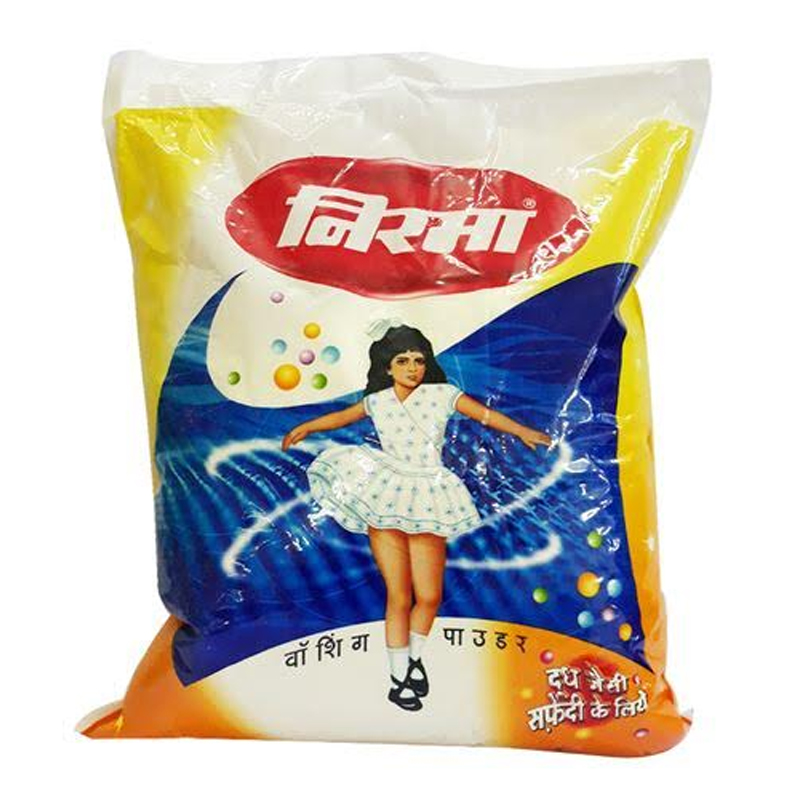
MUMBAI: It’s Thursday once again, and in continuation of our Throwback series featuring prolific marketing campaigns from the past, we rewind to an ad that is sure to invoke nostalgia in most of us.
Remember the visuals of a little girl in a frilly white frock twirling to the tune of a catchy jingle? It remains one of the most enduring images from television commercials of the ’80s. Yes, we are referring to the ‘Washing Powder Nirma’ advertisement, which played a key role in catapulting an underdog, regional, barely known brand into the national limelight and in scripting its marketing success. Admit it, the song “Doodh si safedi Nirma se aayi” is already playing in your head, right? So, let’s flashback to the time when this jingle played on every television set – be it black & white or colour. But for that, we need to start from the beginning.
The homegrown detergent brand, which went on to become a household name, had a unique journey that began in the backyard of its founder. The washing powder is the brainchild of Karsanbhai Patel, who worked as a lab technician at the time, at the department of mining and geology in Ahmedabad, Gujarat, after completing his BSc in Chemistry. The year was 1969 and he was all of 24, when he started experimenting with phosphate-free synthetic detergent powder. Eventually, he started manufacturing it in his house. Packaging the washing powder neatly in a transparent pouch, he started handing out packets to people on his way to work, even selling it door-to-door.

‘Detergents’ till then were a premium product, with most average-income households using laundry soap instead. But Patel knew his target consumers well. In order to reach the masses, the product was priced low and presented sans any fancy packaging, to appeal to the target group. The packaging just had the name ‘Nirma’ with a little girl’s mascot on it. Not many know that the brand derives its name from Patel’s own daughter, Nirupama, who tragically passed away young in an accident. The image of the girl on the detergent’s pack belongs to her, as well. This also explains why the image has remained a constant throughout, upto this day.
The detergent market in those days was dominated by Hindustan Lever Ltd’s (now Hindustan Unilever) Surf, which was priced at around Rs 13 per kg. Since the majority of the middle class couldn’t afford to buy detergents at that time, it hardly had any competition. It is this market that Patel tapped into. He priced his brand at Rs 3.50 per kg. This massive price difference led to consumers opting to buy Nirma, over other pricier alternatives. Subsequently, the product sales picked up and Patel started manufacturing Nirma on a large scale. The time was ripe for a low-cost, no-frills alternative to Surf.
In the 1970s, when Nirma entered the market, the biggest challenge it faced was to make its targeted audience aware of its existence. This was the time when the available means of advertising were primarily radio, newspaper, and magazines- and only a few hours of television. This is where Nirma’s advertising strategy caused an upheaval in the detergents market.
Karsanbhai Patel collaborated with Purnima Advertising Agency for a catchy ad that would promote the product, create brand awareness and of course, boost sales. And thus, the jingle was born — “washing powder Nirma, washing powder Nirma…“
It first hit radio airwaves in 1975 and was a hit. Patel then took a chance on TV advertising, upon seeing the increasing scope of television commercials. And the rest, as they say, is history.
The ad debuted on television in 1982 with actor-model Sangeeta Bijlani as the face for the television commercial. The catchy jingle of “Washing Powder Nirma…Sabki Pasand Nirma” captured the nation’s attention, embedding it in our psyches forever.
The jingle had a desi touch with regular Indian names such as Hema, Rekha, Jaya, and Sushma being thrown in, which struck a chord with the masses. The ad by itself was not path-breaking as such. Positioning itself as a brand for the masses, it followed a similar template for long, showing young people actively enjoying- singing, dancing – and of course, washing clothes using the Nirma powder. It portrayed the act of doing laundry as a fun activity, instead of a dreary task. Focusing on pan-India reach perhaps, the ad was shot at a variety of vantage locations across the length and breadth of the country. The ad begins and closes with the ‘Nirma girl’ – the brand’s mascot- twirling onto the detergent pack.
It is probably one of those rare ads where the jingle actually outshines the visuals that accompany it. The song effectively and simply drove the brand messaging with lyrics like “doodh si safedi, nirma se aayi, rangeen kapda bhi, khil khil jaayae” (It brings the whiteness of milk to white clothes and brightens coloured ones too) and, “kam keemat mein adhik safedi laya nirma” (superior whiteness at a low price), which stressed on the low-cost factor coupled with a quality wash that basically every housewife was looking for. The campaign succeeded in dethroning the detergent heavyweight, Surf and overtaking all other big names in the market with its brand positioning.
Little wonder then, that apart from minor tweaks, Nirma retained the jingle in its ad campaign for more than a dozen years- going on to become the longest-running ad jingle in Indian advertising. The brand responded to the evolving customer tastes and times by showcasing the four characters of Hema, Rekha, Jaya, and Sushma as evolving with time, depicting them as independent-minded women actively pursuing their interests and passion, in a slight upgrade from the original ad.
By 1985, Nirma had overtaken Surf to become the best-selling detergent brand in India. And three years later, what started as a door-to-door selling brand, had 60 per cent of the total detergent market share in the country, dethroning the heavyweight brand from the house of a multinational, which had created the market in India. Also forcing HLL marketing stalwarts to go into a huddle for “Operation STING” which stood for-believe it or not-Strategy To Inhibit Nirma’s Growth!
It was a classic David vs Goliath case- that’s worthy of becoming a management case study- where the advertisement helped script the perfect underdog win. The Nirma ad goes down the annals of Indian advertising for taking on the market leader of the time. And while at it, it did what a good ad is supposed to do – tell you about the product’s advantages and make you remember it. And if an ad doesn’t tick those two boxes, all the awards in the world cannot make it work.






Brands
Sensodyne launches Know Your Dental Age campaign to boost oral health awareness
Nationwide push blends tech, trains and experts to spark early care habits

NEW DELHI: Sensodyne has rolled out its ‘Know Your Dental Age’ campaign across India, aiming to bring oral health out of the shadows and into everyday wellness conversations.
Backed by Ministry of Health & Family Welfare and the Indian Dental Association, the initiative introduces a quick, QR-based Dental Age Test designed to help people understand whether their teeth are ageing faster than expected and what they can do about it.
The move comes as India faces a stark oral health gap, with a large majority experiencing dental issues but often delaying treatment until problems escalate. By nudging people towards early action, the campaign hopes to shift behaviour from reactive fixes to preventive care.
The initiative was launched in Delhi by Anupriya Patel, alongside Ashok Dhoble and Kedar Lele, highlighting a growing push for public and private sectors to work hand in hand on healthcare awareness.
“Oral health is fundamental to overall well being, yet awareness and timely action remain limited,” said Ministry of Health & Family Welfare minister of state for health & family welfare and chemicals & fertilisers Anupriya Patel. “Initiatives like this bring preventive care closer to people and encourage early intervention, which is key to building a healthier India.”
To take the message beyond clinics and into daily life, the campaign is also travelling on select Vande Bharat Express routes, offering screenings and information to an estimated 10 lakh passengers.
Haleon chief executive officer india and president india subcontinent Kedar Lele said the effort builds on years of work to make oral care more accessible and actionable. “When people have the right information at the right time, they are far more likely to act. That is where meaningful change begins,” he noted.
The campaign is being amplified through a 360-degree outreach spanning digital, print, influencers and on-ground activations, with support from dental experts and consumer platforms to widen its reach.
With a mix of technology, mobility and collaboration, Sensodyne’s latest push makes a simple point clear: knowing your dental age today could help you smile better tomorrow.








