Executive Dossier
There is no Plan B for TAM if we lose our appeal in court: Kantar’s Eric Salama

The Indian television industry is possibly heading towards a crisis of an audience ratings blackout. TAM Media Research, a joint venture between Nielsen (India) and Kantar Media Research, is currently the only agency that provides television audience viewership measurement services to advertisers and broadcasters.
TAM has hit a roadblock in India with the government issuing policy guidelines for television ratings agencies in mid-January. It has an impossible deadline of mid-February to ensure that the shareholding in TAM is in accordance with the new policy guidelines.

Apart from having substantial (more than 10%) stakes in TAM, the joint venture partners in the Indian television ratings provider also own advertising agencies in India, which is prohibited in the policy guidelines’ cross-holding norms.
Nielsen appears to have taken a back seat and decided to let Kantar lead the challenge against the government’s new regulations and let TAM face the situation as it develops
Kantar has filed a petition in the Delhi High Court to get a stay on the shareholding norms specified in the guidelines or at least get an extension on the deadline for meeting meet the norms. There’s less than a fortnight left for TAM to comply with them, and it does not like its shareholders will be able to do so in the short time that was given to them.
The launch of television audience measurement by Broadcast Audience Research Council (BARC), an initiative of advertisers, advertising agencies and broadcasters in India, is likely only by October this year.
If Kantar fails to get some relief from the court, TAM will have to stop releasing audience ratings by mid-February which will obviously result in the absence of viewership being metered and measured till BARC is ready with its own services. And that is something which is giving both advertisers and agencies palpitations. Television audience ratings is a key input based on which advertisers base their advertising plans on.
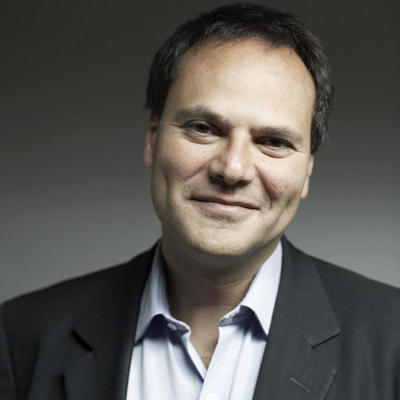
In order to understand what the situation is and what could unfold, indiantelevision.com’s Vishaka Chakrapani spoke to Eric Salama, chairman and CEO of the Kantar group since 2007. Salama has been with global advertising agency WPP, the owner of Kantar, since 1996.
During the interaction, Salama rued that television ratings has become a matter of public debate and a “cricket ball” for everyone to hit. Excerpts:
How different is it operating in India as compared to other countries when it comes to television ratings?
We operate in most countries with the exception of Iran, Cuba and North Korea. We’ve never had problems in India before, IMRB is the oldest research agency in Asia and we see India as a key market for us going forward. We have some of our most talented people here. The TV ratings market is very different to other markets in that it has become a source for public debate and a cricket ball for people to hit.
How do you see TV ratings agencies progressing in India?
We’ll know soon enough!
Do you believe a ratings blackout is likely to happen? What could happen in such a scenario and how will the industry respond?
Unless the court rules in our favour on cross ownership, we are heading for a blackout which will be extremely damaging to broadcasters, programmers, agencies, advertisers and everyone who cares for the Indian media industry.
Do you think there is space for two ratings agencies to coexist?
It happens in some markets such as Philippines but it’s extremely rare as the industry generally wants one currency for trading.
I believe TAM has also applied to BARC for panel management in the industry-driven television ratings service. How do you see your relations with BARC taking shape?
Once BARC is established, TAM will either be a supplier to them for some services or not.
Should the sample size for arriving at television ratings be far bigger?
If people wanted us to expand our sample to 20,000 we would. When BARC is established it will be up to them to decide what they do.
Accusations have been hurled at TAM and its credibility has been questioned. Do you think TAM has been judged wrongly?
Some of the comments have been libellous. Many of them have been poorly informed. TAM has performed extremely well for a long period in a very difficult environment and under huge pressure.
What is the plan B if TAM is not allowed to function?
There is no plan B.






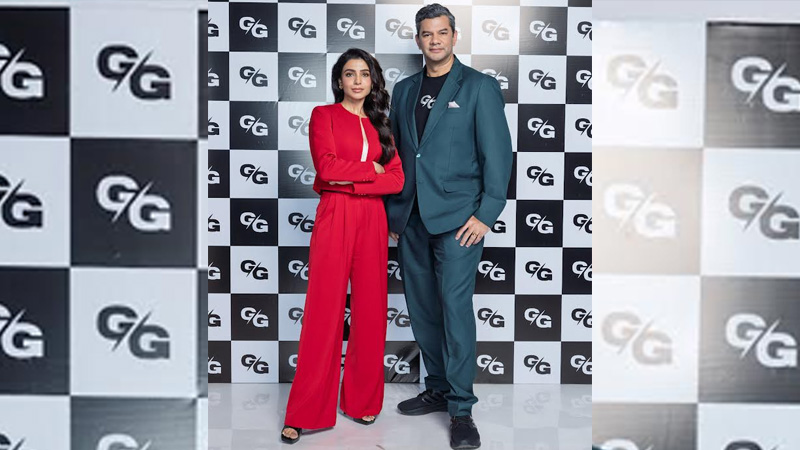
MUMBAI: Game faces on, pressure high India’s gaming ambitions are levelling up. Good Game, billed as the world’s first as-live global gaming reality show, has officially launched in India with a bold mission: to crown the country’s first Global Gaming Superstar.
Blending esports with mainstream entertainment, the show brings together competitive gaming, creativity and on-camera performance in a format that tests more than just joystick skills. Contestants will be judged on gameplay, screen presence and their ability to perform under pressure, reflecting how gaming has evolved from pastime to profession and pop culture currency.
Fronting the show are three high-profile ambassadors: actor and entrepreneur Samantha Ruth Prabhu, Indian cricket star Rishabh Pant, and gaming creator Ujjwal Chaurasia. The winner will take home Rs 1 crore ($100,000) among the largest prize pools for any Indian reality show along with the chance to represent India on a global stage.
Backed by a planned annual investment of up to Rs 100 crore, Good Game is also courting brand partners, promising a minimum reach of 500 million among India’s core youth audience. The creators position the show as a bridge between entertainment and interactive culture, offering long-format content, community engagement and commercial scale.
Auditions are now open to Indian citizens aged 18 and above, inviting amateur and professional gamers, creators and performers alike. Shortlisted candidates will be called for in-person auditions in Mumbai on 14 and 15 February, and in Delhi on 28 February and 1 March 2026.
With big money, big names and even bigger ambition, Good Game signals a shift in how India views gaming not just as play, but as performance, profession and prime-time spectacle.






