MAM
The birth of Korean cool: how Seoul hacked the world’s taste buds

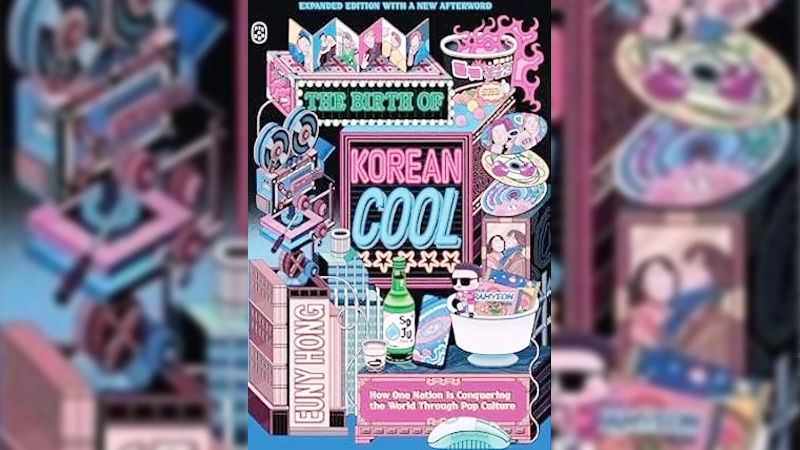
MUMBAI: This is a book the Indian prime minister’s office ought to read between policy briefs—and then read again with a highlighter. Ditto Ashwini Vaishnaw and the mandarins at the ministry of information and broadcasting. Narendra Modi has spoken often about exporting India’s soft power; he has even launched Waves to push Indian content abroad. Euny Hong’s The Birth of Korean Cool shows, briskly and unsentimentally, how another Asian countries actually did it.
First published in 2014 and expanded for 2025, the book is part reportage, part cultural history and part field manual. Hong, a Paris-based journalist, dissects how a war-battered, culturally insecure South Korea retooled itself into a global style factory. The lesson is bracing: Korean cool did not “go viral”. It was planned.
Hong’s central argument is gloriously unfashionable. Hallyu—the Korean wave—was not an accident of youthful exuberance but a state project, designed with bureaucratic zeal. Around 2000, president Kim Dae-jung looked at America’s film revenues and Britain’s stage musicals and drew a blunt conclusion: culture pays. He set up a Cultural Content Office with a $50 million annual budget. That pot swelled to $500 million. Today it is closer to $5 billion, still fuelling Korea’s pop exports.
A financial crisis provided the shove. When heavy industry sputtered, policymakers pivoted to pop. Culture, they decided, was not fluff but infrastructure. Long before K-pop hijacked playlists and K-dramas colonised Netflix queues, Seoul chose to subsidise desire—with spreadsheets, grants and a steely long game.
The book is at its sharpest when Hong punctures the myth of effortless cool. She tours idol boot camps that would make investment bankers blanch, a society obsessed with polish, and an ecosystem where failure is not romanticised but fixed. Cool, she argues, can be trained—sometimes brutally.
She is no evangelist. With dry wit, Hong exposes the darker underside: pressure-cooker perfectionism, the commodification of youth, the relentless optimisation of faces, bodies and emotions. Korean cool, she reminds readers, is as much factory as fantasy.Stylistically, the book moves at K-pop tempo—snappy, self-aware, lightly irreverent. Hongwrites like an insider with a sceptic’s eyebrow permanently raised. The prose is sharp without being academic. This is economics in eyeliner.
If there is a flaw, it is deliberate. Readers seeking obsessive deep dives into specific bands or shows may find Hong more interested in systems than stars. But that, too, is the point. This is not fandom. It is a study of how nations brand themselves—and win.
The Birth of Korean Cool is ultimately a warning to every country chasing relevance. Soft power is not vibes; it is policy. Cool is not magic; it is management. Seoul did not wait to be discovered. It engineered desire—and exported it. The rest of the world is still humming along, trying to catch the tune.
(Thanks to Sameer Nair for the gift. Paperback available on Amazon at Rs 1,612. Publisher: Picador; pp 331.)